The Impact of Long-Term Cycling on Bone Density: Why Cyclists Need to Add Weight-Bearing Training
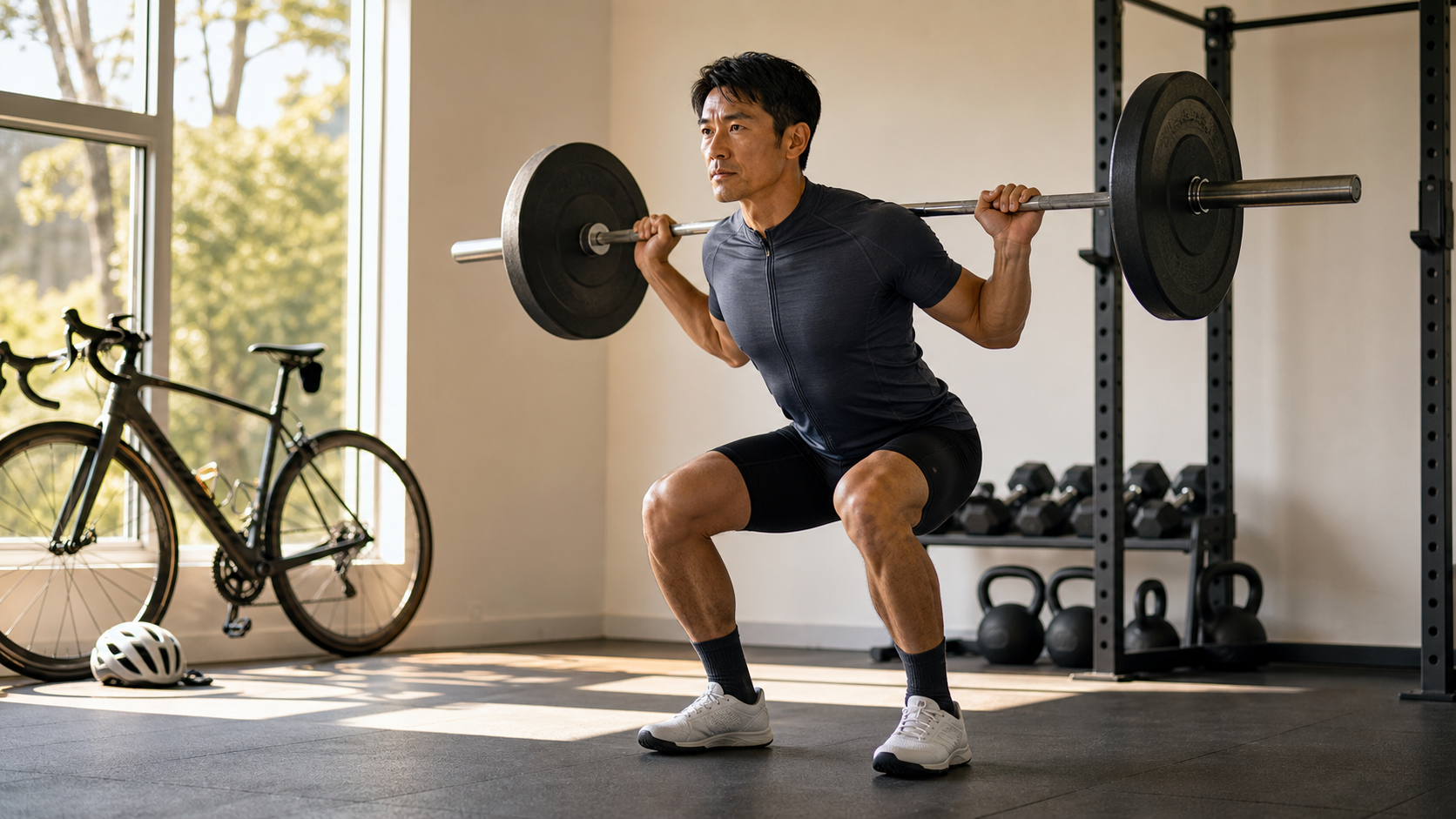
Introduction
“Cycling is so healthy—how could it possibly be bad for your bones?” When many riders hear the claim that “cyclists have a higher risk of osteoporosis,” their first reaction is often skepticism. But this is not an exaggeration; it is a public health issue backed by solid scientific evidence. Although the bicycle is an excellent cardiovascular training tool, its low-impact, seated, and non-weight-bearing nature makes it far less effective at strengthening bones than running, basketball, or weight training.
The Physiological Mechanism of Bone Remodeling
Bone is living tissue that continuously remodels through the dynamic balance of bone resorption (osteoclasts) and bone formation (osteoblasts). The key factor stimulating bone formation is mechanical loading—simply put, subjecting bones to gravitational or impact forces.
- Wolff’s Law: Bone adaptively remodels in response to the mechanical stimuli it experiences—it strengthens with stimulation and deteriorates without it
- Running, jumping, weight training: generate ground reaction forces of 3–5 times body weight, strongly stimulating bone mass gain
- Cycling: primarily seated; although the lower limbs are pedaling, vertical gravitational forces are almost entirely borne by the saddle, so the longitudinal impact forces on bone are minimal
What Does the Research Say?
Multiple studies have compared bone mineral density (BMD) between cyclists and other athletes:
- Nichols et al. (2003) found that professional road cyclists had significantly lower lumbar spine and femoral neck BMD than age-matched runners
- Smathers et al. (2009) showed that high-training-volume road cyclists had low spinal T-scores, with some already meeting the criteria for osteopenia
- The greater the training volume (> 300 km per week) and the longer the training history, the more pronounced the low bone density
Other Factors Affecting Cyclists’ Bone Health
| Factor | Description |
|---|---|
| Calcium loss through heavy sweating | Profuse sweating during long-distance cycling depletes minerals such as calcium and magnesium |
| High-intensity training and energy deficiency | Relative Energy Deficiency in Sport (RED-S) causes hormonal imbalances (lower estrogen/testosterone), suppressing bone formation |
| Vitamin D deficiency | Paradoxically, long hours of outdoor cycling may lead to vitamin D deficiency because of diligent sun protection |
| High-carbohydrate dietary habits | Some elite riders have inadequate dietary calcium intake |
| Low body weight | Those who chronically pursue a lightweight physique may have insufficient bone mineral reserves |
Bone Density Self-Assessment and Screening
Who Should Undergo Bone Density Testing (DXA)?
- Cycling history > 5 years and riding > 10 hours per week
- Age > 40 (men), > 35 (women, especially postmenopausal)
- History of fractures (fractures from minor trauma)
- Significant dietary restrictions or long-term low-calorie intake
Interpreting Bone Density Results (T-Score)
- T-score ≥ -1.0: Normal
- -2.5 < T-score < -1.0: Osteopenia
- T-score ≤ -2.5: Osteoporosis
A Complete Plan for Adding Weight-Bearing Training
The most consistent recommendation from research is: cyclists need to add weight-bearing training that generates ground reaction forces to compensate for cycling’s insufficient bone stimulation.
The Most Effective Bone-Stimulating Exercises
-
Running (2–3 times per week, 20–30 minutes per session)
- Each step generates bone impact of 2–3 times body weight
- Even jogging provides significant stimulation to the spine, femur, and heel bone
- Start with short distances and low intensity to avoid running injuries after being accustomed to cycling
-
Weight Training (2 times per week)
- Squats: strengthen the femoral neck (the most common fracture site)
- Deadlifts: stimulate bone in the spine and hips
- Standing overhead press/rows: for the upper body and spine
- Intensity should reach 70–85% of 1RM for sufficient bone-stimulating effects
-
Plyometric Training
- Jump rope, box jumps, standing long jumps
- Short-duration, high-impact; highly efficient for bone stimulation
- 2–3 times per week, 10–15 minutes per session is sufficient
Nutritional Supplementation Recommendations
- Calcium: Daily intake target of 1000–1200 mg (1000 mg for ages 18–50, 1200 mg for ages 50+)
- Natural sources: milk, yogurt, tofu, dark leafy greens
- Supplements: calcium carbonate (absorbed with meals), calcium citrate (can be taken with or without food)
- Vitamin D: 600–2000 IU daily, with a target blood level of 40–60 ng/mL
- Cyclists who use thorough sun protection should consider additional supplementation
- Protein: 1.5–2.0 g per kilogram of body weight daily; adequate protein is a prerequisite for bone collagen synthesis
- Magnesium: 300–400 mg daily; magnesium participates in the bone mineralization process
Practical Action Plan
- Add 2 sessions of 30-minute strength training per week (squats, deadlifts, jump rope)
- Schedule 2 easy jogs per week of 20–30 minutes
- Verify daily calcium intake, supplementing with calcium tablets when necessary
- Check vitamin D levels with annual blood tests, maintaining target values
- Undergo a bone density scan (DXA) every 2–3 years (for high-risk groups)
Conclusion
Loving cycling does not mean sacrificing bone health. Simply adding moderate weight-bearing training and running to your training plan, combined with balanced calcium and vitamin D intake, will keep your bones strong for decades to come, continuing to support you as you ride toward ever farther destinations. Healthy bones are the longest-term investment in cycling.
Related Reading
- Cycling and Osteoporosis: Bone Density Issues and Supplementation Recommendations for Low-Impact Exercise
- Bone Density in Cyclists: Why Cycling Athletes Should Do Weight Training
- Osteoporosis Risk in Cyclists: The Skeletal Cost of Low-Impact Exercise
- The Bone Density Crisis in Cyclists: Why Pure Cyclists Need to Add Strength Training
靠單車減肥35公斤 心得分享與整理
7 年前
一日北高常見問題大集合 | 攻略 | 路線 | 訓練 | 補給 | 自行車 單車 | 一日雙城 | 雙塔 | TWB北高360 | 屁股痛
6 年前
一日北高/長距離團騎 常見問題補充篇 / 組團或跟團的眉角 / 壯車友容易被瘦車友慢性拉爆 / 原來屁股痛可能是這個原因...? / 風場配速法 / 公路車 / CT Yeh
2 年前
一個測試有沒有認真練車的方法😂 #公路車
10 個月前
#公路車 #Fitting 靠人工智慧APP 幫你調整單車
6 年前
CT 喇低賽) 單車 比賽總是沒照片? 攝影師的觀點大公開 姿勢就是力量! 請加速1.25倍收看
7 年前
鉅齒紋輪組!? ControlTech MEG-T50 EVO 碳纖維幅條輪組/ 功率對比實驗 / 公路車 / CT Yeh
2 年前
2016/4/20 - 中社路 夜騎 半年甩肉14KG 後測
10 年前