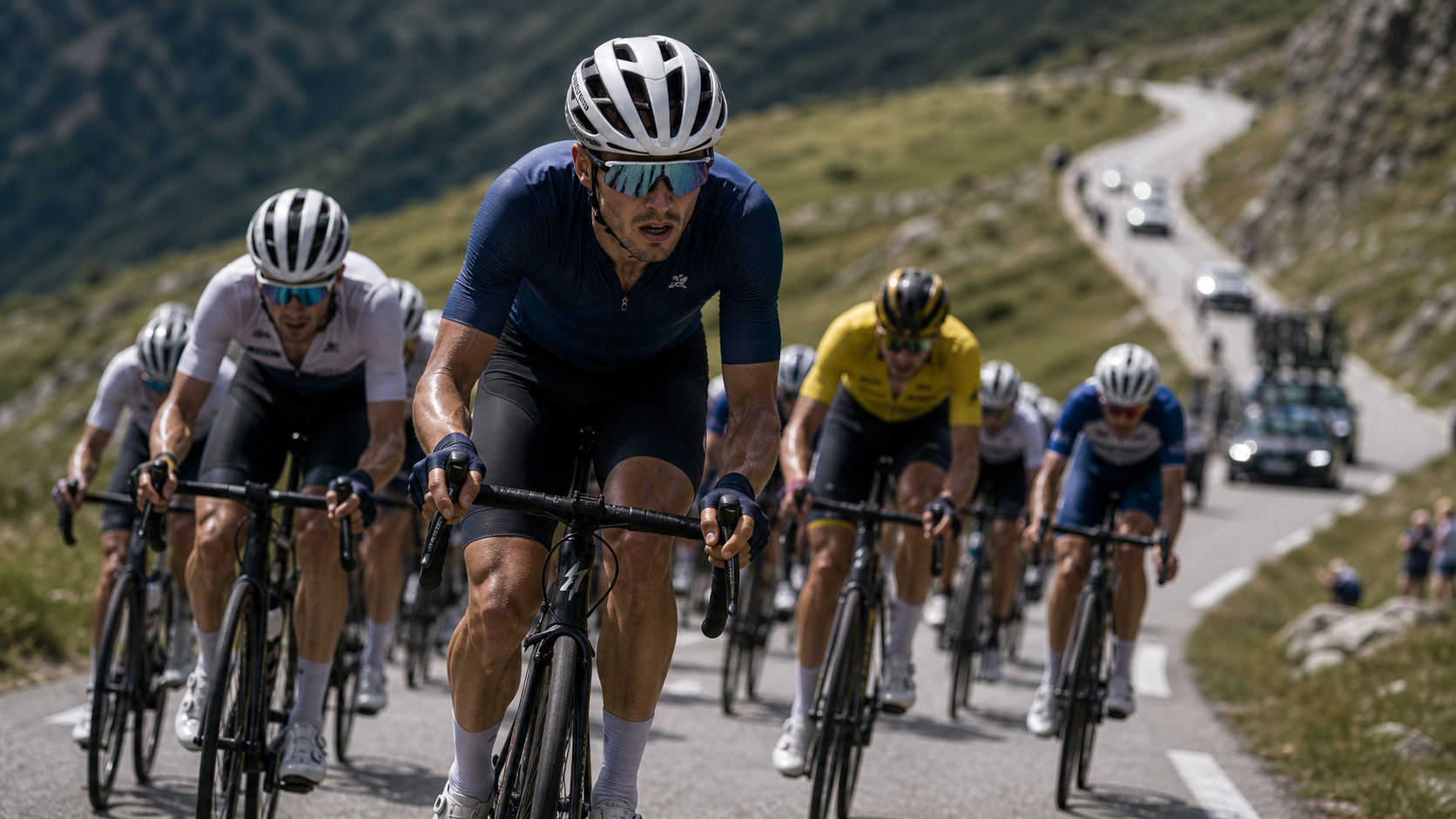
UCI WorldTour Points System Explained: How Pro Teams Qualify for Major Races
A professional cycling team’s core goal is not just winning races, but maintaining its position on the UCI (Union Cycliste Internationale) rankings—because points determine entry into the highest-tier events, shape sponsors’ willingness to invest, and can even decide a team’s survival. The UCI WorldTour points system (UCI World Ranking) is the central mechanism of modern road cycling; understanding it means understanding how the world of professional racing operates.
UCI Race Tier Structure
The UCI divides road races into multiple tiers, with points determined jointly by race tier and final placing:
| Race Tier | Representative Races | Maximum Points (Winner) |
|---|---|---|
| WorldTour (WT) | Tour de France, Giro d’Italia, Vuelta a España, Milan-San Remo | 800–1000 points |
| Pro Series (1.Pro) | Paris-Nice, Tour de Suisse | 400–600 points |
| Continental Circuit (2.1) | Tour de Taiwan, Tour of China | 100–200 points |
| National Championships | National road race champions | Varies by level |
Winners of the three Grand Tours (Tour de France, Giro d’Italia, Vuelta a España) earn the most points, attracting the world’s top riders and teams to concentrate their resources on preparing for them.
How Team Tiers and Points Interlock
The UCI classifies professional teams into three tiers:
- WorldTeam: The highest tier, comprising 18 teams, all of which automatically qualify for every WorldTour event. Licenses are re-reviewed every two years based on points; insufficient points can lead to relegation.
- ProTeam: The second-highest tier, which may apply for invitations to WorldTour events but holds no automatic qualification. They must rely on wild cards or organizer invitations.
- Continental Team: The lowest professional tier, mainly competing in UCI 2.x events, typically serving as a breeding ground for young riders.
How team points are calculated:
Team points are built on individual points, with a team’s total being the sum of its best-performing riders’ results. The specific rules are adjusted slightly each year, but the core principle remains: the more top results, the higher the points.
How Points Shape Team Strategy
The points system profoundly influences teams’ race selection and roster planning:
- Rider allocation: Top GC (General Classification) riders can earn the most points in the Grand Tours, so teams prioritize building their rosters around them
- Race calendar planning: A team’s season schedule must balance earning points against rider recovery—they cannot go all-out in every race
- Wild card pursuit: For a ProTeam to enter the Tour de France, it needs a strong showing on the previous year’s rankings, or must rely on the organizer’s favor
Recent wild card controversies:
Tour de France organizer ASO (Amaury Sport Organisation) reserves 2–4 wild card slots, and sometimes selects not the highest-ranked ProTeam but teams with greater name recognition or box-office appeal, sparking debates over fairness.
The Points Path for Asian Teams
Currently, no Asian team holds WorldTeam status, but several Asian squads are active at the ProTeam or Continental level:
- Cycling Team UKYO (Japan): Has had multiple Japanese riders earn points on European soil
- Team Sapura Cycling (Malaysia): One of Southeast Asia’s most active professional teams
- Team Illuminate / Korea-affiliated teams: Points primarily earned in Asian continental races
Taiwan currently has no fixed UCI professional-level team, but the cycling association continues to push riders to join professional teams in Asia or Europe, accumulating individual points and exposure.
Individual Rider Rankings and Transfer Value
Beyond team points, the UCI also maintains an individual world ranking (UCI Individual Ranking). Highly ranked riders enjoy the following advantages:
- Greater leverage in transfer negotiations, with salaries reaching millions of euros
- The ability to demand front-of-peloton protection in mountain stages, reducing crash risk
- Easier access to wild card slots and race invitations
- Increased brand endorsement and personal sponsorship opportunities
Conclusion
The UCI WorldTour points system is the invisible skeleton of the professional cycling world, determining every team’s survival and every rider’s market standing. For Taiwanese cycling fans, understanding this system lets you see more deeply into why certain teams choose specific races, or why a rider suddenly rises to fame or falls out of favor—everything on the racecourse is inseparable from points. The next time you watch a professional race, consider opening ProCyclingStats alongside it and cross-referencing the points changes—you’ll find the depth of professional racing goes far beyond what you might imagine.
Related Reading
- UCI WorldTour Points System Fully Explained: How Pro Teams Play the Ranking Game
- UCI WorldTour Points System and Pro Team Operations Fully Explained
- UCI WorldTour Points System Fully Explained: How Pro Riders Calculate Points and Tiers
- UCI WorldTour Explained: How the Tour de France, Giro d’Italia, and Vuelta a España Work
西進武嶺各路段 前8000名 大數據分析 配速攻略/功率/心律/推力比/維持率/踏頻/踏瓦比/牽車率 大公開 | 建大盃 NeverStop 可參考 | 公路車 | CT Yeh
5 年前
如何 搶 #中央山脈 報名 #公路車 #報名 #搶票
7 年前
2025 海鷗團體繞圈賽 / 前八強賽事精華!/ 環台賽等級拍攝 / 國手菁英隊伍較勁 / CT Yeh #公路車
8 個月前
城市繞圈賽 直擊! 日本 前橋市 Maemashi Criterium 2017
8 年前
昇陽SYB車隊 & Fuji 菁英選手們的趣味經驗分享,長知識了!市民車友必看~ 一路被拉爆後才給問 | 戀戀197 武嶺 凸台經驗分享 | 公路車 | CT Yeh
4 年前
#公路車 #西進武嶺 配速配瓦實驗 坡度分析 四小時內攻略 建大盃 NeverStop #西進武嶺攻略
6 年前
2022 前十五大自行車錶 !? 兩萬名車友大數據統計 | 你的上榜了嗎? | 菁英車友都用哪些錶? | Bryton Garmin 誰能拔得頭籌?| 車錶推薦 | 公路車 CT Yeh
4 年前
西進武嶺 8000名單車友數據分析 PART1 | 從新手到高手數量/瓦數/推力比/FTP推力比/功率計使用率 大解析 | 公路車 | CTYeh
5 年前