Primož Roglič Time Trial Technique Analysis: The Complete Evolution from Ski Jumper to Time Trial King
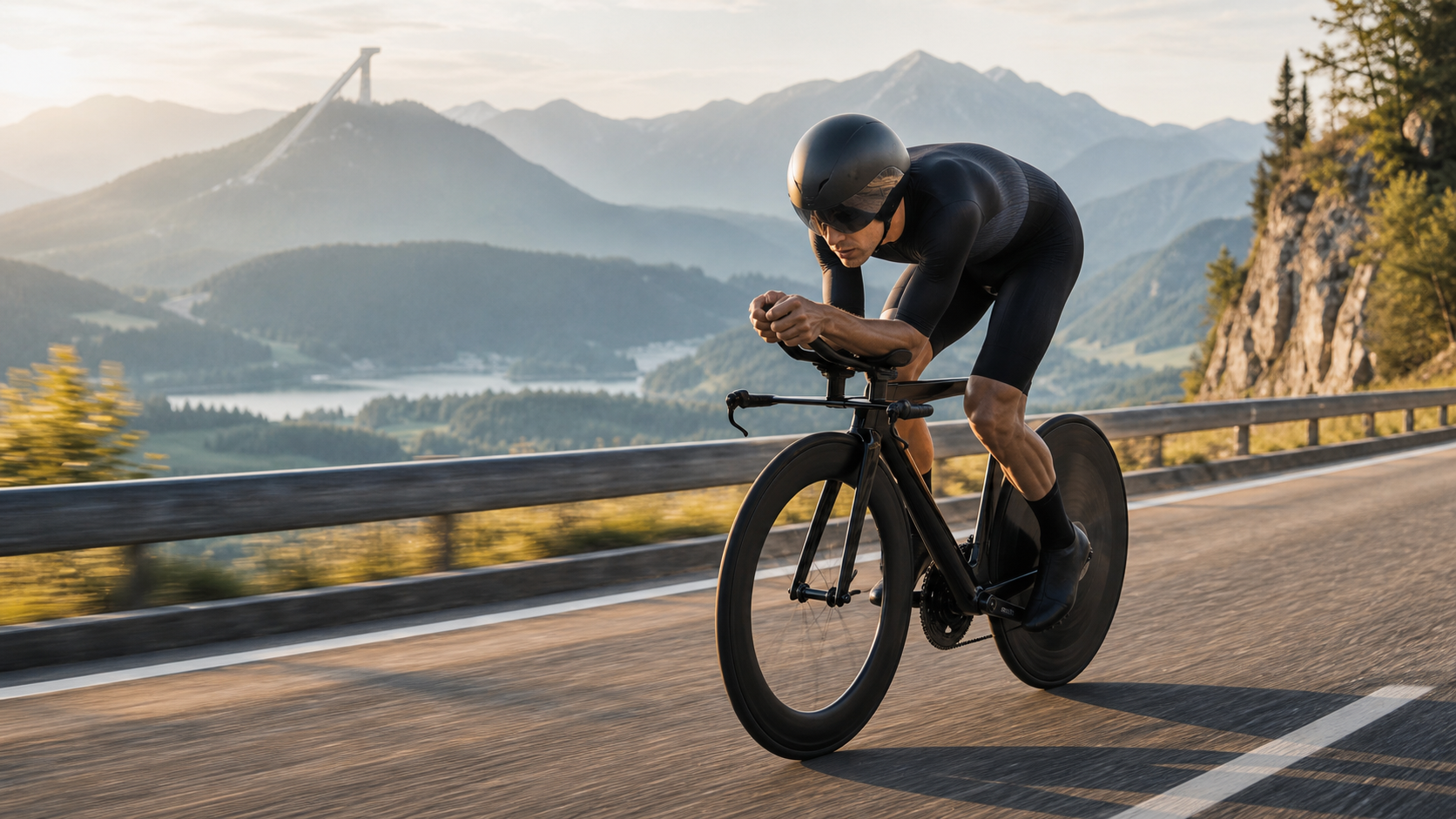
Primož Roglič Time Trial Technique Analysis: The Complete Evolution from Ski Jumper to Time Trial King
Road cycling history is full of “late-bloomer” stories, but no career transition is more dramatic than that of Primož Roglič. The Slovenian was a professional ski jumper until he formally began cycling training at age 22, and only joined a professional team at 26—in a world where professional cyclists typically debut at 18–19, he is a complete anomaly. Yet he has become one of the finest riders in the discipline that demands the most technical skill: the time trial (TT).
The Skill Transfer from Air to Road
Ski jumping contributed to Roglič’s road career in several unexpected ways:
- Body coordination: Ski jumping requires athletes to precisely control their aerodynamic position while in flight. This acute awareness of “body position in space” translates directly into TT riding posture control
- Mental toughness: Ski jumping is a high-risk sport, requiring athletes to remain calm under fear. Roglič’s psychological stability under pressure far exceeds that of most professional riders his age
- Strength foundation: Years of athletic training gave him solid core strength and lower-body explosive power, which translates into instantaneous power output in time trials
Time Trial Technique Analysis
Roglič’s time trial technique is widely regarded by the industry as world-class. Here are several key technical elements:
| Technical Element | Roglič’s Characteristics |
|---|---|
| Riding posture | Ultra-low position, forward center of gravity, reduced frontal wind area |
| Armrest angle | Narrow and low armrests, upper arms tucked in, chest nearly touching the armrests |
| Head position | Extremely small head-up angle, gaze nearly parallel to the ground, aerodynamically optimized |
| Cadence management | Dynamically adjusted by gradient; higher cadence on climbs, maintaining approximately 90–95 rpm on flats |
| Corner handling | Uses momentum from the preceding section to coast, minimizes braking, accelerates quickly after corners |
Roglič’s time trial power characteristics:
Professional time trials typically finish within 30–60 minutes (depending on distance). In 40–60 minute time trials, Roglič can sustain outputs above approximately 6.0 W/kg, placing him in the top 1% of riders worldwide.
TT Advantage at the Vuelta a España
The Vuelta traditionally schedules a long time trial in the final stage (usually 30–45 km), which is particularly favorable for Roglič. His time trial strength allows him to conserve slightly in the earlier mountain stages, then make up significant time in the TT to complete a comeback victory:
- 2019 Vuelta: Massive comeback in the final time trial, from behind to champion
- 2020 Vuelta: Steady race leader, further consolidating the advantage in the TT
- 2021 Vuelta: Three-peat, with the time trial still crucial
However, the same script did not work at the Tour de France—before the final time trial of the 2020 Tour, Roglič had built a lead of nearly one minute, but Pogačar overtook him in the final TT, creating the biggest comeback tragedy in Tour de France history.
Time Trial Preparation Details
The preparation work of elite time trialists is incredibly meticulous:
Equipment:
- Uses a dedicated TT bike with geometry completely different from a road bike, maximizing aerodynamic benefit
- Aero helmets can reduce the drag coefficient (CdA) by 2–5%
- Custom skinsuits with a tight fit and wind-tunnel-tested surface materials
- Disc rear wheel to reduce rim vortex drag
Testing:
- Pre-race wind tunnel testing of CdA values for different positions
- Collaborating with equipment engineers to optimize details (helmet strap clip position, bottle cage mounting angle)
- Practicing on the course to familiarize with corners and gradient changes
Inspiration for Taiwanese Time Trial Enthusiasts
In Taiwan’s IRONMAN triathlon events, aerodynamics in the cycling segment has gradually gained attention among age-group athletes. Here are several key takeaways from Roglič’s technique:
- Emphasize consistency in riding posture: Not just staying low on easy sections, but maintaining a compact position on climbs and when fatigued
- Start with core strength training: The low position requires strong core support; it is recommended to add core training weekly
- Time trial pacing strategy: Do not go all-out from the start; sustaining a steady output at 95–100% FTP is usually faster than a front-loaded surge
Conclusion
Roglič’s story tells us that great athletic achievements often come from cross-disciplinary skill transfer and extreme self-discipline. His time trial technique on the road is both an unexpected gift from his first-half-of-life ski jumping training and the result of relentless refinement in the second half. For Taiwanese time trial enthusiasts, he is not just an idol, but a living textbook on “how to make the body slice through wind resistance.”
Related Reading
- Tadej Pogačar Training Philosophy Analysis: The Slovenian Prodigy’s Aggressive Riding Style and Scientific Preparation
- The Limits of Aerodynamics: Analyzing the Differences Between Track and Road Time Trials
- The Complete Cycling Time Trial (TT) Race Preparation Guide: Position Wind Tunnel, Pacing Strategy, and Equipment Selection
- Optimizing Road Bike Time Trial (TT) Training: An Aerodynamic Study of Power Output Strategies
一個測試有沒有認真練車的方法😂 #公路車
10 個月前
崇越盃武嶺冠軍高手 賽前JJSC 群峰會精華!對應大數據分析,會有落差嗎?/ feat. JJSC中部公路車約騎 /公路車 / CT Yeh
2 年前
小野田真的存在!日本赤城山爬坡公路賽 台灣首發團完全實錄 | 頭文字D真實賽道! | 看完東奧自行車賽後好想再去騎一次啊! | 公路車 | CT Yeh
4 年前
滑雪新手們慘摔學習全紀錄(請開字幕),滑雪好好玩 | Snowboard + Ski | 岩原 スキー場 | 滑雪APP使用 | GoPro Max
6 年前
下次拍照前要查清楚啦🤣 #cycling
7 個月前
換車囉! TIME ADH 2023 全內線碟煞公路車 開箱實錄!/ Dyneema 碳纖維真的太猛了 / 曜越單車 / CT Yeh
3 年前
日本公路最高登山賽,台灣首位YT挑戰實錄,乘鞍登山賽40週年,賽前篇完整版,請到我的YT收看 #公路車 #cycling
11 個月前
西進武嶺 免費訓練分析服務 Intervals | 練不夠還是練過頭?你哪一種類型選手?AI模型告訴你! | 備戰神器 | 公路車 訓練 | CT Yeh
4 年前