One-Day Races vs. Stage Races: How Pro Cyclists Manage Fitness Strategies for Grand Tours and Spring Classics
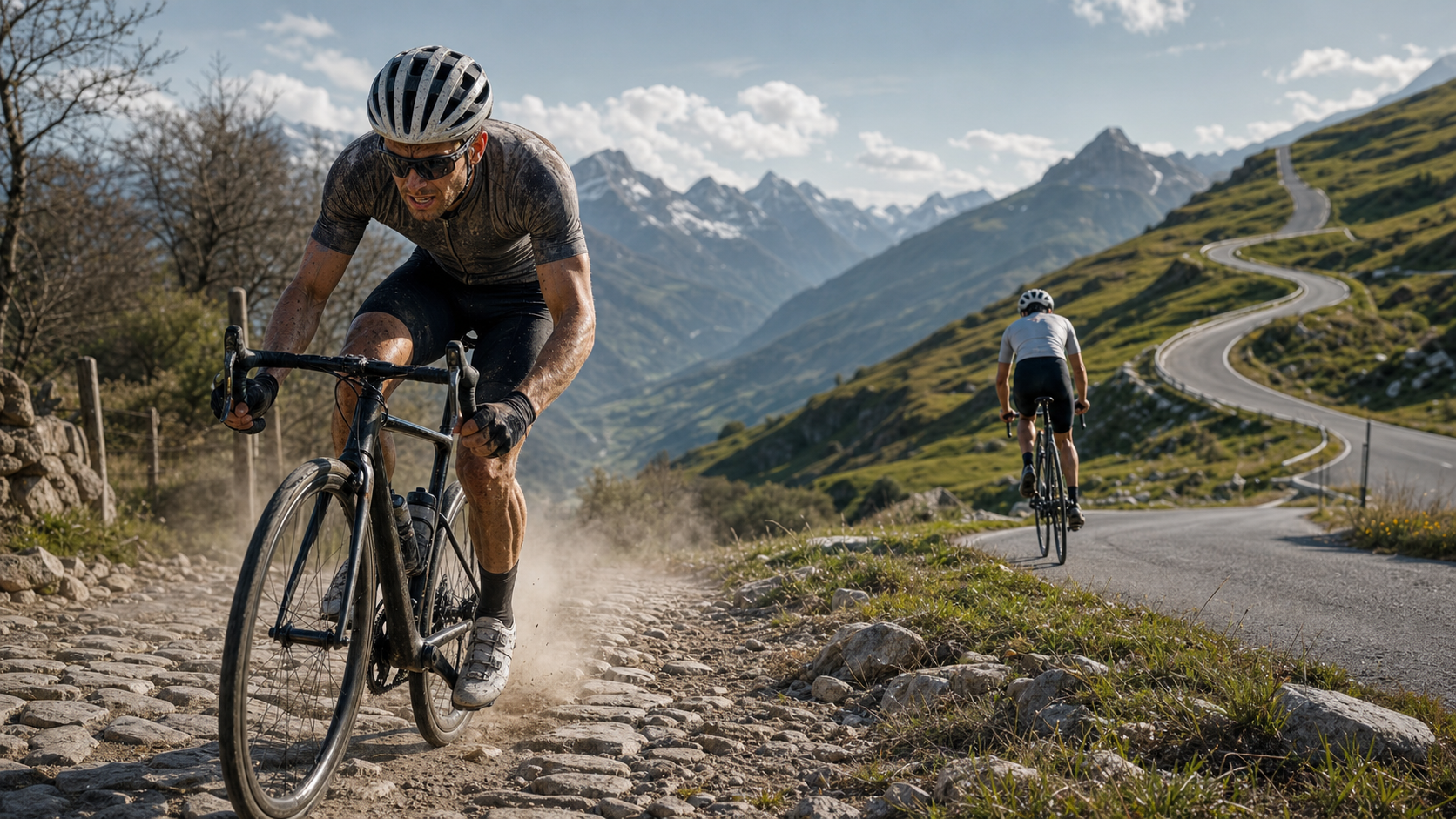
One-Day Races vs. Multi-Day Races: How Pro Cyclists Allocate Fitness Strategies for Grand Tours and Spring Classics
In the world of professional cycling, riders must often make a fundamental choice: are you a king of one-day races, or a ruler of multi-day stage races? This is not merely a matter of preference; it involves comprehensive differences in physique, training methods, race scheduling, and career strategy. While Tadej Pogačar has attempted to balance both paths in recent years, most riders clearly define their primary battlefield throughout their careers.
The Fundamental Differences Between Race Formats
| Race Format | Representative Races | Duration | Primary Requirements |
|---|---|---|---|
| One-Day Races (Classics) | Milan-San Remo, Paris-Roubaix, Strade Bianche | 4–8 hours | Peak explosive power and endurance |
| Multi-Day (Short) | Paris-Nice, Tour de Suisse | 5–8 days | Recovery capacity, GC pacing, climbing |
| Multi-Day (Long, Grand Tours) | Tour de France, Giro d’Italia, Vuelta a España | 21 days | Ultra-endurance, recovery, mental resilience |
Characteristics of One-Day Races:
One-day races (especially the Spring Classics) are typically held in March and April, featuring diverse terrain (asphalt, cobblestones, gravel) and dynamic tactics. The most critical abilities are:
- Repeated sprinting (exploding immediately after multiple short, steep climbs)
- Instant acceleration to follow attacks
- Recovery speed after high-intensity efforts (the need to reach a peak again within 24 hours)
Characteristics of Multi-Day Races (Grand Tours):
Grand Tours test a rider’s “sustainability” under high intensity:
- 21 consecutive days of competition with over 50,000 meters of cumulative elevation gain
- The necessity to recover within hours after each stage (massage, nutrition, sleep)
- Mental resilience: finding the motivation to start despite bad weather, crashes, or illness
The Decisive Influence of Physique
A professional cyclist’s physique often determines which race format they are better suited for:
One-Day Race Specialists (Especially Northern Classics):
- Heavier body weight (70–80 kg) with well-developed upper body muscles
- Need to maintain balance and control on cobblestone surfaces
- Representative riders: Mathieu van der Poel (77 kg), Wout van Aert (78 kg)
Grand Tour GC Contenders:
- Lighter body weight (60–68 kg), aiming to maximize W/kg
- Slender, long bone structure to reduce the gravitational burden during climbs
- Representative riders: Vingegaard (60 kg), Pogačar (66 kg)
The Logic of Annual Race Planning
Professional cyclists typically compete for 70–90 days a year, with the remaining time dedicated to training or recovery. Race scheduling requires precise balance:
Typical Annual Plan for a GC Rider:
- January–February: Winter base training, low-intensity long-distance rides
- March–April: Test races (Paris-Nice, Volta a Catalunya) to confirm form
- May–June: Primary events (Giro d’Italia or Spring Classics)
- July: Tour de France (the most important goal of the year)
- August–September: Deciding whether to participate in the Vuelta or take a break based on fitness
- October–November: Recovery + Autumn test races
- December: Pure rest, allowing bones and joints to recover
Typical Annual Plan for a One-Day Specialist:
The Spring Classics in March and April serve as the absolute peak, with form adjusted around races like Paris-Roubaix and the Tour of Flanders, while other months are secondary.
Pogačar: An Attempt to Break Boundaries
In 2024, Pogačar accomplished a staggering feat: he won Strade Bianche (a gravel classic) in March, Milan-San Remo (the world’s longest classic) in April, then secured the Giro d’Italia title with overwhelming dominance in May, followed by an excellent performance in the Tour de France in July. This “year-round dominator” model breaks traditional labor-division logic, but it also leaves a question: is this level of overload sustainable?
Professional sports scientists generally believe that this model of going all-out year-round places immense physiological strain on a rider and could potentially affect the total length of their career. In the short term, however, Pogačar has supported this feat through raw talent and a scientific recovery system.
Insights for Amateur Cyclists in Taiwan
The logic behind professional race planning also holds value for amateur cyclists in Taiwan:
- Select your most important goal of the year: Is it the Wuling KOM Challenge? The fastest climbing challenge in Taiwan? Or a marathon road race at the end of the year?
- Arrange intensity around your goal: Gradually increase intensity 8–12 weeks before the race, and taper for the final 2 weeks.
- Do not go all-out on every ride: Learn to “distinguish between training days and recovery days” to ensure long-term progress.
Conclusion
One-day races and multi-day races represent two aesthetics of road cycling—the former is an explosive display like fireworks, while the latter is a long, epic narrative. Regardless of which you prefer, the precise calculations professional riders use in their scheduling remind us that top-tier achievements are never random; they are the inevitable result of systematic planning.
Related Reading
- A Complete Analysis of Tactical Differences Between One-Day Classics and Multi-Day Races
- Fitness Allocation and Recovery Techniques for Multi-Day Races
- Multi-Day Race Recovery Guide: Optimal Recovery Strategies Between Stages
- Nutrition Management for Multi-Day Stage Races: The Dietary Recovery Cycle for Consecutive Days of Racing
JJSC南台灣單車走春三日行 DAY 1 / 強度 x 美食 x 節慶體驗 / 公路車 CT Yeh
5 個月前
一日北高/長距離團騎 常見問題補充篇 / 組團或跟團的眉角 / 壯車友容易被瘦車友慢性拉爆 / 原來屁股痛可能是這個原因...? / 風場配速法 / 公路車 / CT Yeh
2 年前
一日北高前的西濱集訓 | 跟著11小時軍團 | 300W踩不動的大逆風 | 輪車破風差幾瓦?
6 年前
一日北高常見問題大集合 | 攻略 | 路線 | 訓練 | 補給 | 自行車 單車 | 一日雙城 | 雙塔 | TWB北高360 | 屁股痛
6 年前
崇越盃武嶺冠軍高手 賽前JJSC 群峰會精華!對應大數據分析,會有落差嗎?/ feat. JJSC中部公路車約騎 /公路車 / CT Yeh
2 年前
2019 夏季KOM 5小 完賽心得 準備攻略 東進武嶺 夏季登山王之路 Taiwan KOM Challenge
7 年前
一日北高 11小時 賽後心得分享篇 | TWB北高360 | 一日雙城 | 單車 | 公路車
6 年前
Live) 備戰2019彰化經典百K 賽前攻略 (已完賽請看新影片
7 年前