The Complete Guide to Runner's Knee (Iliotibial Band Syndrome): Causes, Diagnosis, Treatment, and Prevention
Introduction
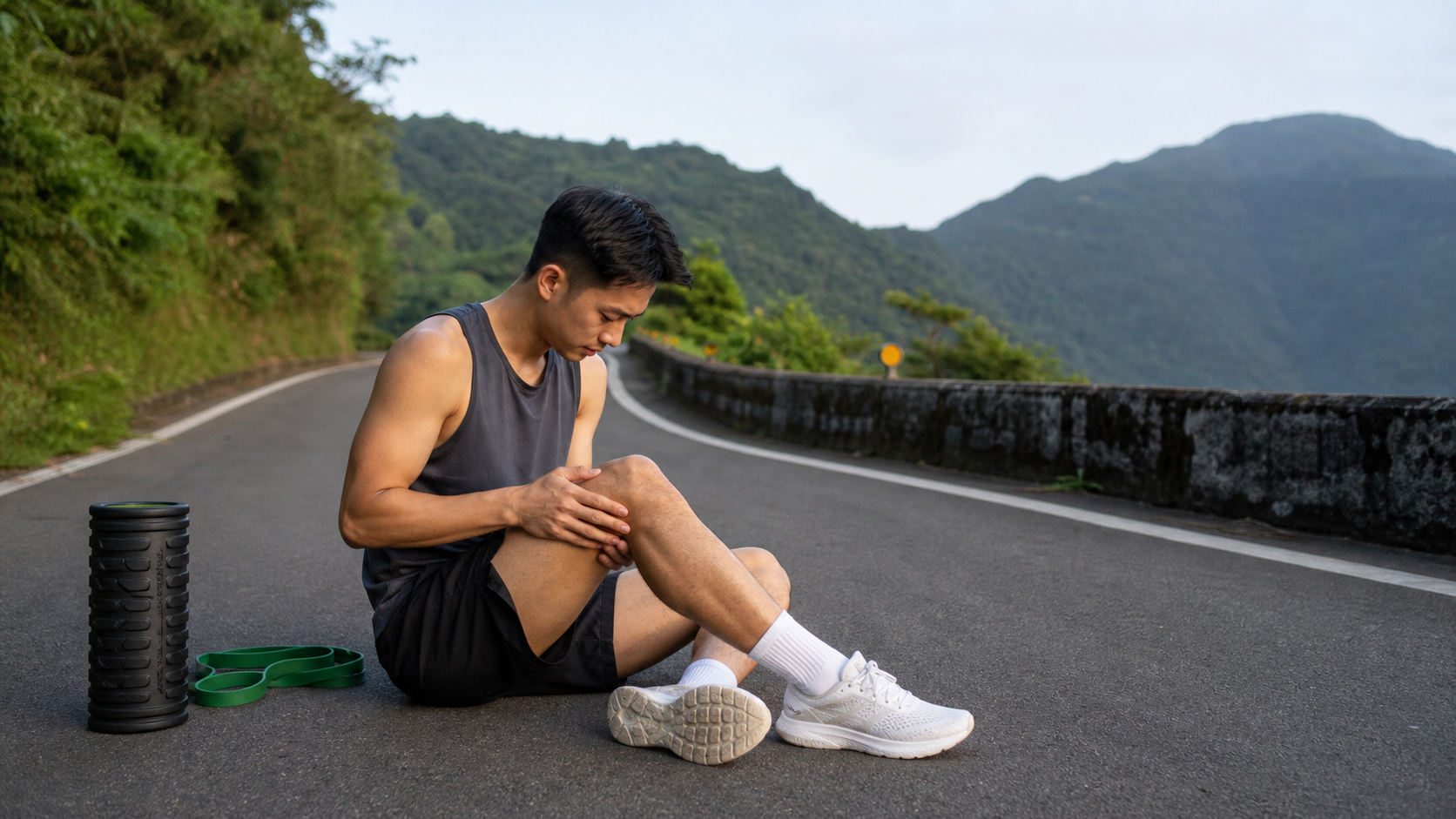
Every marathon season, sports medicine clinics across Taiwan’s major hospitals see a wave of similar patients: a nagging pain on the outside of the knee that becomes nearly unbearable after running 30 kilometers. This is what’s commonly known as “runner’s knee”—Iliotibial Band Syndrome (ITBS)—the most prevalent knee injury among road runners, accounting for approximately 12–15% of all running injuries.
This article will explore the condition from an anatomical and biomechanical perspective to help Taiwanese runners understand this frustrating injury, and provide a complete recovery plan that can be implemented within Taiwan’s healthcare system.
What Is the Iliotibial Band? What’s Happening?
The iliotibial (IT) band is a thick fibrous band extending from the ilium of the pelvis to the lateral tibia. When it passes over the lateral femoral condyle (the bony prominence on the outside of the knee), repeated friction can trigger inflammation. Previously thought to be “friction inflammation,” recent research leans more toward the “compression theory”—the IT band compresses the underlying tissue at around 30 degrees of knee flexion, and accumulated micro-damage leads to pain.
Analysis of Common Causes
- Sudden increase in training volume: Exceeding the 10% weekly mileage increase rule, most common during pre-race preparation periods
- Excessive downhill running: Heavy downhill training before mountain races such as Yangmingshan, Wulai, and Smangus
- Gluteus medius weakness: Pelvic drop during single-leg support (Trendelenburg sign), causing the knee to cave inward and increasing IT band tension
- Footwear issues: Worn-out or inadequately cushioned running shoes
- Overstriding: Foot landing ahead of the center of gravity, placing greater braking forces on the knee
Pain Characteristics Table
| Characteristic | Description |
|---|---|
| Location | Lateral knee, near the lateral femoral condyle |
| Onset | Mid-to-late stages of a run (often after 5–10 km) |
| Nature | Burning sensation, stinging pain |
| Response to rest | Resolves quickly after stopping the run |
| Stair test | Pain is noticeable when descending stairs |
Diagnosis: How to Confirm ITBS?
Self-Assessment
Ober’s Test: Lie on your side with the affected leg on top, and slowly let the upper leg lower toward the bed. If it cannot lower to below horizontal, the IT band is tight.
Noble Compression Test: Lie on your back with the knee bent at 30 degrees. Apply pressure approximately 2 cm above the lateral femoral condyle. If pain is significant, ITBS is highly suspected.
Medical Consultation Recommendations in Taiwan
If you suspect ITBS after self-assessment, it’s recommended to seek confirmation from the following resources:
- Sports Medicine Clinics: National Taiwan University Hospital, Linkou Chang Gung Memorial Hospital, Taipei Veterans General Hospital, and Kaohsiung Medical University Chung-Ho Memorial Hospital all have sports medicine departments
- Ultrasound Examination: Can immediately assess IT band thickness and surrounding bursa inflammation; costs approximately NT$500–1,500 (some require out-of-pocket payment)
- MRI: To rule out other pathologies (such as meniscal tears, lateral collateral ligament injuries); National Health Insurance coverage requires meeting specific criteria
Treatment and Recovery: 6-Week Progressive Plan
Weeks 1–2: Acute Phase Management
- Stop running that causes pain
- Ice 2–3 times daily (15–20 minutes each)
- Take NSAIDs (such as ibuprofen) short-term as prescribed by a physician
- Maintain low-impact aerobic exercise: swimming, cycling (knee flexion beyond 30 degrees is actually safe)
Weeks 3–4: Functional Recovery
- Gluteus medius strengthening: side-lying leg raises, clamshells, resistance band lateral walks, 3 sets × 15 reps daily
- IT band stretching: standing crossover lateral bend, 30 seconds × 3 reps each
- Attempt short-distance running (2–3 km); continue if pain-free
Weeks 5–6: Return to Running
- Gradually resume mileage, increasing no more than 10% from the previous week
- Shorten stride length by 5–10% (use a metronome to maintain 170–180 steps/min)
- Incorporate single-leg squats to assess gluteal control
Prevention Strategies: Long-Term Prevention of Recurrence
- Gluteal training twice weekly: Squats, Romanian deadlifts, lateral band walks
- Regular shoe replacement: Replace running shoes every 500–800 km; don’t judge by appearance alone
- Hill management: Keep downhill running to no more than 15% of total training volume
- Foam rolling: Roll the lateral thigh for 60–90 seconds each session; avoid pressing directly on the most painful point
Conclusion
Iliotibial band syndrome is certainly frustrating, but as long as you identify the root cause—typically gluteal weakness combined with overly rapid increases in training volume—and patiently follow a 6-week progressive plan, the vast majority of runners can fully recover. Taiwan has excellent sports medicine resources, so it’s advised not to “push through the pain and keep running.” Seek an early diagnosis so you can make a strong comeback next season.
Related Reading
- Iliotibial Band Syndrome (IT Band): Complete Prevention and Rehabilitation Guide
- Runner’s Knee (Iliotibial Band Syndrome): Complete Guide to Causes, Preventive Training, and Taping Techniques
- Iliotibial Band Syndrome Complete Guide: A Full Home Rehabilitation Record for Lateral Knee Pain in Runners
- Iliotibial Band Syndrome (ITBS): A Complete Management Manual for Lateral Knee Pain in Runners
一日北高常見問題大集合 | 攻略 | 路線 | 訓練 | 補給 | 自行車 單車 | 一日雙城 | 雙塔 | TWB北高360 | 屁股痛
6 年前
一日北高/長距離團騎 常見問題補充篇 / 組團或跟團的眉角 / 壯車友容易被瘦車友慢性拉爆 / 原來屁股痛可能是這個原因...? / 風場配速法 / 公路車 / CT Yeh
2 年前
iPhone內建一秒變長腿🤣 車友必備#cycling
2 年前
摔車後補裝備: 好市多新款單車安全帽& Specialized Romin 北高整路屁股都不痛的坐墊 | 一千元居然有MIPS | CT Yeh | 公路車
4 年前
Never Stop 西進武嶺 前後雙機 完整全程錄影 訓練台 實境
8 年前
單車 一日北高 ( 雙城 ) 肥宅雙人瘋狂行 紀錄片 REACTO
10 年前
西進武嶺 免費訓練分析服務 Intervals | 練不夠還是練過頭?你哪一種類型選手?AI模型告訴你! | 備戰神器 | 公路車 訓練 | CT Yeh
4 年前
大禹嶺 到 武嶺牌樓 全程前後實況錄影 | 北進武嶺 | 東進武嶺 | KOM | 訓練台 | 坡度分析 | Taiwan KOM Last 10 km HARD | 公路車
6 年前