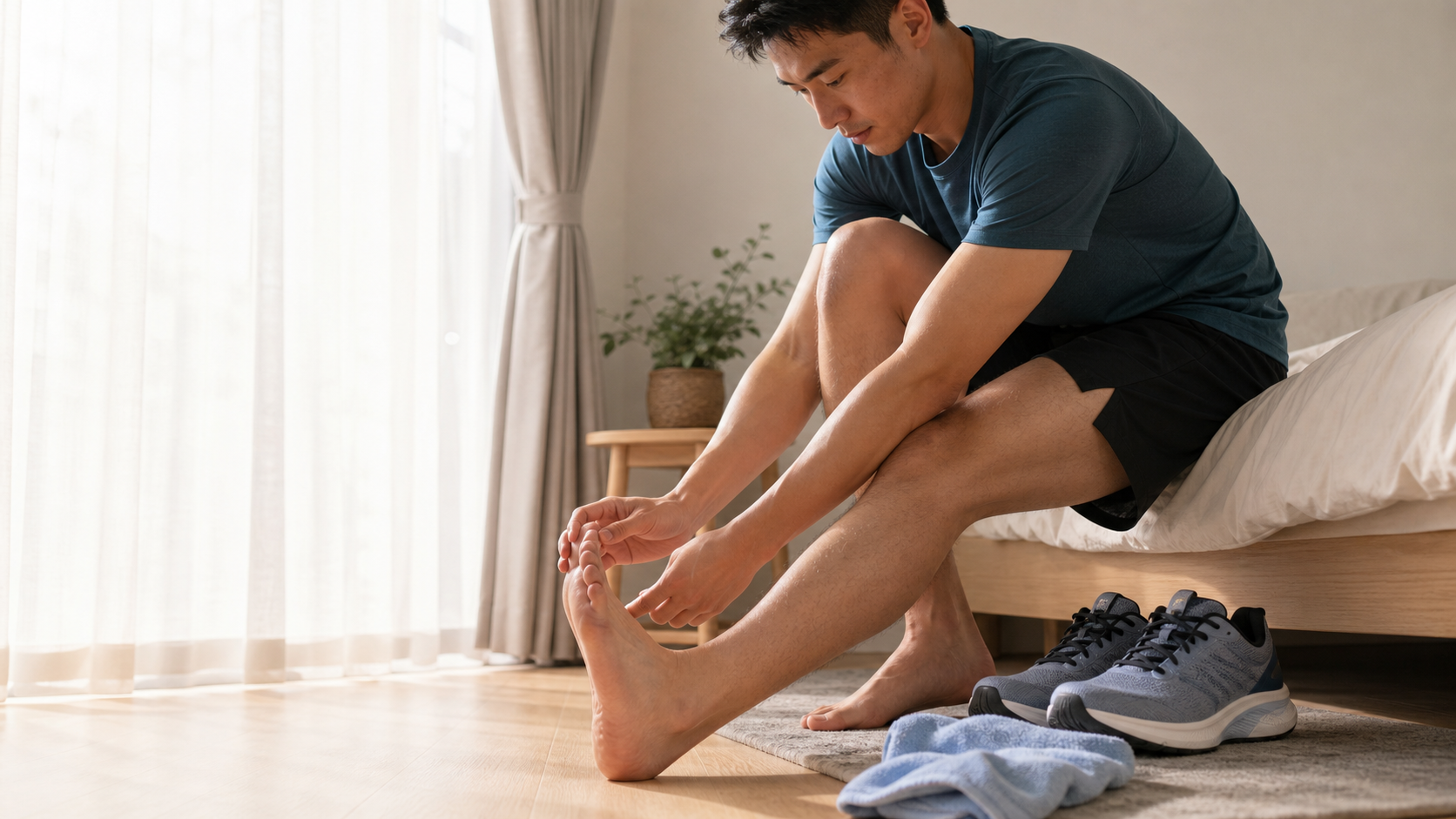
Introduction
“That stabbing pain in the heel when stepping on the ground in the morning” — this is almost the universal description from every patient with plantar fasciitis. According to data from the Taiwan Orthopaedic Association, plantar fasciitis accounts for 11–15% of all running injuries, making it the second most common injury among road runners, second only to iliotibial band syndrome.
The good news is: over 90% of plantar fasciitis patients can fully recover through conservative treatment, usually without the need for surgery. This article provides a complete 8-week plan that Taiwanese runners can implement on their own.
What Is Plantar Fasciitis?
The plantar fascia is a thick band of fibrous tissue extending from the heel bone to the five toes, responsible for maintaining the arch of the foot and absorbing impact during running. When this fascia is repeatedly stretched, developing micro-tears and triggering local inflammation, plantar fasciitis develops.
Typical Symptoms
- Morning heel pain (most painful in the first few steps after getting up, slightly relieved after walking around)
- Pain returns when standing up after prolonged sitting
- Pain worsens after long-distance running
- A distinct tender point when pressing on the medial side of the heel bone with fingers
Risk Factors
| Factor | Description |
|---|---|
| Arch problems | Those with flat feet or high arches are at higher risk |
| Tight calves | Tight gastrocnemius and soleus muscles increase fascial tension |
| Overweight | Risk increases significantly for those with BMI > 25 |
| Barefoot walking | Walking barefoot on tile floors at home in Taiwan is a common trigger |
| Sudden mileage increase | Most common during race preparation when mileage spikes abruptly |
| Worn-out shoes | Cushioning drops significantly in shoes with over 800 km of use |
8-Week Conservative Treatment Plan
Weeks 1–2: Acute Phase Management
Daily adjustments:
- Before getting out of bed in the morning, perform plantar fascia stretches in bed for 2 minutes
- Wear slippers with arch support at home (Birkenstock or styles with arch pads recommended), avoid walking barefoot on tile floors
- If your job requires prolonged standing, take a 5-minute break every 45 minutes
Stretching exercises (3 times daily):
- Toe dorsiflexion stretch: While seated, pull the toes toward the shin with your hand, hold for 30 seconds, repeat 3 times
- Towel stretch: Sitting on the edge of the bed, loop a towel around the ball of the foot and pull upward, hold for 30 seconds
- Calf stretch: Facing a wall in a lunge position, keep the rear heel on the ground, stretch the gastrocnemius, 30 seconds × 3 sets each
Cold and heat application: During the acute phase (inflammation with redness and swelling), prioritize ice application, 15 minutes per session.
Weeks 3–4: Tissue Strengthening Initiation
- Towel toe curls: Repeatedly scrunch a towel on the floor with your toes, 3 minutes per session
- Calf raise exercises (eccentric strengthening): Rise up on both toes, then lower slowly on one foot, 3 sets × 15 reps each
- Short Foot Exercise: Without curling the toes, attempt to shorten the sole of the foot and maintain the arch, 10 seconds × 10 reps each
Weeks 5–6: Functional Recovery
- Resume short, easy runs (3–5 km, pace slowed by 90 seconds per kilometer)
- Add single-leg balance training (single-leg stance with eyes closed for 30 seconds)
- Consider getting custom orthotics: Orthopedic or rehabilitation departments at major hospitals in Taiwan can refer you to a prosthetist-orthotist for fabrication
Weeks 7–8: Return to Running and Long-Term Management
- Increase weekly mileage by no more than 10%
- Continue daily morning stretching as a long-term habit
- Evaluate replacing running shoes: Foot type analysis is available at specialty running stores in Xinyi District, Taipei, or in major cities
Medical Consultation Recommendations in Taiwan
If there is no significant improvement after 4 weeks of self-treatment, it is recommended to seek medical care:
- Rehabilitation Medicine: Extracorporeal shock wave therapy (ESWT) is partially covered by National Health Insurance and is highly effective for chronic plantar fasciitis
- Orthopedics: X-rays to rule out heel spurs (a spur itself is not necessarily the cause of pain)
- Physical Therapists: Provide personalized movement assessment and correction
Practical Tips: Lifestyle Adjustments in Taiwan
- Wear a plantar fascia night splint while sleeping (available at Taiwanese pharmacies such as Dahu and Watsons)
- For those with jobs requiring prolonged standing, add gel heel pads to your shoes (available on Shopee and Momo, approximately NT$200–500)
- During race preparation, schedule swimming or cycling the day after long runs as active recovery to reduce repetitive impact
Conclusion
The key to plantar fasciitis lies in “patience and consistency.” The 8-week plan may seem lengthy, but if followed strictly, most runners will notice significant improvement by week 6. Taiwan has a well-established rehabilitation medical system — there is no need to run through the pain. Resting and treating wisely is the fastest way back to the racecourse.
Related Reading
- Prevention and Treatment of Plantar Fasciitis: A Complete Analysis of Foot Pain in Runners
- The Complete Guide to Plantar Fasciitis: Treatment Strategies and Training Adjustments for the Most Common Foot Injury in Runners
- Cause Analysis of Plantar Fasciitis and a Runner’s Recovery Plan
- The Complete Treatment Pathway for Plantar Fasciitis: From the First Morning Step to Returning to the Marathon
一日北高常見問題大集合 | 攻略 | 路線 | 訓練 | 補給 | 自行車 單車 | 一日雙城 | 雙塔 | TWB北高360 | 屁股痛
6 年前
Never Stop 西進武嶺 前後雙機 完整全程錄影 訓練台 實境
8 年前
單車 一日北高 ( 雙城 ) 肥宅雙人瘋狂行 紀錄片 REACTO
10 年前
一日北高/長距離團騎 常見問題補充篇 / 組團或跟團的眉角 / 壯車友容易被瘦車友慢性拉爆 / 原來屁股痛可能是這個原因...? / 風場配速法 / 公路車 / CT Yeh
2 年前
CT 喇低賽) 武嶺牽車 才是王道 西進牽車四小時內秘訣 攝手位置 如何判斷 防抽筋小秘訣
7 年前
摔車後補裝備: 好市多新款單車安全帽& Specialized Romin 北高整路屁股都不痛的坐墊 | 一千元居然有MIPS | CT Yeh | 公路車
4 年前
一起升級!海鷗盃LSD團練...JJSC Zone2招待 騎到手抖 / 公路車 / CT Yeh
2 天前
[教學] Premiere 影片 手震 修正 教學 防抖 單眼 影像 GoPro 穩定 Video Stabilization
8 年前