Underwater Dolphin Kick Distance After Starting in Water: Rule Limits and Optimization Strategies
Introduction
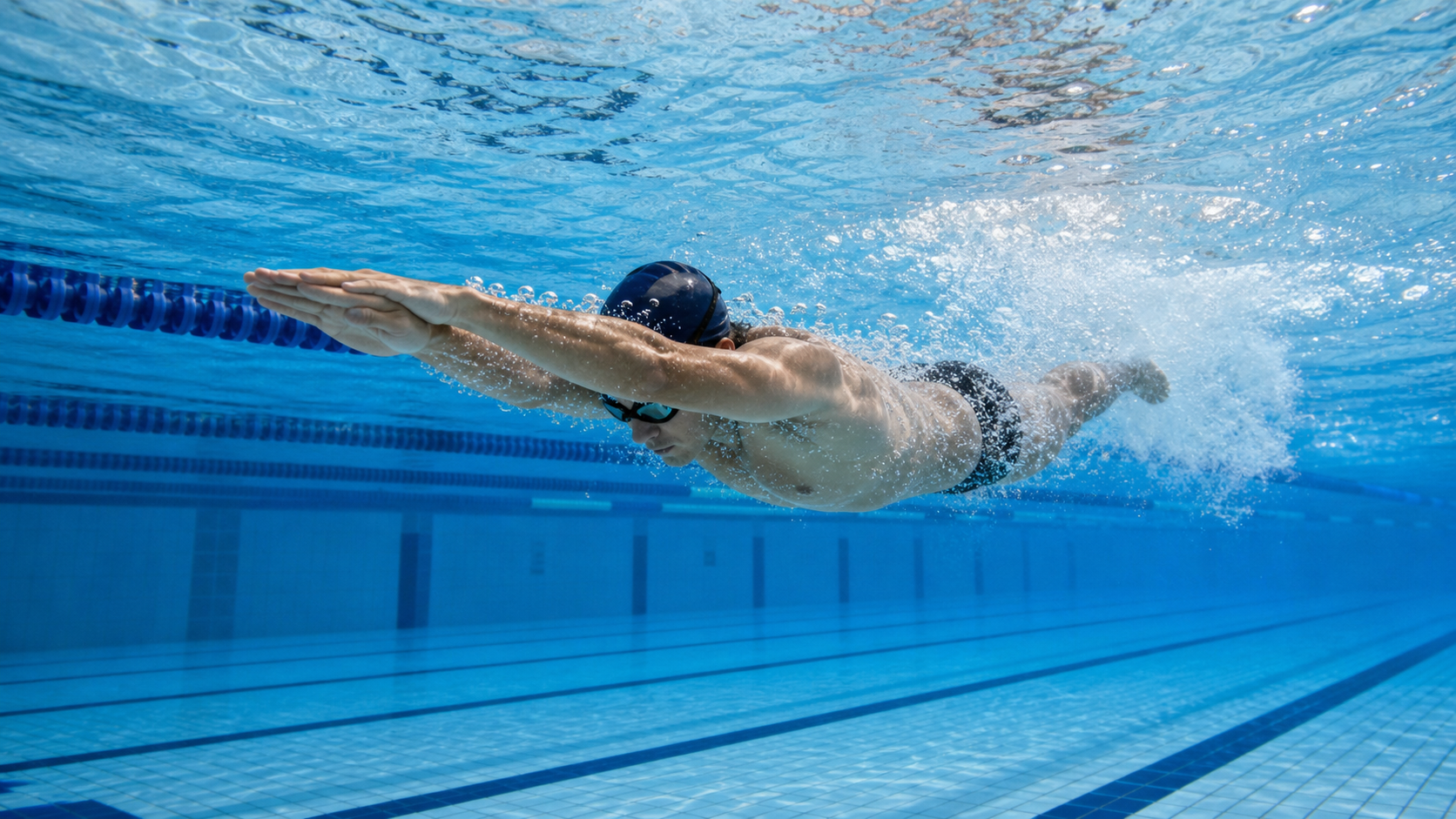
The underwater dolphin kick is known as “the fifth stroke” in swimming. During the underwater phase after starts and turns, a skilled dolphin kick allows swimmers to maintain speeds faster than surface swimming. However, rules limit the underwater distance, and maximizing underwater efficiency within the rule framework is a topic every competitive swimmer must study in depth. Whether it’s the 100m events at the Taiwan National Swimming Championships or the open-water start of the triathlon swim leg, understanding underwater dolphin kick strategies can provide a significant competitive advantage.
FINA (World Aquatics) Rule Limits
Underwater Distance Regulations by Stroke
| Stroke | Underwater Distance Limit | Applicable Situations |
|---|---|---|
| Freestyle | 15 meters | After the start and each turn |
| Backstroke | 15 meters | After the start (on the back) and each turn |
| Butterfly | 15 meters | After the start and each turn |
| Breaststroke | One dolphin kick only | After the start and turns, only once |
Important rule details:
- “15 meters” means the swimmer’s head must break the surface before the 15m mark
- A violation results in disqualification (DQ), regardless of how good the time is
- There is a 15m underwater opportunity after the start and after each turn
Why Swim the Full 15 Meters?
Research shows that elite swimmers reach speeds of approximately 2.2–2.5 m/s during the underwater phase between 12–15 meters, while average surface freestyle speed is about 1.9–2.1 m/s. In other words, the underwater dolphin kick is about 10–15% faster than surface swimming, and every start or turn should take full advantage of this speed benefit.
Factors Affecting the Optimal Underwater Distance
Individual Dolphin Kick Ability
Dolphin kick efficiency varies greatly among swimmers. Methods to determine your own optimal underwater distance:
- Test surfacing timing: In training, test different underwater distances (10m, 12m, 15m) followed by surface swimming to compare overall speed
- Effective tempo: If your dolphin kick tempo drops noticeably after 12m, it indicates insufficient muscular strength to maintain 15m
- Aerobic capacity impact: In longer events (200m, 400m), an excessively long underwater phase depletes more anaerobic reserves, affecting the latter part of the race
Differences Between Start Underwater and Turn Underwater
The underwater dolphin kick strategy differs slightly between starts and turns:
- After the start: The entry angle is steeper, initial speed is faster, and the dolphin kick begins approximately 0.3–0.5 seconds later (waiting for speed to drop into the optimal dolphin kick range)
- After the turn: The wall push-off force is directly converted into propulsion, so the dolphin kick should begin immediately after completing the push-off
Methods to Strengthen the Underwater Dolphin Kick in Training
To maintain an efficient 15m underwater dolphin kick in competition, targeted training is required:
- Underwater dolphin kick interval training: Each session, perform 8–10 reps × 15m maximal underwater dolphin kicks (starting with a wall push-off), with 30 seconds rest between reps
- Goggle visual confirmation: During training, watch the 15m mark line on the pool bottom to confirm your surfacing timing
- Fin training: Use a monofin to practice dolphin kick rhythm and body wave, then remove the fin to compare the feel
- Turn connection training: Don’t practice the dolphin kick in isolation; instead, practice the full “push-off → dolphin kick → surface → stroke” connection for smoothness
Common Problems and Corrections for Taiwanese Swimmers
Common underwater dolphin kick issues observed at swimming events in Taiwan:
- Body position not straight: Excessive hip folding during the underwater dolphin kick increases drag. Correction: Tighten the core and maintain a torpedo-like streamlined body position
- Arms not locked together: Hands not fully stacked in front of the head, increasing drag. Correction: Stack the hands and lock the thumbs together
- Kick amplitude too large: Chasing power leads to a kick amplitude exceeding 40cm, which actually increases drag. Correction: A smaller, faster-tempo dolphin kick is more efficient
- Surfacing too early: Breaking the surface at 10–12m wastes valuable underwater speed advantages
Decision-Making Framework in Competition
In actual races, swimmers should adjust their strategy based on race distance:
- 50m freestyle: Aim for 15m on every start, kick at full effort, with little need to consider energy expenditure
- 100m freestyle: Aim for 12–15m after the start and each turn, slightly controlling effort to sustain the latter part
- 200m and above: 12–15m after the start, 10–12m after turns, preserving aerobic energy
Practical Recommendations
- Measure your actual underwater distance: In training, have a teammate or coach stand at poolside and record where you actually surface
- Weekly specialized training: Schedule at least 1–2 training sessions per week focused on the underwater dolphin kick
- Review immediately after races: If the race is recorded, review the underwater segment of each turn to confirm whether you reached your target distance
- Respect the rule limit: If unsure of the distance, surface at 13–14m rather than risk disqualification
- Breath control training: Practice breath-holding for the underwater dolphin kick, doing 4×25m underwater swims without breathing each week to improve breath-holding capacity
Conclusion
The underwater dolphin kick is one of the most worthwhile technical skills to invest in for competitive swimming. The rules give every swimmer a 15m window of speed advantage, and how well you utilize those 15m is often the difference between gold and bronze at the Taiwan National Championships. Systematically training the underwater dolphin kick, combined with proper breath control and body position, will give you a speed foundation that surpasses your opponents every time you enter the water.
Related Reading
- Underwater Dolphin Kick: The Speed Advantage Within the 15m Rule
- The Hidden Speed of Swimming Turns and Starts: Why the Underwater Dolphin Kick Is the Fastest Phase of the Entire Race
- Underwater Dolphin Kick: Don’t Waste the Fastest Position
- Butterfly Race Preparation: 50m Butterfly Sprint and 100m Pacing Strategies