Maintaining Technique When Swimming Fatigued: Strategies for Preserving Form After High-Intensity Intervals
Introduction
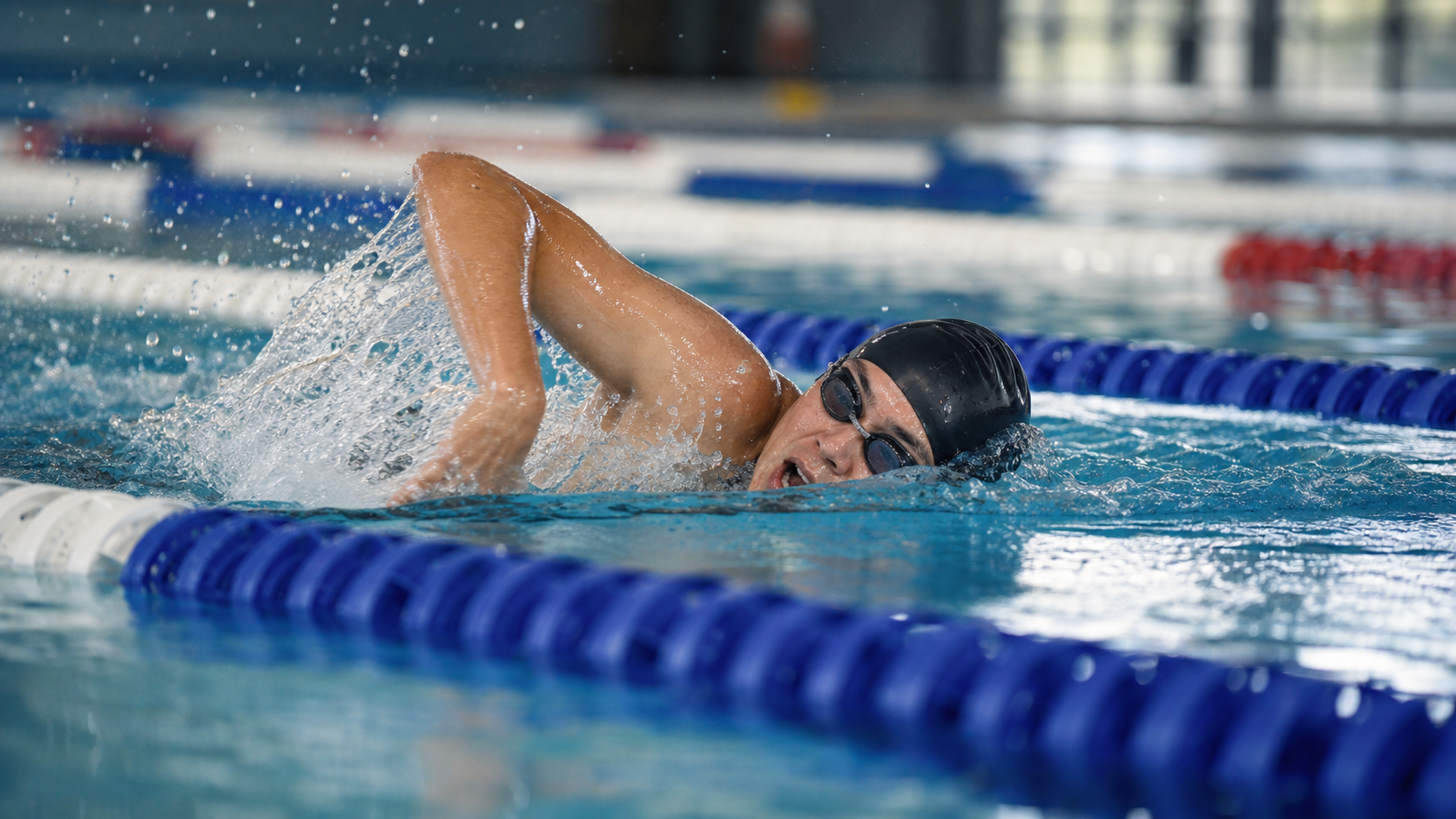
Have you ever experienced this: during the final laps of a swim workout, every stroke feels like maximum effort, yet your speed keeps dropping and your body feels increasingly “sunk” in the water? This is a classic sign of fatigue impacting your swimming technique. In the latter half of high-intensity interval sets (such as 10 × 100m with short rest), accumulated fatigue systematically degrades technique quality—the most refined technical details (high-elbow catch, EVF) break down first, followed by whole-body coordination, and finally the ability to maintain basic body position.
Maintaining technique quality under fatigue is a core challenge in competitive swimming training, and it is the key difference that makes training truly effective.
How Fatigue Impacts Swimming Technique
| Fatigue Stage | Technique Affected First | Symptoms | Impact on Speed |
|---|---|---|---|
| Mild fatigue (mid-workout) | EVF catch precision | Catch becomes slightly shallow | Slight decrease |
| Moderate fatigue (latter part of intensity intervals) | Body rotation angle, stroke completeness | Early hand exit during push phase | Noticeable decrease |
| Heavy fatigue (near exhaustion) | Posture maintenance, head position | Hips sink, head lifts | Significant decrease |
| Extreme fatigue (at the edge of exhaustion) | Basic coordination | Chaotic movements, rapid breathing | Breakdown |
Research shows that swimming in an exhausted state increases drag coefficient by 40–70% compared to a technically sound state, meaning that with the same energy output, you may only swim at 70% of your normal speed when fatigued.
Core Strategies for Technique Maintenance
Strategy 1: Build a “Fatigue Technique Cue Checklist”
During regular training, identify the technical points that break down first when you are fatigued (referred to as your “personal technical weak links”). Create a list of 2–3 key cues to prioritize when fatigue sets in.
Common examples of personal weak links:
- Right arm exits the water early during the push phase when fatigued → Cue: “Push all the way to the thigh!”
- Head lifts when fatigued → Cue: “Press your head down!”
- Body rotation disappears when fatigued → Cue: “Rotate!”
Strategy 2: Slow Down to Maintain Technique (“Pace Quota” Management)
In the latter part of high-intensity intervals, rather than struggling to hold pace while technique falls apart, proactively slow down by 5–10% to ensure technique quality. The training benefit from this approach is often greater than “swimming fast with broken technique.”
“Pace Quota” Training Method:
Set a “technique baseline” for each repeat (for example, stroke count per lap not exceeding X strokes). If you exceed the baseline, it means technique has broken down—immediately slow down or shorten the distance.
Strategy 3: Prioritize Breathing Management
When fatigued, the easiest thing to lose control of is breathing rhythm. Once you start “gasping for air” (wanting to breathe on every stroke), body rotation and head position will both spiral out of control. In the latter part of a workout, deliberately maintaining a breathing pattern of every 3 strokes can effectively stabilize overall technique.
Strategy 4: Core Engagement Awareness
When fatigued, the arm muscles are the first to lose strength, and swimmers tend to rely more on their arms rather than their core muscles. Deliberately reminding yourself to “drive the stroke with your core” when fatigued—letting hip rotation lead—can effectively distribute the load away from your arms.
Training Design for Technique Maintenance Under Fatigue
Drill 1: “Fatigue Technique Swim”
First perform high-intensity intervals (for example, 5 × 100m at 90% intensity), then immediately follow with a 200m technique swim (at 50–60% intensity), requiring deliberate technique maintenance under fatigue. This combination trains your ability to recover technique after fatigue sets in.
Drill 2: “Technique Deterioration Monitoring Set”
Count your stroke count for each repeat (using 25m or 50m as the unit) and record the time. When stroke count increases (DPS decreases) by more than 15%, it indicates significant technique breakdown—at this point, you should stop the set or reduce intensity.
Drill 3: “Race Fatigue Simulation”
In training sessions at swimming clubs in Taiwan, occasionally schedule a “race-distance simulation day”: swim continuously at race distance (for example, 400m or 1500m), focusing on maintaining technique quality in the latter half to simulate the fatigue state experienced at the end of a race.
Technique Recovery After Fatigue
The cool-down swim after training is not just about lowering your heart rate—it is also the best opportunity for technique recovery:
- Slow technique swim: 200–400m at 40–50% intensity, deliberately “resetting” your feel for the technique
- Combine with breathing control: Use a breathing pattern of every 5 strokes during the cool-down to help your body regain a sense of control
- Sensory scan: While swimming, scan the sensations in each part of your body from head to toe to identify which areas are most fatigued
Practical Advice
- In high-intensity training sessions at swimming clubs in Taiwan, proactively tell your coach that you would like technique cues during the latter part of the workout
- Use a waterproof sports earphone with a metronome app to provide a stable stroke rate rhythm when fatigued, which can effectively reduce technique breakdown
- Keep a training log recording stroke count and time for each set to build your personal “fatigue technique breakdown threshold” chart
- Triathletes should pay special attention to fatigue management in the swim leg, because fatigue in the water directly affects subsequent cycling and running performance
Conclusion
Maintaining technique under fatigue is the highest-level challenge in swimming training, and it is the key bridge that converts training results into race performance. Through systematic fatigue-technique training, identification of personal weak links, and breathing management, every serious swimming enthusiast can gradually narrow the “fatigue technique gap” and maintain efficient swimming technique in the final stages of a race.
Related Reading
- Losing Control in the Final Stretch: How to Maintain Technique Quality Under Fatigue
- Fatigue Technique Training in Swimming: Methods for Maintaining Technique Quality After Accumulated Fatigue
- Reasons for Swimming Technique Regression: Identifying and Correcting Technique Breakdown Under Fatigue
- Diagnosing Swimming Technique Regression: How to Determine Technique Breakdown Caused by Fatigue
[教學] Premiere 影片 手震 修正 教學 防抖 單眼 影像 GoPro 穩定 Video Stabilization
8 年前
西進武嶺 免費訓練分析服務 Intervals | 練不夠還是練過頭?你哪一種類型選手?AI模型告訴你! | 備戰神器 | 公路車 訓練 | CT Yeh
4 年前
滑雪新手們慘摔學習全紀錄(請開字幕),滑雪好好玩 | Snowboard + Ski | 岩原 スキー場 | 滑雪APP使用 | GoPro Max
6 年前
實景訓練台) 彰化經典百K 高強度喵團 90分鐘 跟著一起練功 2019 Indoor workout Changhua Classic 100 Taiwan
7 年前
FTL 與 SYB 車隊專訪 西進武嶺 實用攻略分享! 2小時 如何練?!你不知道的眉角!新手準備武嶺必看 EP1 | 實力派女車友 | 精華版 | 公路車 | CTYeh
4 年前
一日北高 11小時 賽後心得分享篇 | TWB北高360 | 一日雙城 | 單車 | 公路車
6 年前
教學) 如何做出專業 慢動作 影片 Slow Motion 120fps GoPro 7 ActionCam AX700 A99II
7 年前
一個測試有沒有認真練車的方法😂 #公路車
10 個月前