Introduction
The moment a swim race ends, most athletes breathe a sigh of relief, feeling that the task is complete. But for competitive swimmers—especially those competing in multi-day events like the National Swimming Championships or the swim leg of a triathlon—the quality of recovery in the 30 minutes after the race directly determines their performance in the next event or the following day. Understanding and executing a science-based post-race recovery protocol is the final piece of the competitive performance puzzle.
The Physiology of the 30-Minute Golden Recovery Window After a Race
After high-intensity swimming, the body’s metabolic state determines recovery efficiency:
- Muscle glycogen depletion: Glycogen synthase activity in muscles peaks within 30–45 minutes after a race, and carbohydrate absorption efficiency during this time is 2–3 times higher than normal
- Muscle micro-damage: The pulling and kicking motions of high-intensity swimming cause micro-tears in muscle fibers, which require protein for repair
- Fluid and electrolyte loss: Even while swimming in water, high-intensity racing still causes significant fluid and electrolyte (sodium, potassium, magnesium) loss through respiration and sweat
- Lactate clearance: Light active recovery (easy swimming) after a race clears blood lactate faster than passive rest
The 30-Minute Post-Race Recovery Protocol
0–10 Minutes: Immediate Refueling
| Refueling Type | Recommended Amount | Food Options |
|---|---|---|
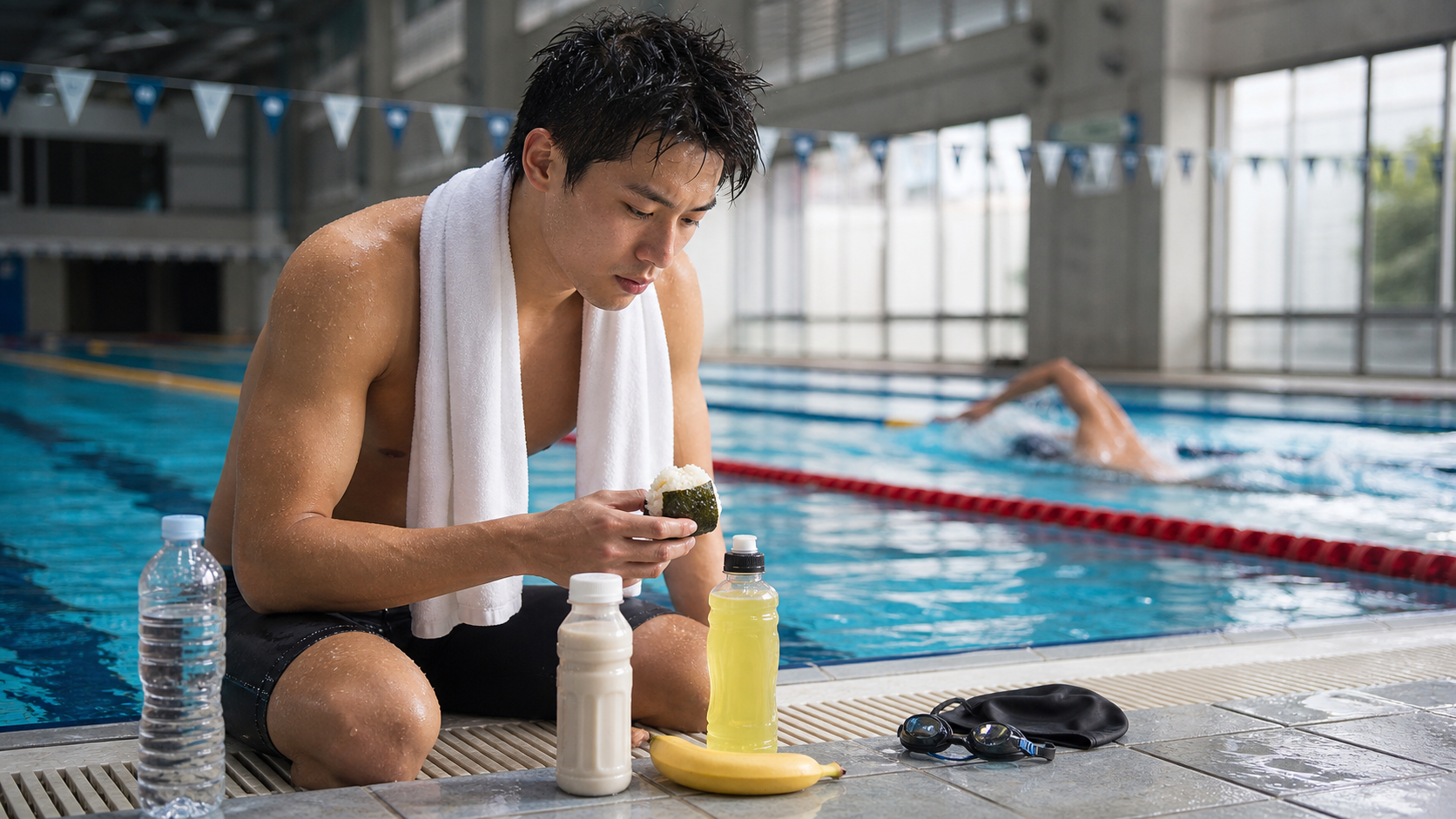
| Carbohydrates | 1–1.2g per kg of body weight | Banana, sports drink, white bread, rice ball |
| Protein | 20–25g | Greek yogurt, milk, protein powder, boiled eggs |
| Fluids | 150% of body weight lost | Water, electrolyte sports drink |
Common post-race refueling options in Taiwan:
- Tea eggs + rice balls from FamilyMart convenience stores (carbs + protein)
- Commercially available sports drinks (electrolyte replenishment) + fresh milk (protein)
- Pre-packed high-carb, high-protein bars (recommended specs: carbs >30g, protein >15g)
10–20 Minutes: Active Recovery Swim
Doing a light active recovery swim (cool-down swim) immediately after the race is far more effective than resting passively:
- Distance: 400–600m at a very easy pace (approximately 50–55% of maximum intensity)
- Stroke selection: Backstroke or an easy breaststroke, allowing the shoulders and legs to relax in non-racing muscle patterns
- Breathing rhythm: Maintain steady, deep breathing to promote lactate clearance through aerobic metabolic pathways
- Purpose: Accelerate the removal of blood lactate from muscles to the liver for conversion, shortening recovery time
Research shows that an active recovery swim after a race can bring blood lactate down to near-resting levels within 20 minutes, approximately 40% faster than passive rest.
20–30 Minutes: Relaxation and Evaluation
Physical relaxation:
- Gentle shoulder and neck stretching (not deep stretching—avoid prolonged static stretching at this time)
- Lightly mobilize the wrist and finger joints
- Seated gentle spinal rotation
Mental evaluation:
- Quickly review pacing and technical execution from the race in your mind
- Note 1–2 key points worth improving next time (don’t over-criticize yourself or over-analyze at this moment)
- Let your emotions gradually settle from the high-tension state of racing
Recovery Strategies for Multi-Day Events
Taiwan’s National Swimming Championships sometimes involve multiple events on the same day or consecutive days of racing, requiring a more aggressive recovery strategy:
Recovery for multiple events on the same day (event interval < 3 hours):
- Refuel immediately after each race, completing carbohydrate intake within 5 minutes
- Shorten the active recovery swim to 200–300m
- Use waiting time for alternating hot and cold showers (2 minutes each, cycling 3–4 times)
Consecutive days of racing (e.g., days 1–3 of a championship):
- Complete a high-carb, high-protein meal within 60 minutes after each day’s racing
- 30 minutes before bed, consume casein protein or milk to promote overnight muscle repair
- Ensure 8–9 hours of sleep each night
Common Post-Race Recovery Mistakes
- Eating a heavy meal immediately after the race: Fried or spicy foods slow digestion and impair glycogen replenishment efficiency
- Leaving without refueling at all: The mindset of “I’ll eat when I get back to the hotel” misses the optimal refueling window
- Staying completely still after the race: Sitting around the venue without doing active recovery leads to slow lactate clearance
- Celebrating with alcohol: Alcohol inhibits glycogen synthesis and protein synthesis, severely impacting recovery for subsequent events
- Excessive deep stretching: Muscle fibers already have micro-tears; over-stretching can worsen the damage
Practical Recommendations
- Prepare a post-race refueling kit with food and drinks ready before the race, rather than relying on venue vendors
- Log your post-race condition (rate it 1–10) to track how different recovery methods affect your status the next day
- Prioritize sleep quality—if the race ends late, allow yourself to wake up slightly later the next day to ensure adequate sleep
- Cold-water leg immersion (10–15°C, 10–15 minutes) provides significant anti-inflammatory recovery benefits for long-distance or multi-event athletes
- Avoid high-intensity training for 24 hours after the race to give muscles sufficient time to repair
Conclusion
A swim race doesn’t end the moment you touch the wall—it’s only complete once the recovery protocol is finished. A well-designed 30-minute post-race recovery routine can help Taiwanese swimmers maintain peak competitive condition through multi-day events, and also allow triathletes to enter the bike leg with greater energy after the swim. Treat post-race recovery as an extension of race preparation, not an optional afterthought.
Related Reading
- Recovery Diet After Swimming: Supplementation Principles for the Golden 30 Minutes
- Recovery Nutrition After Swimming: Protein and Carbohydrate Supplementation in the Golden 30 Minutes
- Recovery After a Swim Race: A 48-Hour Body Care Plan
- In-Water Recovery After Finishing: Cool-Down Swimming for Open Water Races
Live) 備戰2019彰化經典百K 賽前攻略 (已完賽請看新影片
7 年前
CT暗黑廚房) 車友必備 宇宙無敵鮮蚵湯 幫助訓練恢復 天然食補 好市多 超肥鮮蚵 破PR
7 年前
崇越盃武嶺冠軍高手 賽前JJSC 群峰會精華!對應大數據分析,會有落差嗎?/ feat. JJSC中部公路車約騎 /公路車 / CT Yeh
2 年前
西進武嶺 免費訓練分析服務 Intervals | 練不夠還是練過頭?你哪一種類型選手?AI模型告訴你! | 備戰神器 | 公路車 訓練 | CT Yeh
4 年前
西進武嶺 自製新版AI配速表產生器 x 賽前攻略 抱佛腳! 沒有功率計也可以產生配速表嗎?有什麼其他眉角賽前要注意的呢? | 西進武嶺 / 東進武嶺 KOM 攻略 | 公路車 | CT Yeh
4 年前
FTL 與 SYB 車隊專訪 西進武嶺 實用攻略分享! 2小時 如何練?!你不知道的眉角!新手準備武嶺必看 EP1 | 實力派女車友 | 精華版 | 公路車 | CTYeh
4 年前
2023桃園團體繞圈賽 / 海鷗繞圈賽 | 全程空拍數據版 | 公路車 | CT Yeh
2 年前
實景訓練台) 彰化經典百K 高強度喵團 90分鐘 跟著一起練功 2019 Indoor workout Changhua Classic 100 Taiwan
7 年前