Electrolyte Management for Long-Distance Riding: Precision Replenishment Strategies for Sodium and Potassium Loss in Sweat
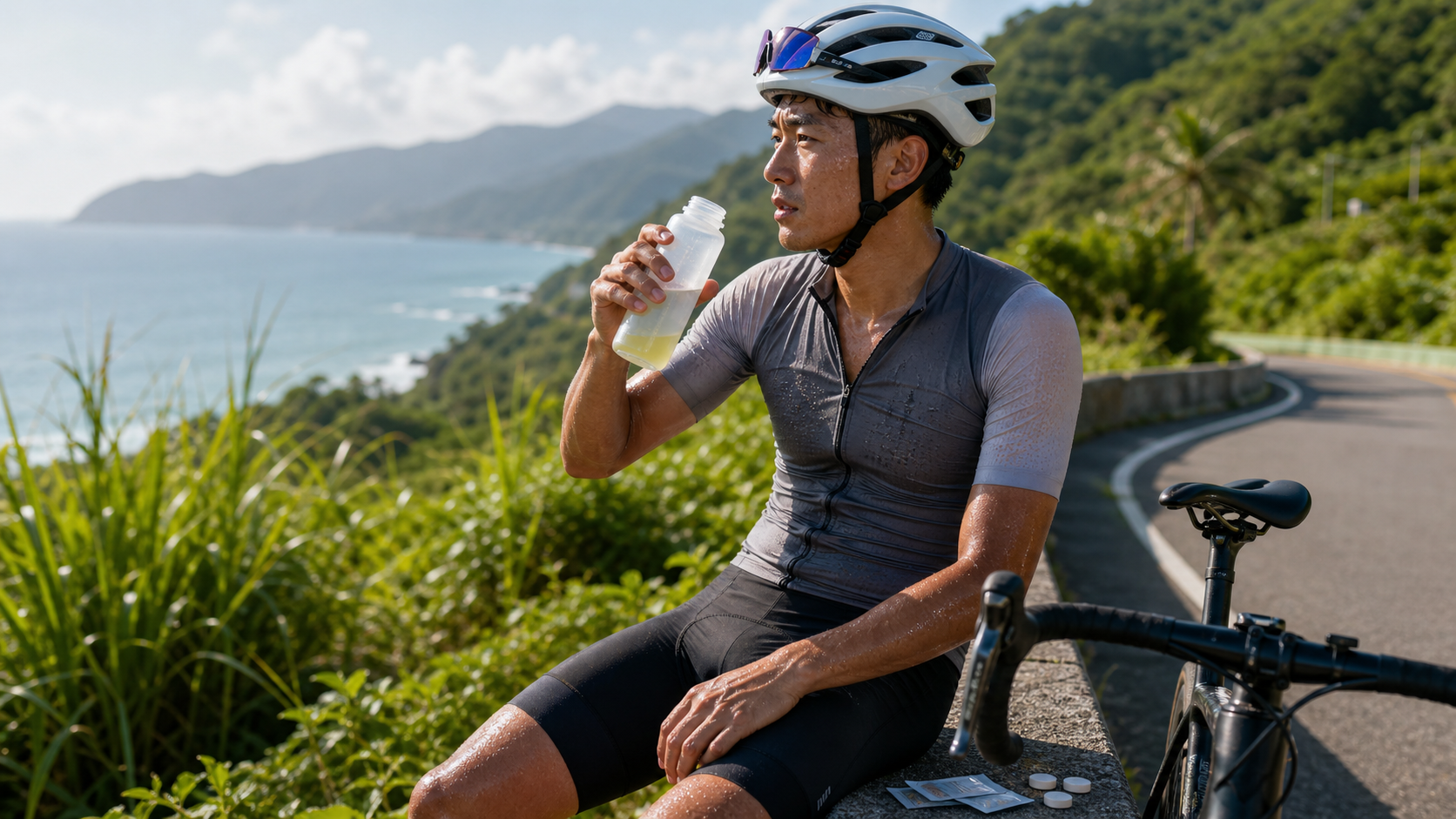
Introduction
Summer riding conditions in Taiwan are among the harshest in the world—temperatures of 37°C combined with relative humidity above 80% dramatically increase sweat output, and electrolyte loss occurs far faster than most riders imagine. A 70kg rider undertaking a 4-hour moderate-intensity ride in a Taiwanese summer can lose 3–5 liters of sweat, with sodium loss reaching as high as 3,000–6,000mg.
But the bigger problem is this: most Taiwanese riders’ replenishment habits severely underestimate electrolyte requirements. Relying on plain water and the occasional electrolyte tablet (typically containing only 200–300mg of sodium) falls far short of making up for the losses. This article will help you build a precise electrolyte replenishment system.
Understanding Sweat Composition
Sweat isn’t just “water and salt”—it contains multiple minerals, and a deficiency in each one produces different problems:
| Electrolyte | Content per Liter of Sweat | Primary Physiological Function | Deficiency Symptoms |
|---|---|---|---|
| Sodium (Na⁺) | 200–2,000mg | Regulation of extracellular fluid osmotic pressure, nerve transmission | Cramping, nausea, dizziness, cognitive decline |
| Potassium (K⁺) | 100–300mg | Cardiac function, muscle contraction | Muscle weakness, irregular heartbeat |
| Magnesium (Mg²⁺) | 10–30mg | Energy metabolism (ATP), muscle relaxation | Muscle spasms, increased fatigue |
| Chloride (Cl⁻) | 300–1,500mg | Gastric acid composition, osmotic balance | Worsened electrolyte imbalance |
| Calcium (Ca²⁺) | 5–30mg | Muscle contraction trigger | Muscle spasms, numbness |
Individual variation is enormous: Sodium loss varies greatly from person to person. “Salty sweaters” can lose up to 2,000mg of sodium per liter of sweat, while low-salt sweaters may lose only 200mg. How to tell: check for visible white salt crystals on your face and neck after a ride—if present, you’re a high-sodium loser and need a more aggressive sodium replenishment strategy.
The Unique Challenges of Taiwan’s Environment
Taiwan’s high-humidity environment reduces sweat evaporation efficiency, leading to:
- Greater sweat volume: The body must secrete more sweat to maintain its cooling effect
- Sweat lingering on the skin: High humidity keeps sweat on the skin, preventing effective evaporation before it’s lost, making riders feel uncomfortable more quickly
- Inaccurate perception: Because sweat doesn’t evaporate, riders may not feel like they’re “sweating,” underestimating their actual electrolyte loss
Especially during Taiwan’s summer riding season (June–September), the following routes require particularly aggressive electrolyte replenishment:
- The Kaoping Plain in southern Taiwan (high heat, little wind)
- The foehn wind belt of the Eastern Rift Valley (particularly dry and hot)
- Climbing sections in the central mountain ranges (heavy sweating)
Precise Replenishment Strategy
Calculate your “hourly electrolyte target”:
A practical estimation method:
- If sweat rate is approximately 600–1,000ml/hr (light sweating), sodium needs are approximately 500–800mg/hr
- If sweat rate is approximately 1,000–1,500ml/hr (moderate sweating, common in Taiwanese summers), sodium needs are approximately 800–1,200mg/hr
- If sweat rate exceeds 1,500ml/hr (high-intensity summer riding), sodium needs can reach 1,200–2,000mg/hr
Recommended replenishment sources:
- Each electrolyte tablet (brands such as Nuun, SIS, GU): approximately 300–360mg sodium
- Salt tablets (high-sodium options like Precision Hydration): 500–1,000mg sodium/tablet
- Local Taiwanese options: salted boiled peanuts (high sodium), salted plums (high sodium + acidity), sports drinks containing sodium
Timing schedule:
- 1–2 hours before departure: take one electrolyte tablet in advance (pre-loading strategy)
- During the ride: replenish electrolytes every 30–45 minutes—don’t wait until cramping starts
- Within 1 hour after finishing: consume sodium-containing food to aid fluid recovery
Practical Recommendations
- Avoid plain water only: The most common mistake among Taiwanese riders is carrying only plain water on long rides. Heavy water intake without sodium replenishment can cause “hyponatremia (dilutional hyponatremia),” with symptoms including headache, nausea, and in severe cases, altered consciousness
- Learn to identify your personal sweat salt concentration: Observe the white salt stains on your clothing and face after riding. High-sodium losers must use higher-sodium-concentration replenishment products
- “Pre-load sodium” before long summer rides: Actively increase sodium intake at dinner the day before departure (such as salty noodle dishes), giving your body adequate sodium reserves
- Don’t forget potassium replenishment: Bananas (approximately 420mg potassium each) are the most convenient potassium source for long-distance riding, and they’re available at almost every convenience store in Taiwan
Conclusion
Electrolyte management is one of the most underestimated—yet easiest to improve—aspects of long-distance riding. You don’t need complex technological equipment; you only need a basic understanding of your own sweating characteristics and a systematic replenishment rhythm.
On long summer rides in Taiwan, smart electrolyte replenishment is often the difference between completing the challenge and giving up halfway.
Related Reading
- Electrolyte Replenishment Strategies for Summer Riding in Taiwan: A Quantitative Study of Sodium, Potassium, and Magnesium Supplementation for High Sweat Rates
- Electrolyte Replenishment Strategies for High-Temperature Riding in Taiwan: Loss and Replenishment Recommendations for Sodium, Potassium, and Magnesium
- Summer Training Electrolyte Replenishment: The Precise Ratio of Sodium, Potassium, and Magnesium
- The Science of Electrolyte Replenishment: Correct Dosage and Timing for Sodium, Potassium, and Magnesium
CT暗黑廚房) 車友必備 宇宙無敵鮮蚵湯 幫助訓練恢復 天然食補 好市多 超肥鮮蚵 破PR
7 年前
單車 一日北高 ( 雙城 ) 肥宅雙人瘋狂行 紀錄片 REACTO
10 年前
一日北高/長距離團騎 常見問題補充篇 / 組團或跟團的眉角 / 壯車友容易被瘦車友慢性拉爆 / 原來屁股痛可能是這個原因...? / 風場配速法 / 公路車 / CT Yeh
2 年前
2019 夏季KOM 5小 完賽心得 準備攻略 東進武嶺 夏季登山王之路 Taiwan KOM Challenge
7 年前
洗單車神器 吹水機! 實際洗車用用看 暴力洗鍊條大法 | 公路車 | CT Yeh
4 年前
水金九不厭五分 10度寒流冷到不願停!feat. 卡卡 / 公路車 / CT Yeh
6 個月前
雨戰! 西進武嶺員工旅遊 加料 各路段大數據分析 | 同事端出5公斤的公路車來挑戰!? EP1
4 年前
台北闊瀨陡坡 騎旅 / 日本單車雜誌編輯車友臨時加入!/ 髮香才是最強的 / feat. 北迴歸線小隊 / 公路車 CT Yeh
6 個月前