Open Water Temperature Management: Cold Water Acclimatization Training and Hypothermia Prevention
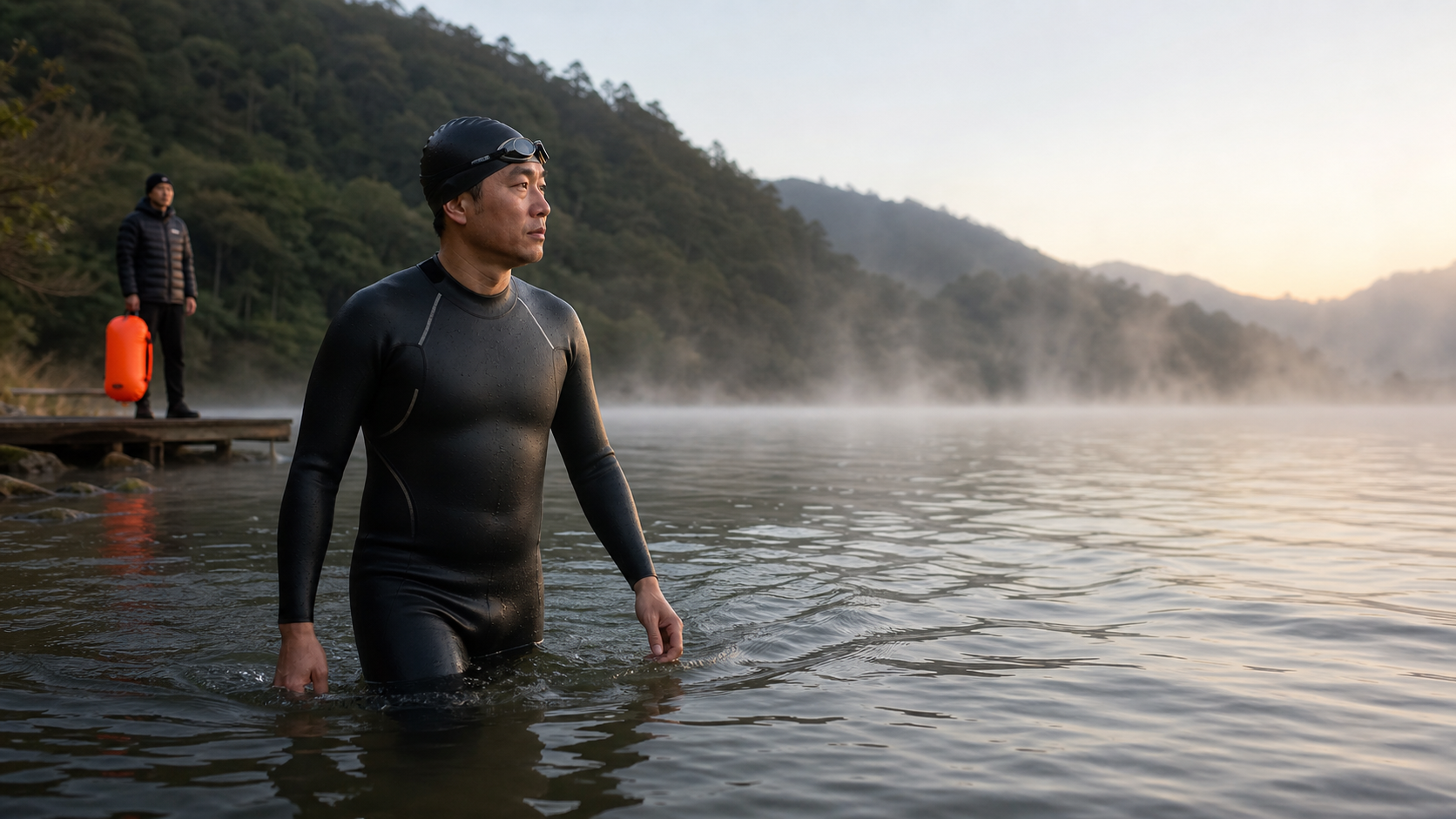
Introduction
For swimming enthusiasts in Taiwan, summer open water swimming is a pleasure, while the cold water challenge in winter is an entirely different matter. The lowest winter water temperature at Sun Moon Lake is around 18°C, while streams around Feitsui Reservoir in the north can even drop below 15°C. Many athletes attempting winter open water swimming may face danger due to a lack of understanding of the body’s response to cold water. This article will help you scientifically understand the physiological responses to cold water swimming and provide safe adaptation training methods.
Physiological Responses to Cold Water: Understanding Your Body
The moment you enter cold water, a series of physiological responses occur in your body, which can be divided into three stages in chronological order:
Stage 1: Cold Water Shock (0–3 minutes)
This is the most dangerous stage. Sudden skin contact with cold water triggers involuntary deep breathing (the gasp reflex). If your head is submerged at this moment, you may inhale water. Meanwhile, heart rate spikes and blood pressure rises, posing the highest risk to those with cardiovascular disease.
Stage 2: Reduced Swimming Ability (3–30 minutes)
Limbs lose flexibility due to cold water, muscle contraction capacity declines, and stroke efficiency drops noticeably. During this stage, many people unconsciously expend large amounts of energy trying to “swim back to shore,” which actually accelerates heat loss.
Stage 3: Hypothermia (30 minutes and beyond)
Core body temperature (normally 37°C) begins to drop. When it falls below 35°C, hypothermia sets in. Symptoms include confusion, muscle weakness, and severe shivering. If not treated promptly, it can be fatal.
| Water Temperature | Primary Risk | Safe Swimming Time (without wetsuit) |
|---|---|---|
| Above 25°C | Almost no cold water risk | No significant limit |
| 20–25°C | Mild chill | 1–2 hours |
| 15–20°C | Cold water shock, hypothermia | 20–45 minutes |
| 10–15°C | High risk | 10–20 minutes |
| Below 10°C | Extremely high risk | 5–10 minutes |
Progressive Cold Water Adaptation Training
Scientific research shows that the human body can reduce the cold water shock response and improve swimming ability in cold water through “Cold Water Adaptation.” Below is a 6-week progressive adaptation plan:
Weeks 1–2: Cold Water Showers
At the end of your daily shower, rinse with cold water for 30 seconds, gradually extending to 2 minutes per day. This effectively reduces the intensity of the gasp reflex from cold water shock.
Weeks 3–4: Short Cold Water Immersion
Choose a lake with a water temperature of 20–22°C (such as Liyu Lake in Taiwan during winter) and stay in the water for 10–15 minutes each session. Note: You must be accompanied by a companion and inform shore personnel.
Weeks 5–6: Extended Cold Water Swimming
Swim for 20–30 minutes in water at 18–20°C while wearing a swimsuit, confirming that your body can maintain a steady stroke rhythm.
Hypothermia Prevention and Emergency Response
Preventive Measures:
- Before entering cold water, do 5 minutes of dynamic warm-up on shore to raise core body temperature
- Wear a swimsuit appropriate for the water temperature (3–5mm thickness), ensuring a good seal around the neck and armpits
- Inform shore companions of your planned swimming duration; initiate rescue if you exceed the time
- Do not swim in cold water on an empty stomach; ensure adequate energy reserves
Emergency Treatment for Hypothermia:
- Get out of the water immediately and move to a sheltered, warm environment
- Remove wet clothing and wrap the body in dry blankets or dry clothing (especially the neck, armpits, groin, and other core areas)
- Provide warm beverages (non-alcoholic) to help raise core body temperature
- Do not immerse in hot water directly (this may cause vasodilation leading to a sudden drop in blood pressure)
- If confusion or severe shivering occurs, call 119 immediately
Practical Advice
Safety guidelines for winter open water swimming in Taiwan:
- Always inform others of your swimming plan (location, expected duration, return time)
- Use an open water swimming buoy (Swim Buoy) to increase visibility and provide emergency buoyancy support
- Carry a whistle with you (usually can be clipped to a swim cap or swimsuit zipper)
- For winter swimming, choose venues with lifeguards or managed facilities, such as the official open water swimming areas in Hualien and Taitung
Conclusion
Cold water swimming is not a forbidden zone, but a challenge that requires proper knowledge and gradual preparation. By understanding your body’s response to cold water and adapting progressively using scientific methods, you can safely enjoy the tranquil beauty of Taiwan’s winter open water. Safety comes first—every successful cold water swim is the best confirmation of your willpower and physical capability.
Related Reading
- Cold Water Swimming: Physiological Effects of Low Water Temperature, Risks, and Progressive Adaptation Training
- Physiological Adaptation in Cold Water Swimming: Responding to Winter Water Temperatures at Taiwan’s Northeast Coast
- Open Water Cold Adaptation: Training for the “Cold Shock Response” When Entering Cold Water
- Cold Water Adaptation in Swimming: The Effects of Water Temperature on Heart Rate, Metabolic Rate, and Oxygen Consumption
[防寒衣體驗] 鐵人魂 三鐵 防寒衣試穿會 於松運 深水游泳池 鯨魚池
8 年前
滑雪新手們慘摔學習全紀錄(請開字幕),滑雪好好玩 | Snowboard + Ski | 岩原 スキー場 | 滑雪APP使用 | GoPro Max
6 年前
2016/05/13 單車 冷水坑下滑
10 年前
水金九不厭五分 10度寒流冷到不願停!feat. 卡卡 / 公路車 / CT Yeh
6 個月前
CT暗黑廚房) 車友必備 宇宙無敵鮮蚵湯 幫助訓練恢復 天然食補 好市多 超肥鮮蚵 破PR
7 年前
西進武嶺 免費訓練分析服務 Intervals | 練不夠還是練過頭?你哪一種類型選手?AI模型告訴你! | 備戰神器 | 公路車 訓練 | CT Yeh
4 年前
一起升級!海鷗盃LSD團練...JJSC Zone2招待 騎到手抖 / 公路車 / CT Yeh
2 天前
台灣旅行團參加 第7回まえばし赤城山ヒルクライム大会 雙視點
8 年前