Swimming Prescriptions for Diabetic Patients: Safe Ranges for Blood Sugar Control and Exercise Intensity
Introduction
The prevalence of diabetes in Taiwan is approximately 11.3%, with more than 2 million diabetic patients nationwide, and the trend is shifting toward younger populations each year. Regular aerobic exercise is one of the three pillars of diabetes treatment (diet, medication, and exercise), and swimming, with its near-zero impact on joints, is particularly suitable for diabetic patients who also suffer from obesity, knee osteoarthritis, or peripheral neuropathy. However, the interaction between swimming and blood sugar is complex, and proper exercise prescription design is the key to safe swimming.
Physiological Mechanisms of Swimming on Blood Sugar Control
Swimming affects blood sugar through multiple pathways:
- Immediate glucose lowering: During muscle contraction, glucose uptake is promoted through non-insulin-dependent pathways (GLUT4 translocation)
- Improved insulin sensitivity: Regular training increases insulin receptor density on muscle cells
- Increased muscle mass: Swimming provides both aerobic and light strength benefits, and increased muscle mass helps boost basal metabolic rate
- Reduced visceral fat: Medium-to-long-term swimming training helps reduce abdominal fat and improve insulin resistance
- Improved glycated hemoglobin (HbA1c): Multiple studies show that more than 150 minutes of aerobic exercise per week can lower HbA1c by approximately 0.5–0.7%
Safe Blood Sugar Range for Swimming
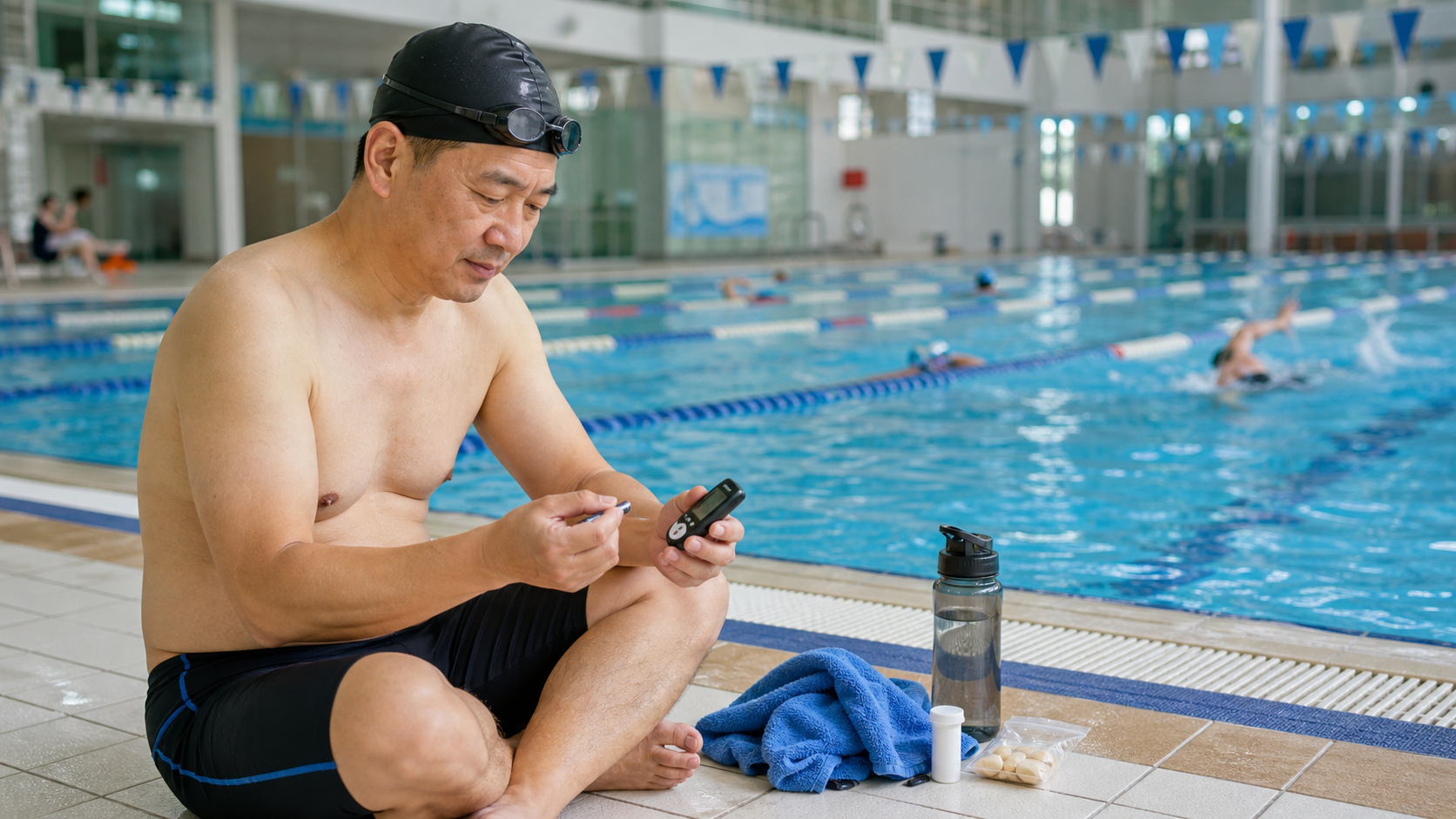
Blood sugar monitoring before and after swimming is crucial for diabetic patients:
| Pre-swim blood sugar (mg/dL) | Recommended action |
|---|---|
| < 90 | Swimming is not recommended; first consume 15g of carbohydrates (such as one slice of whole wheat toast), wait 15 minutes, then re-measure |
| 90–150 | Can swim normally; keep easily accessible sugar supplements (such as glucose tablets) by the poolside |
| 150–250 | Can swim; maintain moderate intensity and stay hydrated |
| > 250 (without ketosis) | Light swimming is feasible, but watch for symptoms of hyperglycemia |
| > 300 or with ketosis | Exercise is prohibited; contact your physician |
Suitable Swimming Prescriptions for Diabetic Patients
Beginners (Weeks 1–4)
- Frequency: 3 times per week
- Intensity: Low to moderate (target heart rate 50–60% of maximum heart rate)
- Duration: 20 minutes per session, including 5 minutes of warm-up and 5 minutes of cool-down
- Stroke: Primarily breaststroke or backstroke, no need to turn the head for breathing
Advanced Phase (Weeks 5–12)
- Frequency: 4–5 times per week
- Intensity: Moderate (target heart rate 60–70%)
- Duration: 40–50 minutes per session
- Recommended to use interval swimming: swim for 2–3 minutes, rest for 1 minute, repeat for 8–10 sets
Long-term Maintenance Phase
- Accumulate more than 150 minutes of moderate-intensity swimming per week (American Diabetes Association ADA recommendation)
- Swimming or other aerobic exercise should be performed at least every 2 days
Resources and Precautions in Taiwan
- Foot protection: Diabetic patients with neuropathy have reduced sensation in their feet; they should wear waterproof pool shoes to avoid injury and infection
- Skin care: Rinse and dry the body immediately after swimming, especially between the toes and underarms, to prevent fungal infections
- Taiwan Diabetes Shared Care Network: Major hospitals have diabetes shared care clinics where patients can consult nurses for exercise prescriptions; some hospitals (such as NTU Hospital and Chang Gung) offer group exercise programs combined with dietitian services
- Continuous Glucose Monitoring (CGM): CGM devices such as Libre are now available in Taiwan and can be worn on the arm during swimming for real-time blood sugar trend monitoring (confirm waterproof specifications)
Practical Recommendations
- Measure blood sugar 30 minutes before swimming to confirm it is within the safe range.
- Keep glucose tablets or sugary drinks (100ml of juice contains approximately 10g of sugar) by the poolside for hypoglycemia emergencies.
- Inform the lifeguard that you have diabetes and let them know the emergency response procedures.
- The period from 30 minutes to 2 hours after swimming is a high-risk window for delayed hypoglycemia; measure blood sugar again during this time.
- Patients taking sulfonylurea medications (such as Gliclazide) have a higher risk of hypoglycemia and should discuss with their physician whether to adjust medication timing.
Conclusion
Swimming is a double gift for diabetic patients: it effectively improves insulin sensitivity while reducing joint burden through the buoyancy of water. Taiwan’s comprehensive medical shared care system and widespread public swimming pools provide an excellent exercise environment for diabetic patients. As long as blood sugar monitoring is properly conducted and prescription intensity is followed, swimming can fully serve as a core exercise tool for long-term diabetes management.
Related Reading
- Swimming and Diabetes Management: Aquatic Exercise Prescriptions for Blood Sugar Control
- Swimming’s Benefits for Chronic Diseases: Aquatic Exercise Prescriptions for Diabetic and Hypertensive Patients
- Risk of Hypoglycemia After Swimming: A Blood Sugar Monitoring Guide for Diabetic Patients in Aquatic Exercise
- Benefits of Swimming for Chronic Diseases: Aquatic Exercise for Hypertensive and Diabetic Patients
靠單車減肥35公斤 心得分享與整理
7 年前
CT暗黑廚房) 車友必備 宇宙無敵鮮蚵湯 幫助訓練恢復 天然食補 好市多 超肥鮮蚵 破PR
7 年前
4K 東眼山 x 水蜜桃冰沙 百人單車約騎! 操完再吃冰 多爽快
7 年前
西進武嶺 免費訓練分析服務 Intervals | 練不夠還是練過頭?你哪一種類型選手?AI模型告訴你! | 備戰神器 | 公路車 訓練 | CT Yeh
4 年前
台北大雁西飛 約騎挑戰 feat. Doris | 公路車 | CT Yeh
3 年前
一日北高常見問題大集合 | 攻略 | 路線 | 訓練 | 補給 | 自行車 單車 | 一日雙城 | 雙塔 | TWB北高360 | 屁股痛
6 年前
半日 小台灣 極限單車路線挑戰實錄
7 年前
#PUSHBIKE 原來這麼好玩! 小朋友 滑步車 初體驗 超可愛
6 年前