The Impact of Swimming on Asthma: The Scientific Mechanism of Moist Air Reducing Airway Irritation
Introduction
The prevalence of asthma in Taiwan is approximately 10–13%, making it one of the most common chronic respiratory diseases. Many asthma patients reduce their physical activity out of fear that exercise will trigger an asthma attack (Exercise-Induced Bronchoconstriction, EIB), creating a vicious cycle of declining fitness. However, swimming is the type of aerobic exercise least likely to trigger EIB, and the scientific principles behind this are worth understanding in depth.
The Scientific Mechanisms Behind Why Swimming Is More Asthma-Friendly
1. Moist Air Protects the Airways
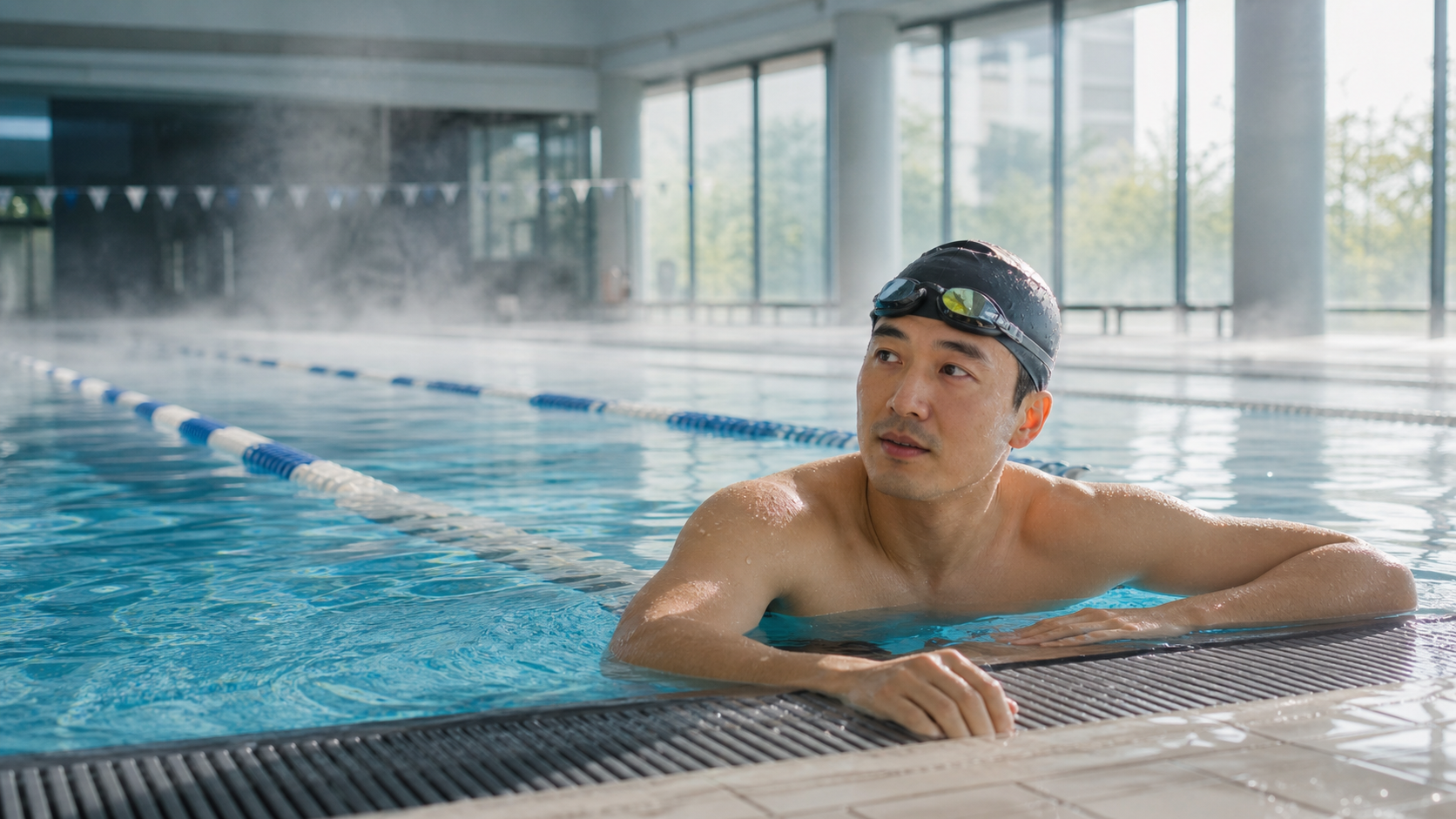
The core mechanism that triggers EIB is: during intense breathing, large volumes of dry, cold air are inhaled, causing water evaporation and a sudden drop in temperature in the airways, which triggers bronchial smooth muscle contraction. In contrast, when swimming, the air inhaled above the pool surface is warm and moist, rich in water vapor, significantly reducing airway dehydration and cooling stimulation.
2. Horizontal Posture Improves Mucus Drainage
The horizontal body position in swimming facilitates gravity-assisted drainage of bronchial secretions, reducing mucus accumulation and improving airway obstruction.
3. Respiratory Muscle Training
Swimming breathing techniques require active, rhythmic contraction of the diaphragm. Long-term training significantly enhances respiratory muscle strength and endurance, reducing asthma patients’ sensitivity to mild stimuli.
4. Enhanced Cardiopulmonary Function
Regular swimming increases maximal oxygen uptake, allowing asthma patients to breathe less frequently at the same exercise intensity, thereby reducing the likelihood of triggering EIB.
Research Evidence
| Study Design | Subjects | Key Findings |
|---|---|---|
| Cochrane Systematic Review (2016, 11 RCTs) | Children and adults with asthma | Swimming significantly improved FEV1 (lung function indicator) and reduced EIB frequency |
| Comparative study (swimming vs. running, EIB induction rate) | 32 adults with asthma | EIB incidence after swimming: 3.1%; after running: 22.4% |
| Taiwanese pediatric study (2018, Taipei schoolchildren) | 86 children with asthma | Swimming group reduced reliever inhaler use by 41% after 12 weeks |
Precautions for Asthma Patients When Swimming
Potential Chloride Irritation Issues:
It is worth noting that some studies have found that high chlorine concentrations (particularly chloramine) may irritate the airways and may even be the cause of occupational asthma developing in some competitive swimmers later in life. Recommendations:
- Choose outdoor pools or well-ventilated indoor pools
- Avoid pools with a pungent odor after swimming (an indicator of excessive chloramine levels)
- Saltwater pools (already introduced at some upscale gyms in Taiwan) are less irritating to the airways
Emergency Management of Asthma Attacks:
- Have a fast-acting inhaled bronchodilator (such as Salbutamol) ready before swimming, and inform the lifeguard
- Exit the water immediately if wheezing or difficulty breathing occurs, use medication, and rest in a seated position
- Do not return to the pool until the acute attack has fully resolved
Swimming Plans Suitable for Asthma Patients
Recommendations for Beginners:
- Before swimming: Preventive inhalation of a fast-acting bronchodilator 30 minutes prior (as directed by a physician)
- Adequate warm-up: Gentle treading water for more than 10 minutes to allow the airways to gradually adapt
- Intensity control: Maintain low-to-moderate intensity at which you can “carry on a conversation,” avoiding intense segments that leave you breathless
- Avoid cold-water pools: Pools with water temperatures below 26°C pose a higher risk for asthma patients
Practical Recommendations
- Confirm your current asthma control status with an allergist/immunologist or pulmonologist (only those with well-controlled asthma should begin a swimming program).
- If you have an upper respiratory infection or worsening allergy symptoms on the day of swimming, postpone your swim.
- After swimming in winter, pay attention to keeping warm, as exposure to cold air may trigger post-swim bronchoconstriction.
- Keep a swimming log, including peak expiratory flow (PEF) before and after swimming, to assess the safety trend of swimming.
- The Taiwan Asthma Education Association website provides asthma exercise guidelines that can be downloaded as reference material for discussions with your physician.
Conclusion
Swimming is not only safe for asthma patients, but is also an effective tool for actively improving asthma control. With the triple benefits of moist air, respiratory muscle training, and overall cardiopulmonary fitness enhancement, swimming ranks among the most “asthma-friendly” of all aerobic exercises. Under the premise of stable asthma control, asthma patients in Taiwan can absolutely step into the pool and find an excellent balance between health management and the joy of exercise.
Related Reading
- Swimming and Respiratory Health: Special Considerations for Aquatic Exercise in Asthma Patients
- The Scientific Impact of Swimming on Lung Function and Asthma
- Swimming as Respiratory Training: Vital Capacity and Asthma Improvement
- The Scientific Benefits of Swimming for Cardiovascular Health: What the Research Says
#公路車 #Vo2Max #最大攝氧量 測驗 體驗 | 心肺測試
6 年前
[防寒衣體驗] 鐵人魂 三鐵 防寒衣試穿會 於松運 深水游泳池 鯨魚池
8 年前
CT暗黑廚房) 車友必備 宇宙無敵鮮蚵湯 幫助訓練恢復 天然食補 好市多 超肥鮮蚵 破PR
7 年前
3D 列印車褲墊 / 舒適改善? / 無痕 x 分區壓縮 / ATK & Decider系列 / JE22黑科技 / #公路車 #CTYEH
11 個月前
水金九不厭五分 10度寒流冷到不願停!feat. 卡卡 / 公路車 / CT Yeh
6 個月前
2025 海鷗團體繞圈賽 網路直播 超激烈裁判長視角 / EIPC 李廷威、Waypoint 等眾多高手競爭 / feat. 卡密兒主持 / 海鷗繞圈賽
9 個月前
2023桃園團體繞圈賽 / 海鷗繞圈賽 | 全程空拍數據版 | 公路車 | CT Yeh
2 年前
一日北高/長距離團騎 常見問題補充篇 / 組團或跟團的眉角 / 壯車友容易被瘦車友慢性拉爆 / 原來屁股痛可能是這個原因...? / 風場配速法 / 公路車 / CT Yeh
2 年前