文章導覽
- Introduction
- The Physiology of the Pre-Race Breakfast
- The 3-Hour Digestion Clock Before the Start
- The "Reactive Hypoglycemia" Trap in Blood Sugar
- Ideal Carbohydrate-to-Fat Ratio
- Practical Breakfast Options for Taiwanese Runners
- Option A: Rice Balls + Soy Milk (Convenience Store Version)
- Option B: Oatmeal + Boiled Eggs (Home Version)
Introduction
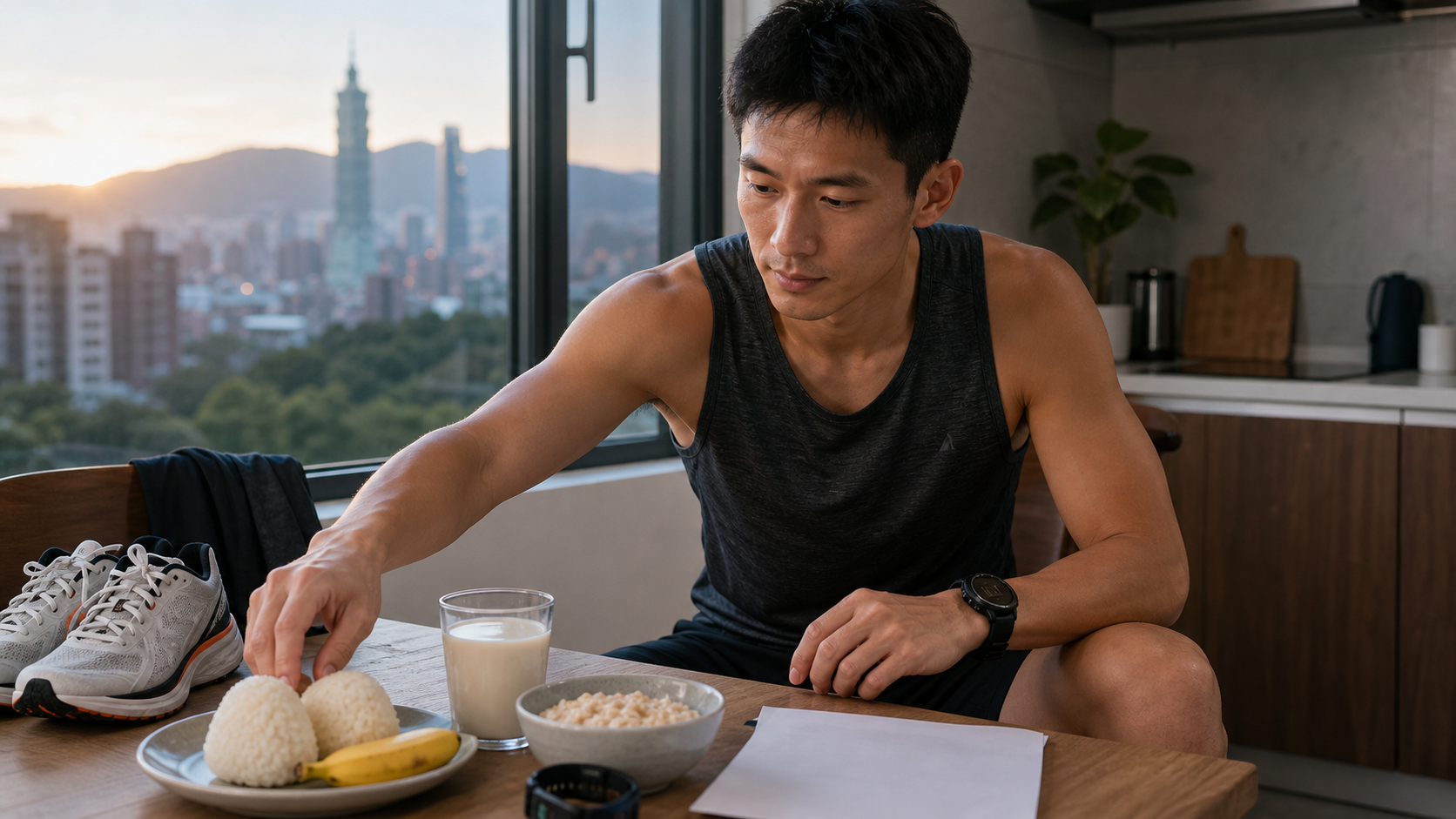
Many runners hesitate when it comes to their pre-race breakfast: eating too much risks stomach discomfort, while eating too little leaves them short on energy. This is especially challenging in Taiwan, where most full marathons start at 5–6 AM, requiring breakfast to be prepared by 3–4 AM. The core goal of a pre-race breakfast is simple: stable blood sugar, an emptied stomach, and full muscle glycogen stores at the starting line. Getting the right carbohydrate-to-fat ratio provides steady fuel at the critical moment.
The Physiology of the Pre-Race Breakfast
The 3-Hour Digestion Clock Before the Start
Gastric emptying time depends on food composition:
| Food Type | Gastric Emptying Time | Hours Before Race |
|---|---|---|
| Pure liquids (sports drinks) | 20–30 minutes | Within 30 minutes of start |
| Low-fat carbs (white toast) | 1–2 hours | 2 hours before start |
| Mixed carbs and protein (oatmeal) | 2–3 hours | 3 hours before start |
| High-fat (bacon and eggs) | 4–5 hours | Not recommended pre-race |
Fat is the biggest culprit in delaying gastric emptying. A breakfast containing 30g of fat (equivalent to half an egg yolk plus a small amount of butter) can extend gastric emptying time by 1–2 hours, leaving food residue in the stomach at the start and increasing the risk of abdominal cramps.
The “Reactive Hypoglycemia” Trap in Blood Sugar
Consuming high-glycemic-index (GI) foods 30–60 minutes before the start can trigger temporary hypoglycemia (dizziness, weak legs) after exercise begins, due to excessive insulin secretion. Solutions:
- Finish breakfast 2–3 hours before the start
- Or consume high-GI foods within 5 minutes of the start (insulin won’t have time to react)
Ideal Carbohydrate-to-Fat Ratio
Research suggests the following macronutrient ratio for a pre-race breakfast:
- Carbohydrates: 60–70% (primary fuel)
- Protein: 15–20% (prevents muscle breakdown, but not excessive)
- Fat: 10–15% (keep as low as possible to speed gastric emptying)
For a 60kg runner, the breakfast target 3 hours before the start: 80–100g carbohydrates, 15–20g protein, and under 10g fat.
Practical Breakfast Options for Taiwanese Runners
Option A: Rice Balls + Soy Milk (Convenience Store Version)
- 2 salmon rice balls from the convenience store (about 70g carbs, 10g protein)
- 450ml unsweetened soy milk (about 15g protein)
- 1 banana (about 25g carbs)
- Total: approximately 95g carbs, 25g protein, 8g fat ✓
Option B: Oatmeal + Boiled Eggs (Home Version)
- 80g instant oatmeal cooked with water (about 55g carbs)
- 1 tablespoon honey (about 17g carbs)
- 2 boiled eggs (about 12g protein, 10g fat)
- 1 banana (about 25g carbs)
- Total: approximately 97g carbs, 22g protein, 10g fat ✓
Option C: White Toast with Honey + Low-Fat Milk (Quick Version)
- 4 slices of white toast (about 70g carbs)
- 2 tablespoons honey (about 34g carbs)
- 300ml low-fat milk (about 12g carbs, 9g protein, 3g fat)
- Total: approximately 116g carbs, 19g protein, 5g fat ✓
Option D: Congee + Salted Egg (Traditional Version)
- 2 bowls of plain congee (about 80g carbs)
- Half a salted egg (egg white portion, low fat) + a small amount of pork floss
- 1 plain steamed bun (about 40g carbs)
- Total: approximately 120g carbs, 18g protein, 12g fat (slightly high; eat 3 hours in advance)
Common Mistakes and Remedies
- Added peanut butter or butter: These are high in fat; use honey as a substitute instead
- Drank a latte or tofu pudding: Whole milk is higher in fat; switch to unsweetened soy milk or low-fat milk
- No time to eat: At least drink 500ml of a sports drink (maltodextrin-based) 30 minutes before the start for quick carbs
- Too nervous to eat: Use liquid carbs (energy drinks, sports drinks) instead—similar effect
Practical Tips
- Practice the same breakfast menu during long training runs (30km+) before the actual race to confirm your stomach’s response
- Carry spare energy gels in case breakfast intake falls short
- After breakfast and before the start, take small sips of a sports drink every 30 minutes to maintain stable blood sugar
- If race-day temperatures exceed 28°C, reduce carbs by 10–15% and increase fluid intake
Conclusion
There is no perfect formula for a pre-race breakfast, but a few principles never change: finish eating 3 hours before the start, keep fat as low as possible, get enough carbs, and stick to familiar foods. With Taiwan’s convenient convenience-store options and local ingredients, you can easily put together a scientific breakfast that fuels an entire marathon. Before your next race, set aside the “new outfit” superstition and start by practicing your pre-race breakfast menu.
Related Reading
- Runner’s Breakfast Design: Best Eating Timing on Race Morning
- Pre-Ride Breakfast Design: Best Timing and Food Choices for Race-Day Morning
- Pre-Race Meal Guide for Runners: Best Food Combinations 2–3 Hours Before the Start
- Trail Race Morning Breakfast: What to Eat 3 Hours Before the Start So Your Stomach Doesn’t Turn on You at 10K