Local Taiwanese Runner Fuel Foods: The Sports Nutrition Value of Bananas, Salted Plums, and Sweet Potatoes
Introduction
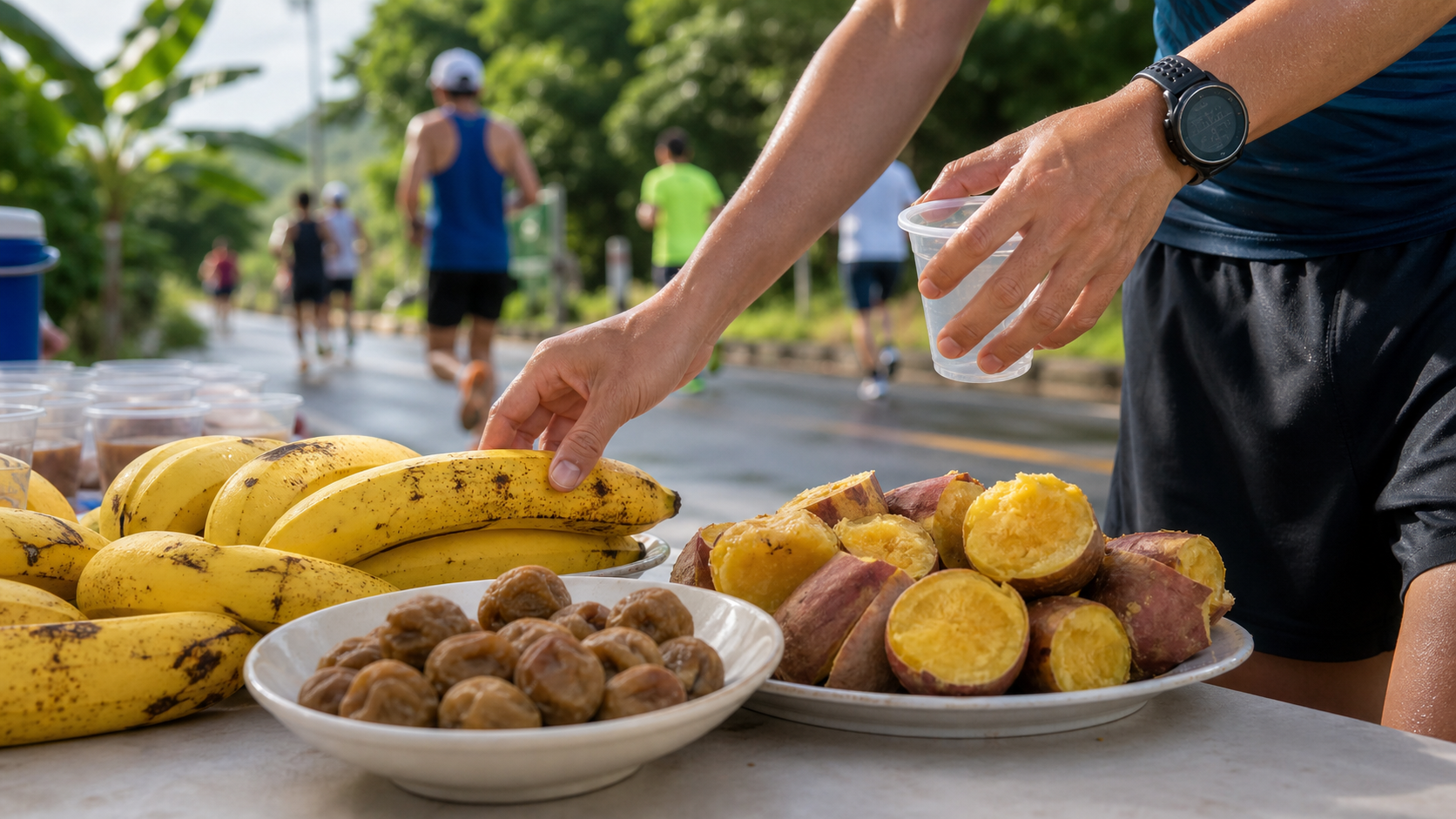
Traveling through aid stations at marathons big and small across Taiwan, you’re bound to see these three items: bananas, salted plums, and sweet potatoes. They’re not just placed there at random—they represent the collective wisdom of Taiwanese runners accumulated over decades. These three foods each have unique advantages in sports nutrition, and they’re more compatible with Taiwanese digestive habits than most imported supplements. This article takes a scientific deep dive into the composition and usage strategies of these three local refueling staples.
Banana: The Perfect Combination of Potassium and Carbohydrates
Composition Analysis
Main components of a medium banana (approx. 120g):
| Component | Amount | Athletic Significance |
|---|---|---|
| Carbohydrates | 27g | Immediate energy source |
| Potassium | 422mg | Prevents cramps and maintains electrolyte balance |
| Vitamin B6 | 0.4mg | Supports protein metabolism |
| Magnesium | 32mg | Muscle relaxation and nerve transmission |
| Vitamin C | 10mg | Antioxidant, reduces free radical damage |
Why Do Runners Get Cramps? How Does Banana Help?
The main causes of cramping during long-distance running are electrolyte imbalance and neuromuscular fatigue, not simply potassium deficiency. However, supplementing potassium does improve the potassium ion concentration gradient, supporting the muscle contraction–relaxation cycle.
Advantages of Taiwanese bananas:
- Taiwanese bananas (Qishan bananas, Pingtung bananas) contain more fructose and potassium than imported bananas
- A moderately ripe banana (with a few dark spots on the peel) has a glycemic index of 55–65, placing it in the moderate GI range, so it won’t cause excessive blood sugar fluctuations
- The banana peel is natural packaging, making it convenient to carry for pre-race fueling
Optimal Timing
- Race kilometers 25–30km: Start taking in solid carbohydrates; bananas are the first choice
- Within 30 minutes after training: Pair with milk or soy milk to create a 4:1 carbohydrate-to-protein recovery meal
- 2 hours before a long run: Low in fiber and easy to digest, suitable as a breakfast supplement
Salted Plum: Taiwan’s Secret Weapon for Natural Electrolytes
Composition Analysis
Taiwanese salted plum (pickled plum, approx. 10–15g per piece):
| Component | Amount (per piece) | Athletic Significance |
|---|---|---|
| Sodium | 100–200mg | Replenishes sodium lost through sweat |
| Citric acid | High content | Participates in the TCA cycle, supports energy metabolism |
| Organic acids (malic acid) | Moderate | Antioxidant, anti-fatigue |
| Carbohydrates | 3–5g | Trace energy |
Unique Athletic Benefits of Salted Plum
- Sodium replenishment to prevent hyponatremia: Each salted plum contains 100–200mg of sodium, equivalent to about 1/3 of a salt tablet, making it a natural electrolyte supplement
- Organic acids combat fatigue: The citric acid and malic acid in plums can lower lactate levels and delay the sensation of muscle acidification
- Stimulates saliva production: In hot, stuffy races, the sour taste stimulates saliva secretion in the mouth, relieving dryness
- Digestive-friendly: A food Taiwanese people have been accustomed to since childhood, with virtually no gastrointestinal discomfort
Salted Plum vs. Salt Tablets
- The sodium content of salted plums varies greatly depending on the pickling method, making it less precise than salt tablets
- However, salted plums contain multiple organic acids, offering broader benefits
- Recommendation: Use salted plums together with salt tablets during long runs to get the best of both
Optimal Timing
- Hold one in your mouth every 5–8km to maintain an electrolyte replenishment rhythm
- At the first sign of an impending cramp, immediately take one with water
- Summer races with temperatures above 28°C: Start supplementing one every 5km from the 15km mark
Sweet Potato: The Dual Advantage of Long-Lasting Carbohydrates and Antioxidants
Composition Analysis
Steamed sweet potato (per 100g):
| Component | Amount | Athletic Significance |
|---|---|---|
| Carbohydrates | 25g | Moderate GI (54), sustained energy release |
| Vitamin A (β-carotene) | High content | Antioxidant, reduces muscle damage |
| Vitamin C | 20mg | Collagen synthesis, immune support |
| Potassium | 390mg | Potassium content close to that of bananas |
| Dietary fiber | 3g | Higher than bananas; gastrointestinal caution needed |
Advantages of Sweet Potato as a Runner’s Food
- Taiwan has a diverse range of sweet potato varieties (Tainung No. 57 golden sweet potato is the most common), with high sweetness and rich carbohydrates
- Moderate GI (54) makes it suitable for consumption 2–3 hours before a race, providing steady energy rather than a blood sugar spike
- Sweet potato rice (sweet potato + white rice) is a staple pre-race meal for many Taiwanese marathon runners
Precautions
- Sweet potato has a relatively high fiber content; consuming large amounts (over 200g) within 3 hours before a race is not recommended
- The sweet potatoes provided at aid stations are usually small steamed pieces, about 30–50g each, which places less burden on the stomach
Refueling Schedule for the Three Foods
| Kilometer Mark | Refueling Recommendation | Rationale |
|---|---|---|
| 10–15km | 1 salted plum | Begin electrolyte replenishment |
| 20–25km | Half a banana + salted plum | Carbohydrate + potassium + sodium combo |
| 28–32km | 1 banana + sports drink | Late-stage energy replenishment |
| After 35km | Sweet potato pieces + cola (small amount) | Solid carbohydrates + caffeine |
Practical Tips
- During training, bring bananas or sweet potatoes as solid fuel for long runs to simulate race-day refueling habits
- Make your own salted plum water: 1 salted plum + 500ml water, serving as a natural electrolyte drink
- Sweet potato can partially replace white rice as a daily staple to increase vitamin intake
- Frozen bananas blended into a smoothie with soy milk make an extremely practical post-run recovery drink
Conclusion
Bananas, salted plums, and sweet potatoes aren’t at aid stations because they’re cheap—they’re there because they have real scientific backing in sports nutrition. These three Taiwanese local ingredients correspond respectively to what runners need most: carbohydrate replenishment, electrolyte balance, and sustained energy. Used together in full coordination, they form a powerful natural refueling strategy that lets you run longer and more steadily on Taiwan’s racecourses.
Related Reading
- The Sports Science of Taiwan’s Traditional Refueling Foods: Research Analysis on Bananas, Sweet Potatoes, and Pineapple
- Taiwanese Runners’ Dietary Culture: Post-Race Refueling and Local Ingredients
- Aid Station Food Selection Strategies for Road Races: Making Energy Gels No Longer the Only Option
- Local Eating for Taiwanese Road Runners: Sports Diet Analysis of Bento Boxes, Braised Dishes, and Soy Milk
CT暗黑廚房) 車友必備 宇宙無敵鮮蚵湯 幫助訓練恢復 天然食補 好市多 超肥鮮蚵 破PR
7 年前
2021 96聯賽 桃園市長盃 4K多視角實況 當天選手瓦數/推力比/均速/時間 即時數據分析 | 公路車 | CT Yeh
5 年前
單車 一日北高 ( 雙城 ) 肥宅雙人瘋狂行 紀錄片 REACTO
10 年前
一日北高/長距離團騎 常見問題補充篇 / 組團或跟團的眉角 / 壯車友容易被瘦車友慢性拉爆 / 原來屁股痛可能是這個原因...? / 風場配速法 / 公路車 / CT Yeh
2 年前
太平山單車員工旅遊 | 這樣玩CP值最高!| 公路車
5 年前
#KOM 夏季登山王之路 比賽實況 #東進武嶺
7 年前
一日北高前的高裝檢 | 北高 360 | 挑戰11小時的裝備 | 一日雙塔 | 補給
6 年前
2019 夏季KOM 5小 完賽心得 準備攻略 東進武嶺 夏季登山王之路 Taiwan KOM Challenge
7 年前