Runner's Gastrointestinal Issues: Dietary Strategies to Prevent Abdominal Pain and Diarrhea During Races
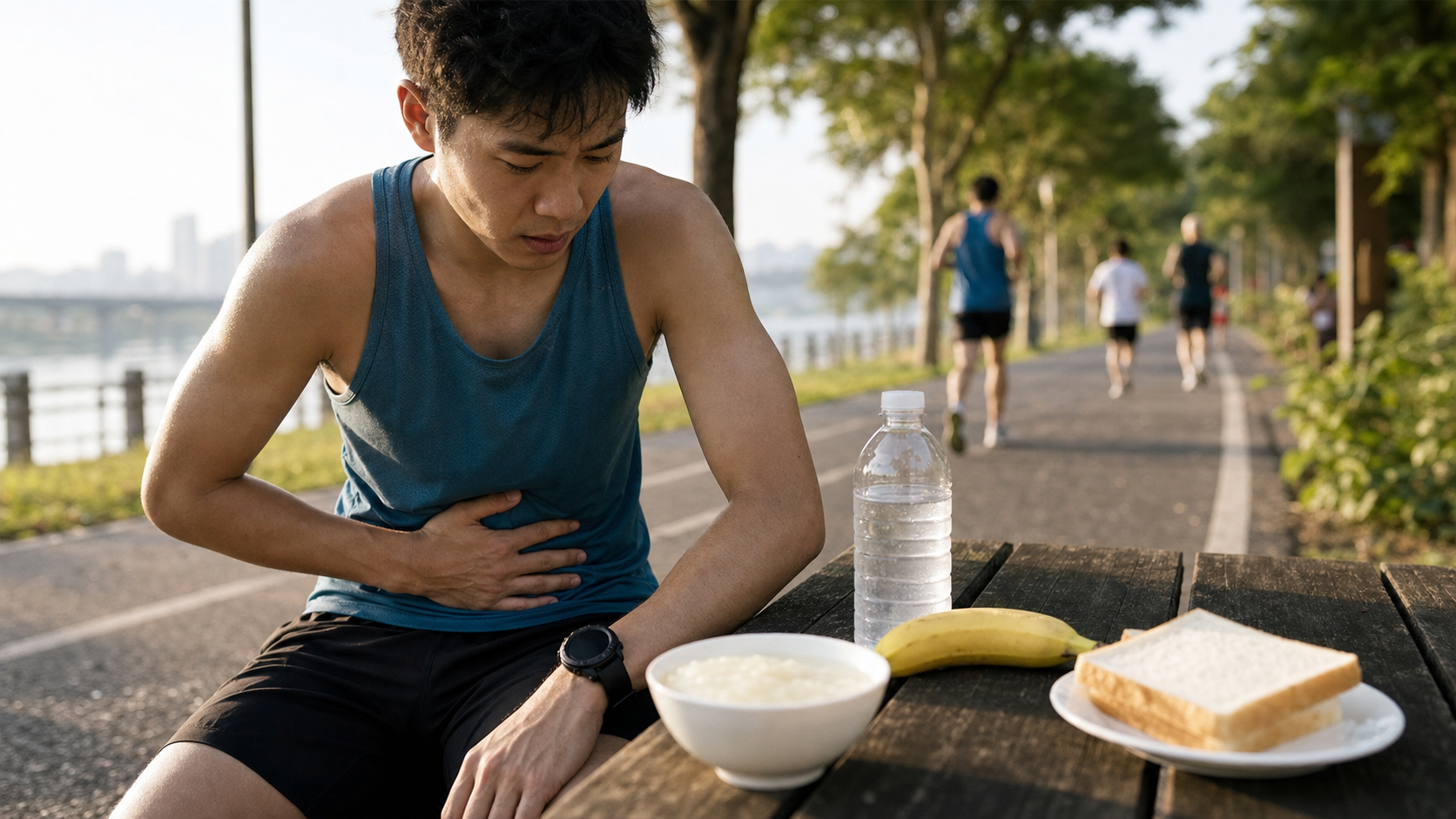
Introduction
“Runner’s stomach” is one of the most common struggles on the marathon course. Research shows that approximately 30–50% of full marathon runners experience gastrointestinal symptoms during a race, including abdominal pain, diarrhea, nausea, or vomiting. These issues don’t just affect performance—in severe cases, they can even force athletes to withdraw from the race. The good news is that most pre-race gastrointestinal problems can be prevented through dietary strategies. This article compiles the most common triggers and provides a prevention-focused eating plan tailored for Taiwanese runners.
The Physiological Mechanisms Behind Runner’s GI Issues
Why Running Is Particularly Prone to GI Discomfort
- Blood flow redistribution: During high-intensity running, up to 80% of blood flow is diverted to the muscles, leaving intestinal blood flow at only 20–30% of normal levels, resulting in intestinal ischemia
- Mechanical vibration: The vertical impact of running jars the intestines, stimulating accelerated bowel motility
- Nervous system effects: Sympathetic nervous system activation suppresses digestion, while parasympathetic (motility-promoting) activity is relatively insufficient
- Dehydration: Even mild dehydration (1–2%) reduces intestinal blood flow and increases permeability
Main Triggers
| Trigger | Description | Prevention |
|---|---|---|
| High-fiber foods | Residual fiber left in the gut before the race | Low-fiber diet 2 days before the race |
| High-fat foods | Delays gastric emptying; stomach still has food at the start | Avoid high-fat foods 12 hours before the race |
| Lactose | Milk consumption in lactose-intolerant individuals | Switch to soy milk or low-lactose products |
| High-fructose foods | Low fructose absorption rate; remains in the gut to ferment | Avoid large amounts of apples, pears, watermelon juice |
| Energy gels paired with drinks | Excessively high osmolality accelerates bowel motility | Energy gels must be taken with plain water |
| Aspirin/Ibuprofen | Damages the intestinal mucosal barrier | Avoid taking before the race |
| Caffeine | Accelerates bowel motility | Test personal tolerance before the race |
3-Day Pre-Race Gut-Protective Diet
Days 3–2 Before the Race: Start Reducing Gut Burden
Foods to reduce:
- All legumes (red beans, soybeans, black beans—prone to causing gas)
- High-fiber vegetables: broccoli, cabbage, sweet potato leaves, spinach
- Whole grains: brown rice, quinoa, oats (switch to white rice)
- Raw vegetables (salads): fiber + risk of pathogens
Foods to continue eating:
- White rice, white toast, white noodles
- Skinless chicken breast, fish fillets
- Steamed sweet potato (small amount), bananas, papaya
1 Day Before the Race: Maximize a Light Diet
- Breakfast: Plain rice porridge + century egg (low fiber)
- Lunch: Clear broth noodles (no bean sprouts) + braised pork slices (small amount)
- Dinner: White rice + steamed fish + tofu (avoid high-fiber vegetables)
- Forbidden: Milk, bread (contains lactose and high fiber), spicy food, alcohol
Pre-Race Breakfast (2–3 Hours Before the Start)
Gut-friendly breakfast options for Taiwanese runners:
- 2 plain rice balls (safest option)
- 3 slices of white toast + honey
- Plain rice porridge + steamed egg
- Avoid: McDonald’s breakfast, egg crepes (contain milk), tofu pudding (may contain dairy)
Emergency Management of GI Issues During the Race
When Abdominal Pain Occurs
- Slow down: Reduce running intensity to allow some blood flow to return to the intestines
- Deep breathing: Slow diaphragmatic breathing to relax the abdominal wall muscles
- Stop fueling: Pause energy gels and solid nutrition
- Sip water: Maintain intestinal blood flow without adding burden
Emergency Management of Diarrhea
- Immediately find a restroom (don’t hold it and keep running—the risk is greater)
- Replenish electrolytes (lost sodium and potassium)
- After using the restroom, walk first to let the gut stabilize before resuming a slow jog
Long-Term Gut Training Strategies
Beyond dietary adjustments, the gut also needs “training” to adapt to fueling during running:
- Simulate fueling during training: Carry energy gels on long runs and practice fueling while running, so the gut gets used to absorbing under exercise conditions
- Gradually increase solid intake: Progress from pure liquids to semi-solids (banana) to solids (cookies), step by step
- Avoid changing your diet before a race: Test any new food on training days before trying it for the first time
Practical Advice
- Create a personal “GI risk food list”: Record your gut condition after each training session along with pre-session foods to identify your personal triggers
- For lactose-intolerant individuals: Avoid all dairy products; switching to soy milk is the most convenient alternative in Taiwan
- The gut effects of caffeinated gels vary from person to person—always test them during training first
- Avoid trying any new restaurants or unfamiliar foods the day before a race
Conclusion
Gastrointestinal issues can be significantly reduced through advance preparation. A low-fiber, low-fat eating plan for the 3 days before the race, combined with a cautious fueling strategy during the race, can turn your gut into an ally rather than an obstacle on race day. The advantage for Taiwanese runners is that local light fare such as white rice, plain rice porridge, and steamed fish is already among the most gut-friendly choices—make the most of this natural advantage, and you’ll remove one more variable from your race.
Related Reading
- Gut Training for Running: How to Get Your Gut Used to Digesting Fuel While Running
- Gastrointestinal Issues in Endurance Athletes: Solutions for Runner’s Diarrhea and Cycling Bloating
- GI Distress During Running: A Complete Guide to Causes and Prevention
- Post-Exercise GI Issues: How to Avoid Stomach Discomfort When Cycling and Running
約騎爆笑地獄梗 大腸怎麼了🤣 #公路車 #cycling
3 年前
一日北高/長距離團騎 常見問題補充篇 / 組團或跟團的眉角 / 壯車友容易被瘦車友慢性拉爆 / 原來屁股痛可能是這個原因...? / 風場配速法 / 公路車 / CT Yeh
2 年前
一日北高常見問題大集合 | 攻略 | 路線 | 訓練 | 補給 | 自行車 單車 | 一日雙城 | 雙塔 | TWB北高360 | 屁股痛
6 年前
靠單車減肥35公斤 心得分享與整理
7 年前
Never Stop 西進武嶺 前後雙機 完整全程錄影 訓練台 實境
8 年前
FTL 與 SYB 車隊專訪 西進武嶺 實用攻略分享! 2小時 如何練?!你不知道的眉角!新手準備武嶺必看 EP1 | 實力派女車友 | 精華版 | 公路車 | CTYeh
4 年前
CT 喇低賽) 武嶺牽車 才是王道 西進牽車四小時內秘訣 攝手位置 如何判斷 防抽筋小秘訣
7 年前
CT暗黑廚房) 車友必備 宇宙無敵鮮蚵湯 幫助訓練恢復 天然食補 好市多 超肥鮮蚵 破PR
7 年前