Post-Run Recovery Nutrition: Food Choices for the Golden Recovery Window with a 4:1 Carbohydrate-to-Protein Ratio
Introduction
The 30 minutes following a run represent one of the most critical windows in a runner’s nutrition plan. During this time, muscle cells reach peak absorption capacity for glucose and amino acids—glycogen synthase activity is high, insulin sensitivity is increased, and protein synthesis signals (the mTOR pathway) are activated. Missing this golden window can reduce recovery speed by 30–50%, impacting the quality of your training the following day. This article breaks down the science behind the 4:1 carbohydrate-to-protein ratio and provides recovery meal options best suited for the lifestyle of runners in Taiwan.
The Science Behind the 4:1 Carbohydrate-to-Protein Ratio
Research Background
The “4:1” ratio originates from a study by Ivy et al. (2002), where subjects were given either a carbohydrate-protein drink in a 4:1 ratio or a pure carbohydrate drink after endurance exercise. The results showed that the mixed group experienced a 38% increase in muscle glycogen resynthesis speed, for the following reasons:
- Carbohydrates: Stimulate insulin secretion, triggering GLUT4 receptors to absorb glucose into the muscles.
- Protein (specifically Branched-Chain Amino Acids, BCAA): Further enhances the insulin response (insulinotropic effect).
- Leucine: Independently activates the mTOR protein synthesis pathway.
Macronutrient Targets for Recovery Meals
| Runner Weight | Carbohydrate Target | Protein Target | 4:1 Ratio Food Amount |
|---|---|---|---|
| 50kg | 40–50g | 10–12g | Medium recovery meal |
| 60kg | 50–60g | 12–15g | Large recovery meal |
| 70kg | 60–70g | 15–18g | Extra-large recovery meal |
Protein absorption efficiency is optimal at 20–25g; the marginal benefit for muscle synthesis decreases for single meals exceeding 40g of protein.
Golden Recovery Meal Options for Taiwanese Runners
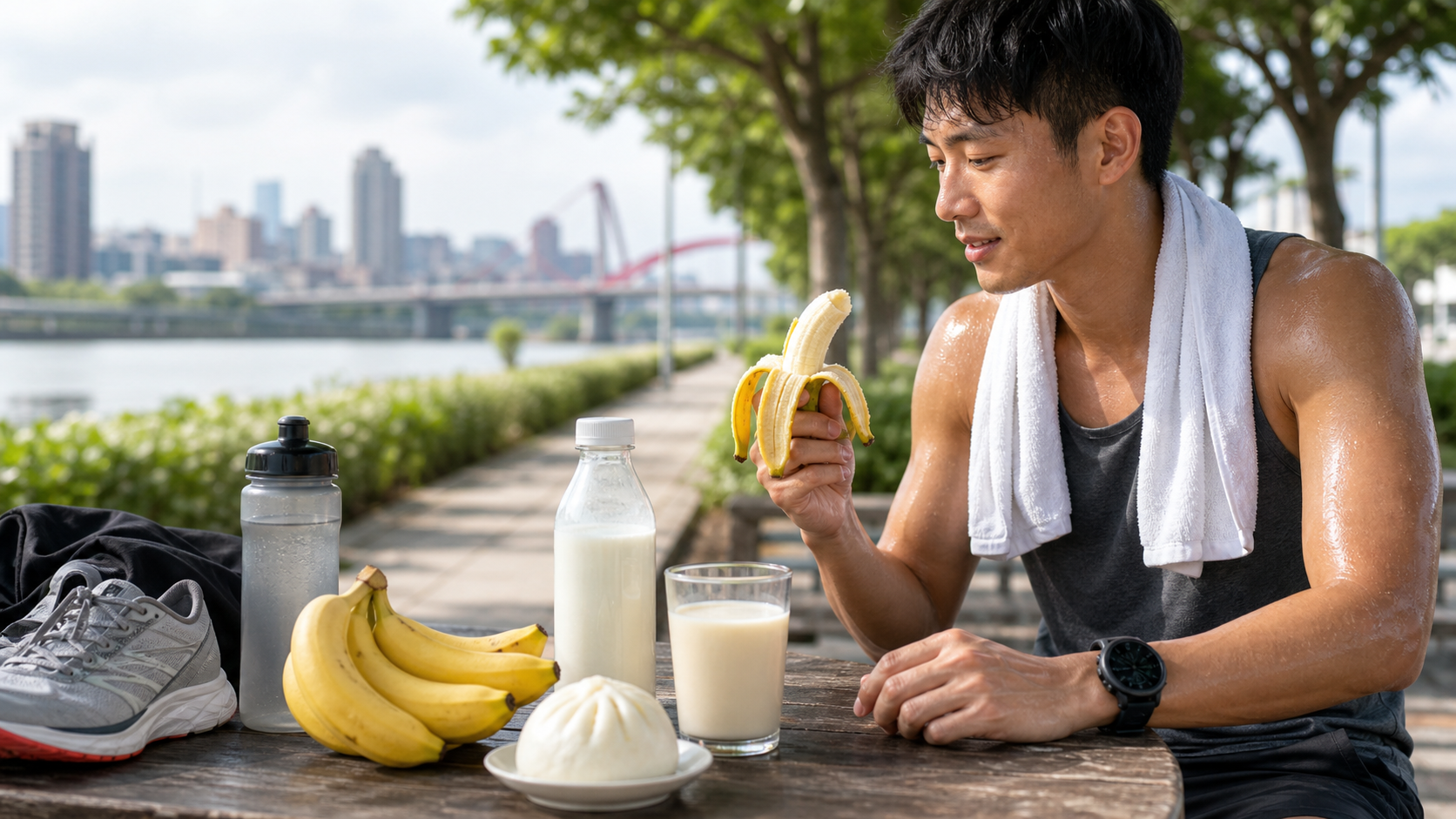
Option A: Fresh Milk + Banana (Fastest)
- Low-fat fresh milk 500ml: 24g carbs, 17g protein
- 2 Bananas: 54g carbs
- Total: 78g carbs, 17g protein (ratio approx. 4.6:1) ✓
- Pros: Buy and drink immediately at convenience stores, zero preparation time.
Option B: Unsweetened Soy Milk + Mantou (Vegetarian Version)
- Unsweetened soy milk 500ml: 15g carbs, 15g protein
- 1.5 White Mantou (approx. 120g): 75g carbs
- Total: 90g carbs, 15g protein (ratio 6:1, slightly higher in carbs) ✓
- Pros: Traditional Taiwanese food, vegan-friendly, high cost-performance ratio.
Option C: Steamed Rice + Steamed Chicken Leg (Complete Recovery Meal)
- 1.5 bowls of white rice (approx. 300g): 83g carbs
- 1 Steamed chicken leg (skinless, approx. 150g): 30g protein, 8g fat
- Total: 83g carbs, 30g protein (ratio approx. 2.8:1)
- Note: Although protein is in excess, it remains an excellent recovery choice.
Option D: Greek Yogurt + Banana (Western Version)
- Greek yogurt 200g: 17g protein, 10g carbs
- 2 Bananas: 54g carbs
- 1 tablespoon honey: 17g carbs
- Total: 81g carbs, 17g protein (ratio 4.8:1) ✓
Option E: Taiwanese Rice Milk + Tea Egg (Local Version)
- Taiwanese rice milk (with sesame paste) 500ml: 60g carbs, 8g protein
- 2 Tea eggs: 12g protein
- Total: 60g carbs, 20g protein (ratio 3:1, can add a banana to adjust) ✓
Extended Recovery Nutrition Strategies
Complete Recovery Meal After the Golden Window (30–120 minutes later)
After the light snack in the golden window, you should consume a full meal within 1–2 hours:
- Carbohydrates: Complex starches such as white rice, noodles, or sweet potatoes.
- Protein: Chicken breast, fish, or tofu, reaching 30–40g.
- Vegetables: Dark-colored vegetables to replenish vitamins and minerals.
- Fat: Moderate amounts of nuts or avocado to aid the absorption of fat-soluble vitamins.
Pre-sleep Casein Supplementation (Optional)
After long-distance running (over 25km), consuming 30g of slow-release protein (such as Greek yogurt) before bed can extend the efficiency of muscle repair throughout the night:
- Greek yogurt 150g (30 minutes before bed)
- Tofu 150g (soy protein)
Hydration Synchronization Strategy
Recovery is not just about food; hydration also requires a strategy:
- For every 1kg of body weight lost (difference between pre- and post-run weight), replenish 1.2–1.5L of fluid.
- Recovery drinks should contain sodium (sports drinks or salted soy milk) to help retain fluid in the bloodstream.
- Consuming large amounts of pure water may dilute electrolytes; it is recommended to mix sports drinks and water in a 1:1 ratio.
Practical Advice
- Drink a cup of soy milk or milk immediately after finishing your run, then go home to shower and change; this makes time management easier.
- Keep a convenience store rice ball + soy milk in your bag before a long run so you can refuel immediately without needing to make decisions on the spot.
- If you have no appetite after running (common after intense exercise), prioritize liquid recovery meals (milk, soy milk, sports drinks).
- Avoid drinking beer immediately after a run—alcohol inhibits protein synthesis and is a diuretic, making it an enemy of recovery.
Conclusion
The 4:1 carbohydrate-to-protein ratio is not a rigid formula, but a concept to remind runners to “replenish both macronutrients simultaneously.” Taiwan’s abundant food choices—from soy milk and mantou to fresh milk and bananas—make it easy to achieve this ratio. Establishing a recovery nutrition habit after every long run will not only accelerate recovery but also accumulate training adaptations over the long term, allowing your running performance to rise steadily.
Related Topics
- Post-Run Recovery Nutrition: Protein and Carbohydrate Ratios for the 30-Minute Golden Window
- Post-Run Nutrition: The Golden Ratio of Protein and Carbohydrates
- Nutritional Recovery Window After Running: The Golden Ratio of Carbohydrates and Protein
- The Golden 30 Minutes of Post-Run Recovery: The Best Timing for Protein and Carbohydrate Supplementation
CT暗黑廚房) 車友必備 宇宙無敵鮮蚵湯 幫助訓練恢復 天然食補 好市多 超肥鮮蚵 破PR
7 年前
西進武嶺 免費訓練分析服務 Intervals | 練不夠還是練過頭?你哪一種類型選手?AI模型告訴你! | 備戰神器 | 公路車 訓練 | CT Yeh
4 年前
2021 96聯賽 桃園市長盃 4K多視角實況 當天選手瓦數/推力比/均速/時間 即時數據分析 | 公路車 | CT Yeh
5 年前
靠單車減肥35公斤 心得分享與整理
7 年前
live) 超越北高 之一日北高12小時 策略
7 年前
一日北高/長距離團騎 常見問題補充篇 / 組團或跟團的眉角 / 壯車友容易被瘦車友慢性拉爆 / 原來屁股痛可能是這個原因...? / 風場配速法 / 公路車 / CT Yeh
2 年前
FTL 與 SYB 車隊專訪 西進武嶺 實用攻略分享! 2小時 如何練?!你不知道的眉角!新手準備武嶺必看 EP1 | 實力派女車友 | 精華版 | 公路車 | CTYeh
4 年前
摔車後補裝備: 好市多新款單車安全帽& Specialized Romin 北高整路屁股都不痛的坐墊 | 一千元居然有MIPS | CT Yeh | 公路車
4 年前