Taroko Gorge Marathon Guide: Managing Temperature Swings and Nutrition Timing in the Canyon Environment
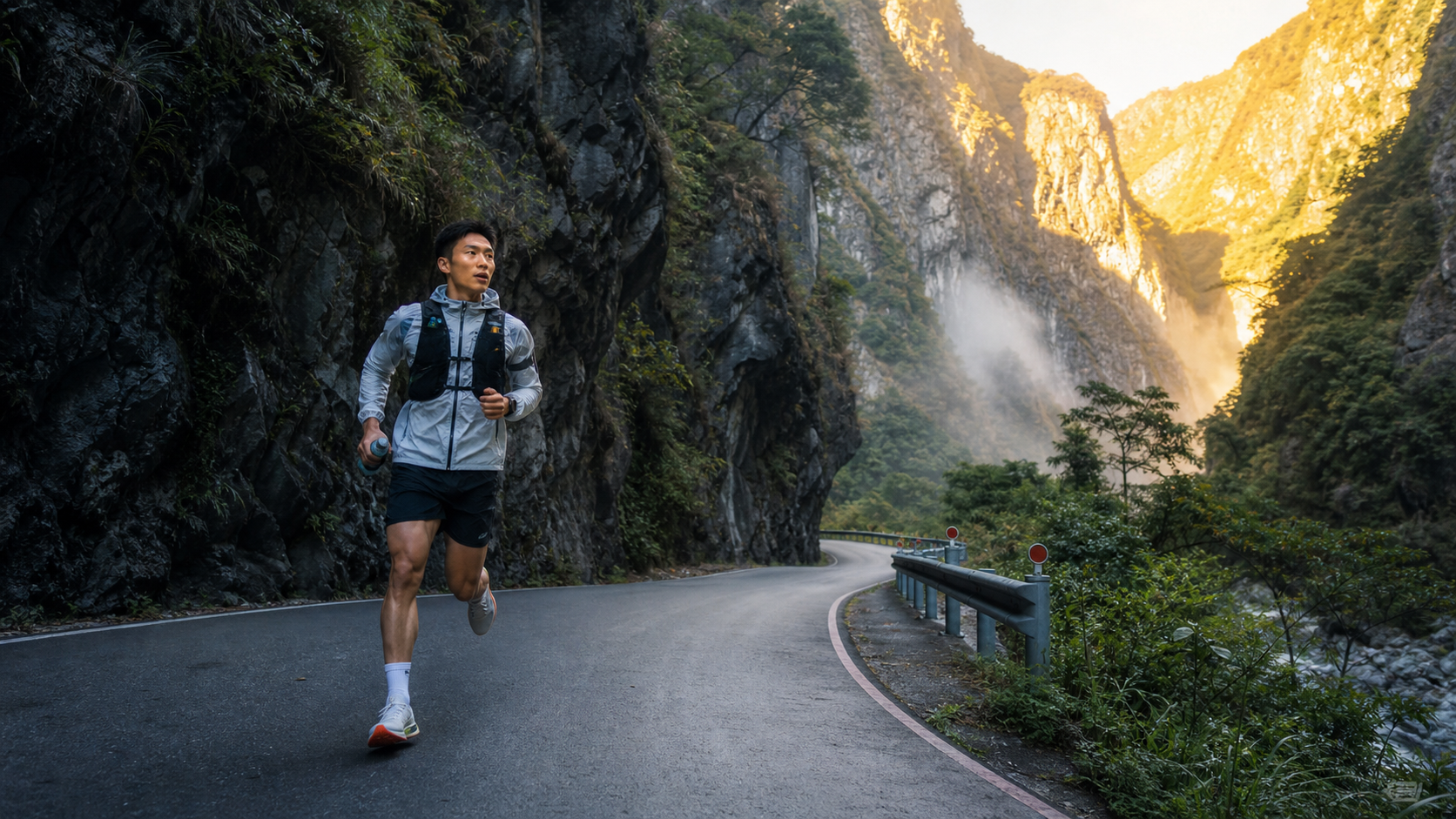
Introduction
The Taroko Gorge Marathon is one of Taiwan’s most spectacular mountain marathons, with a course that winds deep into Hualien’s Taroko National Park, weaving through the magnificent gorge. However, the challenge of this course comes not only from the elevation gain, but also from the unique gorge microclimate: chilly early-morning temperatures, rapid warming after sunrise, and unstable wind patterns caused by the gorge terrain are all factors runners must prepare for in advance. This article provides a complete guide covering three key aspects: environmental analysis, temperature difference management, and nutrition strategies.
Gorge Microclimate: Taiwan’s Marathon with the Greatest Temperature Swings
The unique terrain of Taroko Gorge creates significant temperature differences before and after sunrise, and combined with the temperature gradient from elevation changes, the perceived temperature across different sections of the course can vary by more than 10°C.
| Time Point | Typical Temperature (March) | Perceived Conditions | Physical Impact |
|---|---|---|---|
| Start (early morning 6:00) | 10–13°C | Cool to chilly | Muscles are stiffer; thorough warm-up needed |
| After sunrise (7:30–8:00) | 15–18°C | Comfortable | Optimal performance window |
| Mid-course (after 9:00) | 20–24°C | Warm | Increased sweating; higher hydration needs |
| Gorge exit section | 25–28°C | Humid and hot | Elevated heat stress risk |
Layered Clothing Strategy
Given such wide temperature swings, “layered clothing” is the smartest choice:
- Outer layer: Lightweight windproof vest or compression arm sleeves; can be removed and tied around the waist after 5–8 km
- Mid layer: Moisture-wicking long-sleeve top to maintain core body temperature during cooler sections
- Shoe selection: Waterproof or quick-drying materials recommended, as some gorge sections may be damp from mountain springs
Elevation and Breathing: Energy Management on Gorge Terrain
The Taroko Marathon course features a cumulative elevation gain of approximately 350–500 meters (varies slightly by year’s course design), distributed mainly across the following sections:
- Early section (0–8 km): Gentle uphill; warm up moderately and avoid rushing the pace
- Mid section (12–20 km): Steepest section, with some curves reaching 6–8% grade
- Later section (25–35 km): Mostly downhill, but knees bear cumulative stress
Breathing recommendations for gorge running:
- Gorge air is humid and oxygen-rich, but air circulation is poor in tunnel sections; breathe deeper when passing through
- On uphill sections, adopt a 3-step inhale, 2-step exhale rhythm to maintain aerobic metabolism
- On downhill sections, slow your breathing rate and focus attention on foot placement safety
Nutrition Strategy: Timing Matters More Than Quantity
In the gorge environment, judging nutrition timing is more critical than in a flat marathon, because temperature changes significantly affect sweat rate and electrolyte loss.
| Course Section | Temperature Conditions | Hydration Focus | Energy Intake |
|---|---|---|---|
| 0–10 km | Cool | Light hydration (150ml per station) | No rush to take energy gels |
| 10–20 km | Gradually warming | Increase hydration (200ml per station) | Begin taking energy gels or bananas |
| 20–30 km | Warm section | Hydrate at every station (250ml) | Prioritize electrolyte drinks; take salt tablets |
| 30–42 km | Humid and hot exiting gorge | Actively pour water to cool down | Take final energy gel as conditions dictate |
Smart use of aid stations:
- Aid stations near gorge tunnel sections are crowded; move to the outer side early to grab water
- When pouring water to cool down, prioritize the head, neck, and wrists—do not pour on your feet to avoid water pooling in your shoes
- Consume solid foods (bananas, crackers) before uphill sections to give your stomach time to digest
Safety Precautions
The Taroko course runs close to gorge edges and through tunnels, making safety the top priority:
- Tunnel sections: Lighting is dim; slow down automatically and do not force overtakes
- Cliffside sections: Run on the mountain side, away from guardrail edges
- Rockfall advisories: Check the organizer’s course condition announcements before the race; wear a helmet in sections with rockfall risk
- Emergency assistance: Cell phone signal is unreliable inside the gorge; memorize the locations of each checkpoint
Practical Tips
- Arrive in Hualien 2 days early to acclimate to the gorge’s humidity and temperature
- Do 10–15 minutes of dynamic warm-up before departing in the early morning to activate muscles in the cold
- Carry a disposable emergency blanket to stay warm if you have to wait for an extended period during the race
- The gorge scenery is spectacular, but don’t stop for selfies longer than 30 seconds, or your body will cool down
Conclusion
The Taroko Gorge Marathon is one of Taiwan’s most unique events, with the majestic mountains and rivers serving as the most beautiful backdrop for runners. By fully understanding the temperature swings of the gorge microclimate, precisely mastering nutrition timing, and always keeping safety first, you will be able to complete an unforgettable gorge run on this awe-inspiring course.
Related Reading
- Taroko Gorge Marathon: Elevation Gain Guide and Altitude Adaptation Strategies for Mountain Racing
- Taroko Gorge Marathon: The Ultimate Challenge in a Magnificent Gorge
- Taroko Gorge Marathon Guide: Climbing Strategies and Stunning Scenery on a Mountain Course
- The Mental Challenge of the Taroko Gorge Marathon: Balancing Gorge Claustrophobia and Scenic Motivation
台灣登山王之路 KOM 全程參賽4K臨空錄影 PART1 穿越峽谷地形! #東進武嶺 太魯閣 / 燕子口 / 天祥 / 西寶 PART1 (公路車 / CT Yeh)
3 年前
2023 夏季KOM 參賽實況 / 穿越空拍視角 / 整車都凸台 / 太魯閣峽谷x合歡山絕美大景 / 東進武嶺 / Taiwan KOM Challenge / 公路車 / CT Yeh
3 年前
#東進武嶺 全程實況錄影 5小時半 #夏季KOM #太魯閣 Taiwan KOM Challenge Reality Video Taroko scenery
7 年前
微東進 太魯閣 蘇花 單車兩日遊 ! 颱風過後路況超刺激 行程大亂 | 最狂的鹹酥雞訂單 | CT Yeh | 4K 高畫質空拍絕景!
4 年前
太平山單車員工旅遊 | 這樣玩CP值最高!| 公路車
5 年前
水金九不厭五分 10度寒流冷到不願停!feat. 卡卡 / 公路車 / CT Yeh
6 個月前
一日北高前的高裝檢 | 北高 360 | 挑戰11小時的裝備 | 一日雙塔 | 補給
6 年前
大武山後門26%歡樂陡坡!JJSC南台灣單車行Day2 / 被颱風追著跑 / 公路車 / CT Yeh
2 年前