Taiwan Cycling League (TCL) Format Explained: Points System and Individual Time Trial Challenges
Introduction
The Taiwan Cycling League (TCL) has grown rapidly in recent years, attracting a large number of amateur riders from north to south to compete. However, many novice riders are confused about the TCL points system: when are points awarded? How do you move up a category? How does the individual time trial work? This article organizes the TCL format structure to help every rider who is committed to the sport build a clear competition roadmap.
TCL Basic Format Structure
TCL uses a category-based points system, dividing participants into different levels by ability (typically A, B, C, D groups or Elite and Amateur groups), with each category having its own independent points ranking.
Main Event Types
| Event Type | Scoring Method | Features |
|---|---|---|
| Road Race | Finish position points | Peloton tactics matter most; this is TCL’s primary format |
| Individual Time Trial (ITT) | Finish time points | Pure ability test, no peloton influence |
| Criterium | Sprint points + position points | High speed, highly spectator-friendly |
| Hill Climb | Finish time points | Tests pure climbing ability |
Points Allocation Rules
TCL points generally follow the spirit of the UCI points system, but are adjusted for amateur events. In general:
- 1st place: 25 points
- 2nd place: 20 points
- 3rd place: 16 points
- 4th place: 13 points
- 5th place: 11 points
- 6th–10th place: 8, 7, 6, 5, 4 points
- Finishing: 1–3 base points depending on category
Individual Time Trial (ITT) Strategy
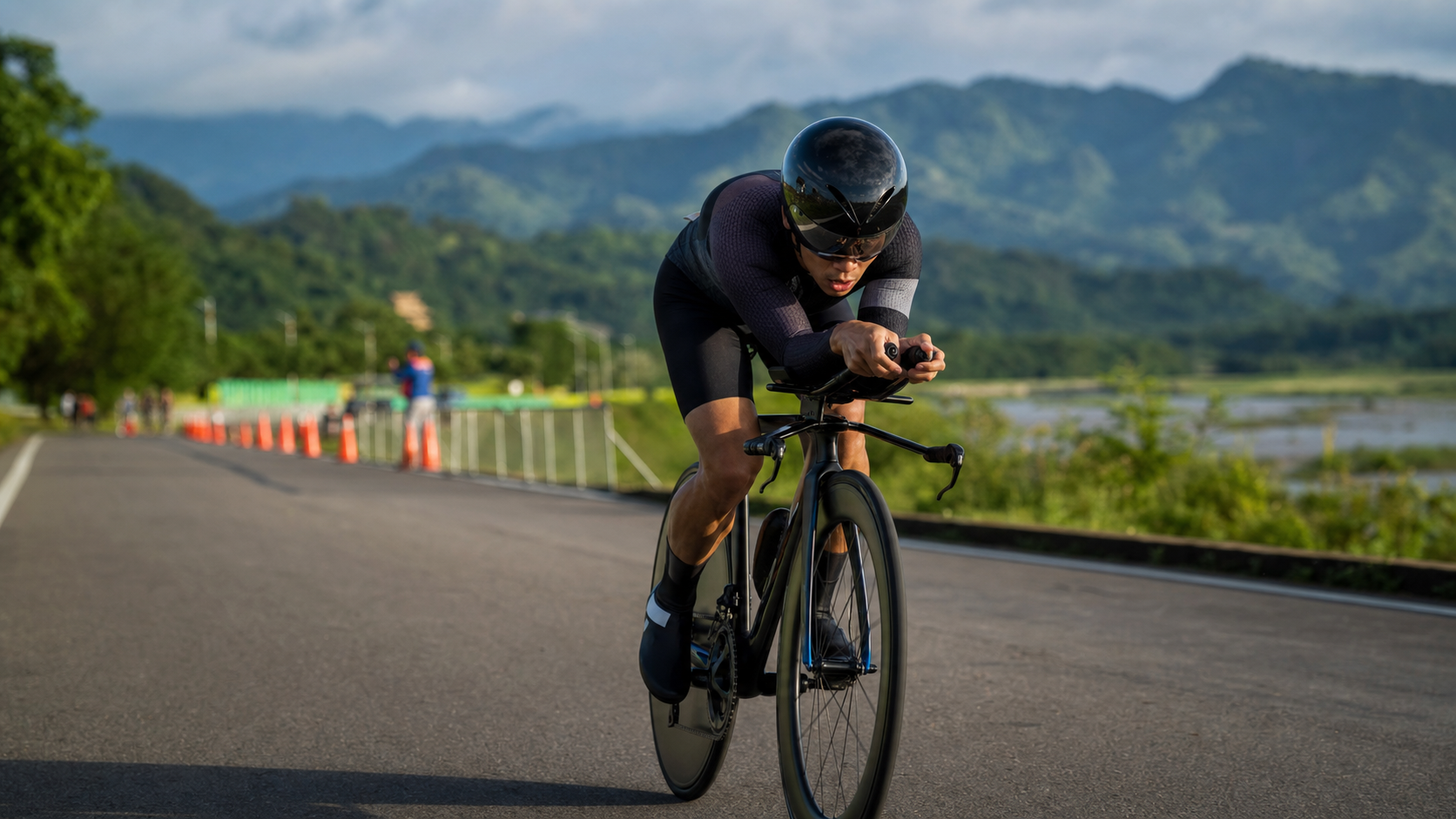
The individual time trial is the “fairest” event in TCL—each rider starts alone and covers the same distance as fast as possible. No peloton protection, no tactical deception; it tests pure power output.
ITT Equipment Selection
- Frame: If you have a TT bike or triathlon bike, use it; if not, a road bike with aero bars still offers significant aerodynamic drag advantages
- Helmet: A TT helmet saves 30–60 seconds per 40 km compared to a road helmet
- Wheels: Disc (solid) rear wheel + 60–80mm deep-section front wheel maximizes aerodynamic benefit on flat courses
Start Interval Strategy
ITTs typically start at 1–2 minute intervals. The “chasing strategy” is a choice for some strong riders: observe the rider starting ahead of you, chase at a slightly higher pace than theirs, and use the psychological pressure of “not being caught” to maintain high intensity. But this requires very precise self-pacing judgment.
TCL Promotion and Relegation System Explained
Promotion Conditions
TCL promotion typically depends on points ranking:
- Points threshold: Reaching a specific points threshold within a season (thresholds differ by category)
- Result threshold: Finishing in the top 3 in any single event qualifies you to apply for promotion
- Mandatory promotion: Some events use a mandatory promotion system for top finishers to prevent strong riders from dominating lower categories long-term
Relegation Conditions
- Points falling below the minimum threshold within a season
- Full-year absence (failing to complete the minimum number of race starts)
Promotion Strategy Recommendations
- Early-season points: Participate actively early in the season to secure “finish base points” and build a points foundation
- Selective participation: Choose events that best suit your style based on course characteristics (e.g., climbers focus on hill climb events)
- Avoid point-losing events: If you have a clear points lead, assess whether it’s worth risking high-intensity showdown events
TCL Race Preparation Planning for Taiwan Riders
Annual Race Calendar Planning Recommendations
- January–March (Preparation period): Base fitness training, build aerobic foundation, don’t chase results
- April–June (Transition period): Begin adding intensity training, participate in early-season events to feel the race rhythm
- July–September (Peak period): Enter the season’s peak, focus on key points-scoring events
- October–December (Recovery period): Organize season data, assess promotion potential, plan winter training
Practical Advice
- Download the official race regulations: TCL rules may have minor adjustments each year; be sure to read the current year’s official rules before competing
- Join a team: In TCL, racing with a team offers special tactical advantages (drafting, support, etc.) that can help achieve results difficult to reach when racing solo
- Track every points haul: Use a spreadsheet to track your points from each event and your competitors’ points movements
- Understand sprint points design in points-scoring races: Some events feature sprint points at specific laps; actively sprinting mid-race can earn bonus points
- Watch a race first: Before your first race, attend as a spectator to understand the race environment and procedures
Conclusion
The TCL format is designed to create a fair competitive environment, allowing riders of all ability levels to find their own stage. Whether you’re a D-category novice just stepping into the racing world or a seasoned rider preparing to challenge the Elite category, understanding the format itself is the first step to gaining an advantage in competition. You can observe and study your opponents on the course, but only you truly know your own strengths—use the format wisely, maximize your strengths, and that is the smart rider’s TCL playbook.
Related Reading
- Taiwan Amateur Cycling Leagues: A Complete Guide to OCUP and CHC Series Events
- UCI World Ranking System Explained: How Individual Points and Team Points Are Calculated and Their Strategic Impact
- UCI WorldTour Points System Fully Explained: How Pro Riders Calculate Points and Tiers
- The Complete Guide to Taiwan Road Cycling Races: From KOM to UCI Points Races in the Competitive World
Zwift跨國線上追逐賽 第二站 台灣 TTR vs. 日本 JETT 第二場 (台灣追日本) | 數百位國內外公路車高手,同場較勁 | 多視角賽事直播
4 年前
一日北高/長距離團騎 常見問題補充篇 / 組團或跟團的眉角 / 壯車友容易被瘦車友慢性拉爆 / 原來屁股痛可能是這個原因...? / 風場配速法 / 公路車 / CT Yeh
2 年前
西進武嶺 免費訓練分析服務 Intervals | 練不夠還是練過頭?你哪一種類型選手?AI模型告訴你! | 備戰神器 | 公路車 訓練 | CT Yeh
4 年前
新屋團體繞圈賽 | 眾多菁英好手賽道奔馳 | 千瓦女子軍團 | 無敵交管狂獲好評 明年你一定不能錯過 | #公路車
5 年前
單車元宇宙新霸主?TrainingPeaks Virtual 實測 / Zwift 完美平替? 還是超越?/ 有台灣國旗!前身 indieVelo / 公路車 / CT Yeh
1 年前
如何 搶 #中央山脈 報名 #公路車 #報名 #搶票
7 年前
單車實況) 車測中心高速賽道 96 彰化讚 挑戰組一圈實錄 | ARTC
6 年前
2023桃園團體繞圈賽/環台賽等級拍攝/賽事精華/ 10人一隊缺一不可!50隊廝殺大場面 / 第三屆 海鷗繞圈賽 /公路車/CT Yeh
2 年前