Introduction
“You have a big heart”—for endurance athletes, this is a compliment, but it also raises a common question: is a bigger heart a good thing or a bad thing? Long-term high-intensity cycling training triggers a series of structural adaptations in the heart, medically known as “Athlete’s Heart.” For most people, these changes are completely benign and reversible, but in rare cases they can be difficult to distinguish from certain heart diseases and require professional evaluation.
In recent years, several sudden-death incidents during long-distance cycling events in Taiwan have drawn recreational riders’ attention to heart health issues. This article explains the effects of long-term cycling on the heart from a scientific perspective, helping Taiwanese riders approach this topic rationally.
Structural Adaptations of the Heart from Long-Term Cycling
Endurance sports (such as long-distance cycling) primarily rely on aerobic metabolism. To deliver large volumes of blood over extended periods, the heart undergoes the following adaptations:
Ventricular Chamber Enlargement (Eccentric Hypertrophy)
- Increased left ventricular chamber volume: Athletes’ left ventricular volume is on average 20–30% larger than that of the general population
- Stroke volume per heartbeat increases, improving efficiency
- Resting heart rate decreases (elite cyclists’ resting heart rate can drop to 30–40 bpm)
Ventricular Wall Thickening (Mild Concentric Hypertrophy)
- The ventricular wall thickens moderately to maintain normal wall tension in response to increased volume
- Myocardial fibers thicken, enhancing contractile strength
Electrical System Adaptations of the Heart
- Increased vagal tone shifts autonomic balance toward parasympathetic dominance
- Electrocardiogram (ECG) may show “athlete’s ECG” changes such as sinus bradycardia, early repolarization, and first-degree atrioventricular block
Athlete’s Heart vs. Pathological Heart Disease
This is the most critical differential diagnosis. The table below summarizes the main differences:
| Feature | Athlete’s Heart (Benign) | Cardiomyopathy (Pathological) |
|---|---|---|
| Symptoms | Asymptomatic | Syncope, chest pain, palpitations |
| Echocardiographic wall thickness | <13mm | >15mm (HCM) |
| Changes after detraining | Gradually returns to normal | Persists |
| Left ventricular filling function | Normal or better than normal | May be impaired |
| Family history | Unremarkable | Possible family history of sudden death |
| Holter ECG | Occasional benign arrhythmias | Complex arrhythmias |
Hypertrophic Cardiomyopathy (HCM)
Hypertrophic Cardiomyopathy is the most common cause of sudden death in young athletes, and related cases are also reported in Taiwan each year. HCM ventricular wall thickness typically exceeds 15mm and does not regress after cessation of training; in contrast, athlete’s heart usually does not exceed 13mm and gradually returns to normal after detraining.
The Relationship Between Cycling Intensity and Cardiac Load
Aerobic Training Zones (Zone 1–3)
- Heart rate approximately 50–80% of maximum heart rate
- Primarily aerobic metabolism
- Stable cardiac load; this is the optimal training intensity for promoting heart health
- 150–300 minutes per week of moderate-intensity exercise has been proven to significantly reduce cardiovascular disease risk
High-Intensity Training (Zone 4–5)
- Heart rate exceeds 85–90% of maximum heart rate
- Short-term enhancement of cardiac contractile capacity
- However, long-term excessive high-intensity training (e.g., more than 10 hours per week in Zone 4–5) may increase the risk of atrial fibrillation (AF)
- One study showed that long-term high-intensity endurance athletes have a 5-fold higher risk of AF compared to the general population
Risk Assessment for Recreational Riders
| Weekly Cycling Volume | Cardiac Risk | Recommendation |
|---|---|---|
| <150 minutes/week | Nearly none | Keep it up |
| 150–300 minutes/week (moderate intensity) | Lowest; protective effect | Ideal state |
| 300–500 minutes/week | Low, but regular cardiac evaluation is advised | Suitable for riders in training |
| >500 minutes/week (predominantly high intensity) | Long-term risks such as AF need monitoring | Cardiology follow-up recommended |
Heart Health Recommendations for Taiwanese Recreational Riders
Screening Recommendations
According to the recommendations of the Taiwan Society of Cardiology, the following groups should undergo a baseline cardiac evaluation before starting high-intensity cycling training:
- Men >40 years old, women >50 years old
- Family history of cardiovascular disease (parents or siblings with heart attack or sudden death before age 55)
- History of hypertension, diabetes, or hyperlipidemia
- Experience of chest pain, syncope, or severe breathlessness during exercise
Recommended Evaluation Items
- Resting Electrocardiogram (ECG): Baseline screening, available at family medicine or cardiology clinics
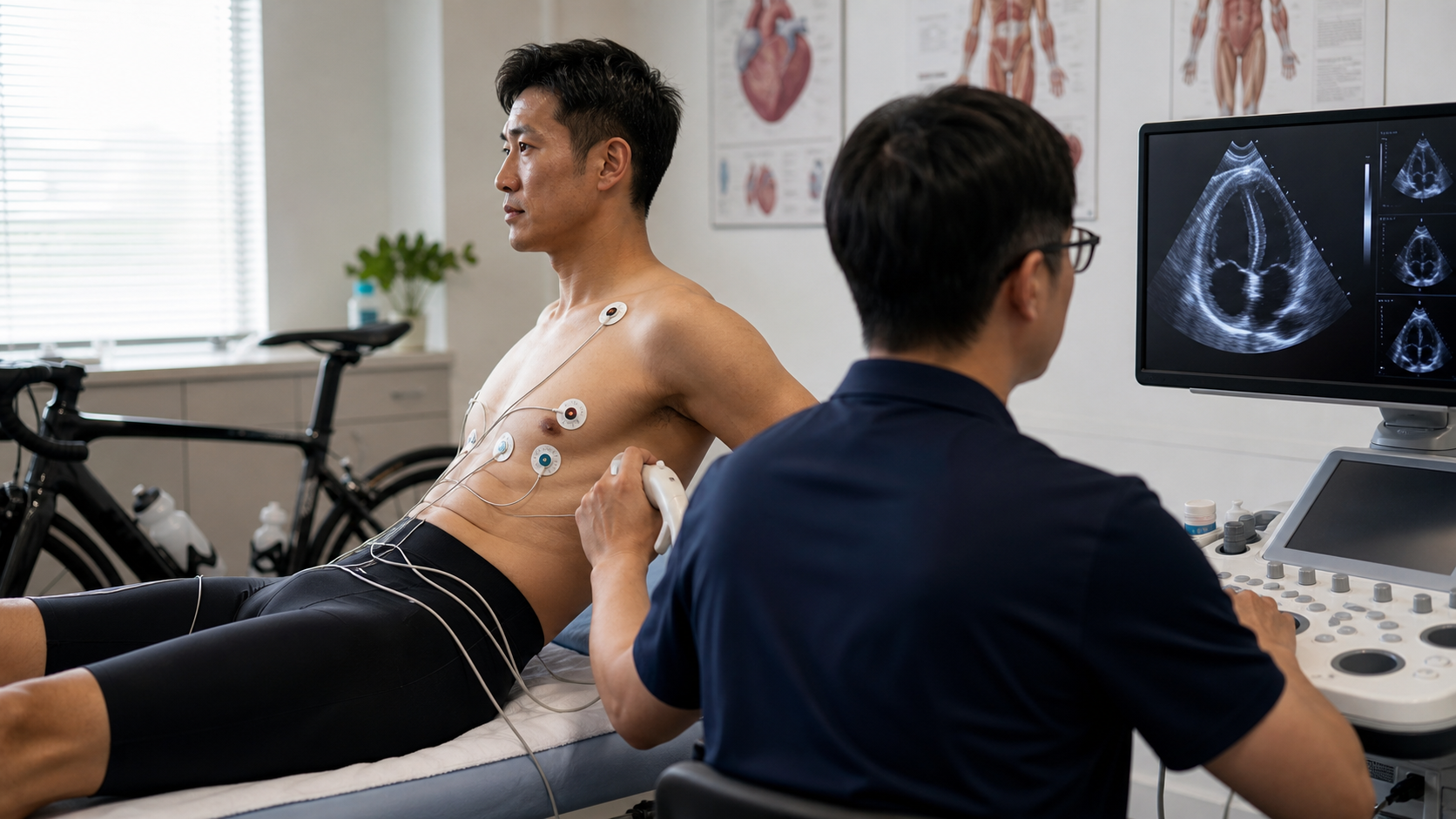
- Echocardiogram (Echo): Assesses ventricular size and myocardial thickness; can differentiate HCM
- Exercise ECG: Observes cardiac response under stress
- 24-Hour Holter Monitoring: Recommended if palpitations or irregular heartbeats are present
Practical Recommendations
- Monitor resting heart rate: Measure at the same time each morning. If resting heart rate is more than 10 bpm above your average for several consecutive days, it may signal overtraining or illness
- Use heart rate-based training: Avoid prolonged training in high heart rate zones (>90% HRmax); 80% of training volume should be in the low-intensity aerobic zone
- Seek medical attention for chest pain, syncope, or extreme breathlessness: If these symptoms occur during exercise, stop immediately and go to the emergency room
Conclusion
The adaptive changes in the heart from long-term cycling are a manifestation of the body’s wisdom. Under appropriate training intensity, these changes make your heart stronger and more efficient. Through regular cardiac health evaluations, you can confidently enjoy the heart-protective benefits of cycling while identifying any signals that need attention early. A healthy heart is what carries you down every road you long to ride.
Related Reading
- Improving Heart Function Through Cycling: Long-Term Structural Adaptations from Regular Riding
- Cardiac Adaptations in Cycling: Changes in Heart Size and Function from Long-Term Aerobic Training
- Cycling and Cardiac Adaptation: Long-Term Benefits of Regular Riding for Cardiovascular Health
- Heart Health in Endurance Athletes: Exercise-Induced Cardiac Hypertrophy vs. Pathological Heart Disease
一日北高/長距離團騎 常見問題補充篇 / 組團或跟團的眉角 / 壯車友容易被瘦車友慢性拉爆 / 原來屁股痛可能是這個原因...? / 風場配速法 / 公路車 / CT Yeh
2 年前
#公路車 #Fitting 靠人工智慧APP 幫你調整單車
6 年前
「悲情男車友」創作單曲 爆笑MV / 公路車 / CT Yeh / 4K劇情版
7 個月前
2025 自行車錶排行榜 兩萬車友大數據 / Garmin Bryton 排名會大洗牌嗎? / 全新的碼表前身分析 /公路車 / CT Yeh
1 年前
靠單車減肥35公斤 心得分享與整理
7 年前
#雙崎部落 單車挑戰賽 心跳破200 #公路車 Neko's Fun
6 年前
KHS 6/6 桃園大園單車樂騎活動紀錄 原來還有這些景點
6 年前
單車 一日北高 ( 雙城 ) 肥宅雙人瘋狂行 紀錄片 REACTO
10 年前