Introduction
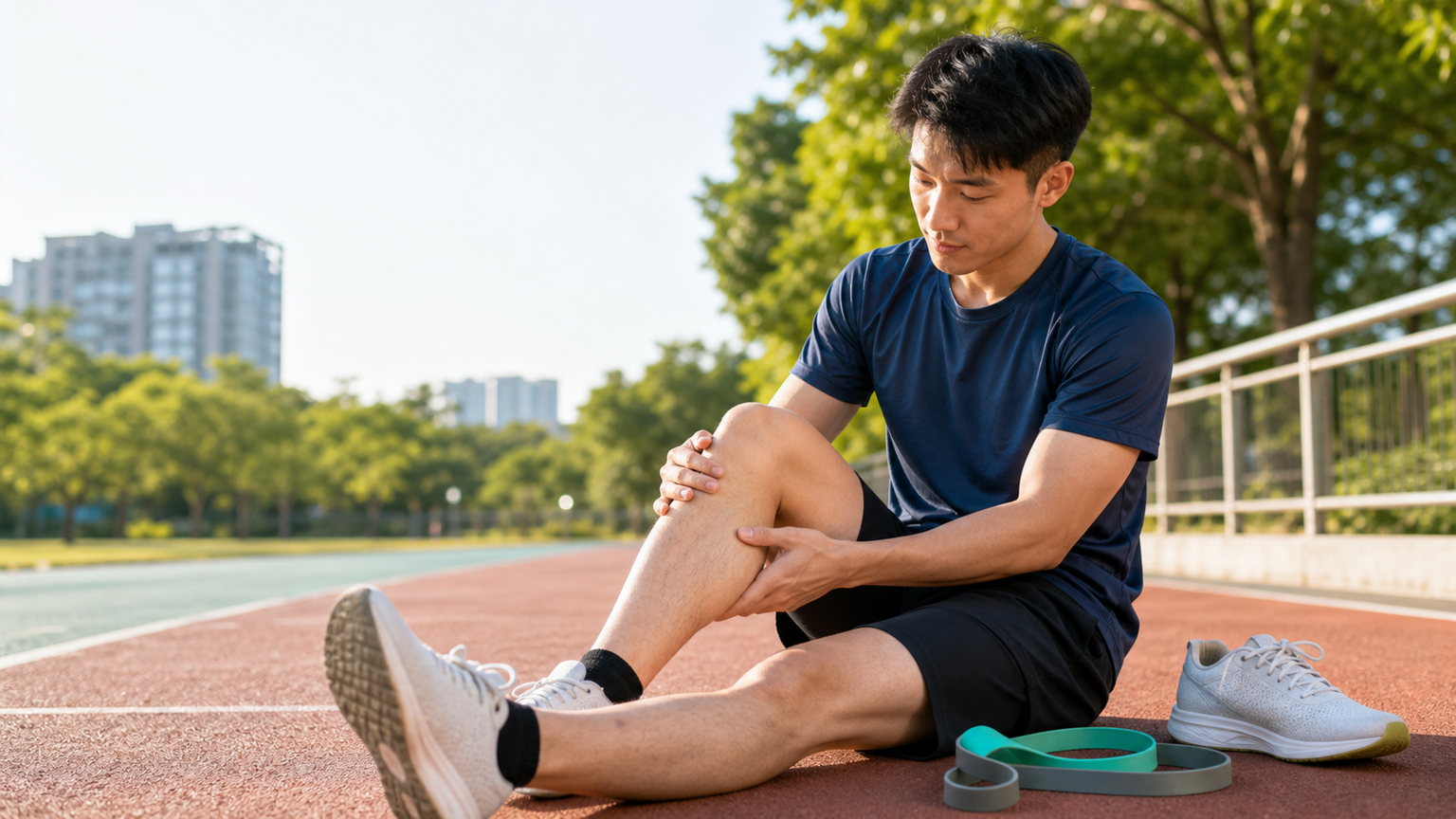
Runner’s Knee, formally known as Patellofemoral Pain Syndrome (PFPS), is another highly prevalent injury among runners, particularly common in female runners in Taiwan. The deep, dull ache on the front of the knee, which becomes more pronounced when climbing stairs or riding a scooter, significantly impacts training quality and daily life.
Biomechanics of Patellofemoral Pain
The patella (commonly known as the kneecap) acts like a “pulley,” moving within the trochlear groove of the femur. With every knee bend, it slides up and down while bearing pressure. Under normal conditions, the patella’s tracking path is precisely controlled by surrounding muscles and ligaments; once this control becomes imbalanced, the patella shifts laterally under pressure, causing abnormal wear on the articular cartilage and resulting in pain.
Main Factors Leading to Patellar Tracking Abnormalities
| Factor Type | Specific Description |
|---|---|
| Quadriceps imbalance | Vastus medialis oblique (VMO) is weak, vastus lateralis (VL) is overactive, pulling the patella outward |
| Insufficient gluteal strength | Weak gluteus medius causes knee valgus collapse during running |
| Tight hamstrings | Tight hamstrings create abnormal posterior knee tension, altering patellar loading |
| Excessive foot pronation | Collapsed arches cause tibial internal rotation, indirectly altering patellar tracking path |
| Running form issues | Overstriding and low cadence increase knee flexion angle and impact forces |
Identifying Symptoms
Typical symptoms:
- Deep pain or aching on the front or anterolateral aspect of the knee
- Pain worsens with stair climbing, standing up after prolonged sitting, or squatting
- Pain increases after long runs and improves with rest
- Occasional “clicking” sound in the knee (not necessarily indicative of a serious problem)
Diagnoses that are easily confused:
- Iliotibial band syndrome (pain on the lateral knee, not the front)
- Patellar tendinopathy (localized point tenderness at the inferior pole of the patella)
- Bursitis (more pronounced knee joint swelling)
If in doubt, it is recommended to consult a sports medicine or orthopedics specialist, and arrange for ultrasound or MRI if necessary.
Home Rehabilitation Plan
Phase 1: Pain Control (Weeks 1–2)
- Avoid pain-provoking activities; temporarily stop downhill running and speed training
- Switch to flat-ground cycling or swimming
- Patellar Taping: The McConnell taping technique can temporarily reduce pain, allowing training to continue
- Foam rolling: 2 minutes each on the lateral thigh (IT Band) and posterior thigh (hamstrings)
Phase 2: Strength Building (Weeks 3–8)
This is the most critical phase, rebuilding proper muscular control:
- Terminal Knee Extension: Place a resistance band around the back of the knee, extend the last 30 degrees in a standing position, focusing on stimulating the VMO
- Clamshell: Lie on your side with knees bent, externally rotate the top hip, 3 sets × 15 reps
- Band Walk: Step on a resistance band with both feet, walk laterally 10 steps and back, activating the gluteus medius
- Step-down: Stand on a step, slowly bend one knee 30 degrees (within pain-free range), focusing on controlling the knee to prevent inward collapse
- Wall Slide: Slowly squat against a wall to a pain-free angle, feet shoulder-width apart
Phase 3: Functional Training (After Week 8)
- Add lunges and lateral lunges to mimic running movement patterns
- Gait analysis on a treadmill: confirm no knee valgus collapse, maintain cadence at 175–180 steps/min
- Progressively introduce downhill running, starting with a 5% incline
Use of Assistive Devices
- Patellar Brace: Features a central opening design that guides patellar tracking, suitable for early-stage use
- Custom Orthotics: For runners with excessive foot pronation, corrective insoles can improve biomechanics at the root cause
- KT Tape: Applied on the lateral knee, providing proprioceptive feedback and mild support
Practical Prevention Tips
- Incorporate gluteal and core stability training twice a week; do not only run
- The common scooter-riding posture in Taipei (knee held at a fixed angle for extended periods) can also aggravate PFPS; pay attention to keeping the knee aligned with the toes while riding
- Choose running shoes with arch support and appropriate cushioning; avoid blindly following the trend of “thinner and more minimalist is better”
- Allow adequate knee recovery after hiking or mountain climbing; avoid repeated downhill loading on consecutive days
Conclusion
Runner’s knee is not an incurable condition; rather, it is a training signal that “forces an upgrade” for the runner. Most studies show that targeted gluteal and quadriceps strengthening programs, combined with postural correction, lead to significant improvement in over 80% of patients within 8–12 weeks. Building whole-body running fitness—not just cardiorespiratory endurance—is the fundamental way to prevent recurrent knee injuries.
Related Reading
- Runner’s Knee (Patellofemoral Pain Syndrome): Causes, Prevention, and Rehabilitation
- Runner’s Knee (Patellofemoral Pain Syndrome) Complete Guide: A Comprehensive Analysis from Causes to Recovery
- The Complete Prevention and Treatment Guide for Runner’s Knee (Patellofemoral Pain Syndrome)
- Runner’s Knee (Patellofemoral Pain Syndrome): Causes, Self-Assessment, and Evidence-Based Rehabilitation Pathways
一日北高常見問題大集合 | 攻略 | 路線 | 訓練 | 補給 | 自行車 單車 | 一日雙城 | 雙塔 | TWB北高360 | 屁股痛
6 年前
一日北高/長距離團騎 常見問題補充篇 / 組團或跟團的眉角 / 壯車友容易被瘦車友慢性拉爆 / 原來屁股痛可能是這個原因...? / 風場配速法 / 公路車 / CT Yeh
2 年前
白沙屯媽祖進香在家走!UREVO 坡度自調走步機 / 可連接訓練遊戲APP MyWhoosh / 邊看直播邊走起來 / CT Yeh
11 個月前
爬陡坡被爆胎的車友跑步超車 #cycling #里佳部落
9 個月前
iPhone內建一秒變長腿🤣 車友必備#cycling
2 年前
單車 一日北高 ( 雙城 ) 肥宅雙人瘋狂行 紀錄片 REACTO
10 年前
#公路車 #Fitting 靠人工智慧APP 幫你調整單車
6 年前
摔車後補裝備: 好市多新款單車安全帽& Specialized Romin 北高整路屁股都不痛的坐墊 | 一千元居然有MIPS | CT Yeh | 公路車
4 年前