文章導覽
- Introduction
- The Core Technology of Carbon-Plated Shoes
- 1. Supercritical Foamed EVA Midsoles (e.g. Pebax/ZoomX/LightStrike Pro)
- 2. Full-Length Carbon Plate
- 3. Rocker Outsole Design
- Scientific Research: How Big Is the Benefit?
- Who Carbon-Plated Shoes Are Suited For
- Allocating Carbon-Plated Shoes Between Training and Racing
Introduction
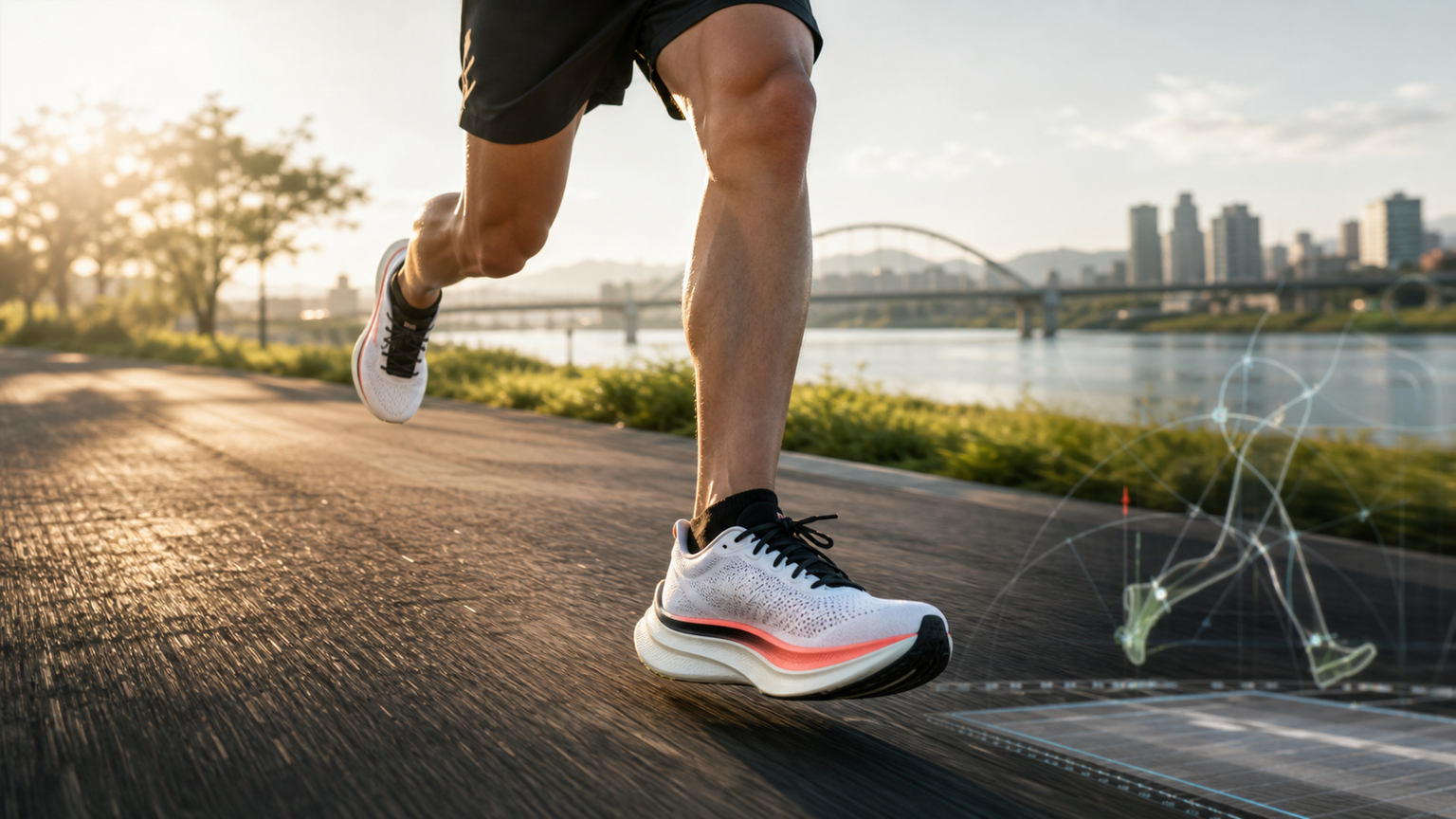
In 2016, Nike launched the first-generation Vaporfly and changed the rules of the marathon world. In the years that followed, world marathon records fell again and again, and carbon-plated racing shoes became essential speed gear for every serious runner. But how exactly do they work? Is the effect real science, or just marketing talk? And how should Taiwanese runners choose?
The Core Technology of Carbon-Plated Shoes
The performance of modern carbon-plated racing shoes comes from three technical elements working together:
1. Supercritical Foamed EVA Midsoles (e.g. Pebax/ZoomX/LightStrike Pro)
- Material: Uses Pebax (Nike ZoomX), TPU (ASICS MetaFoam+), or specialized EVA foams
- Properties: Energy return of 85–92%, compared to about 60–65% for traditional EVA
- Thickness: Forefoot/midsole thickness typically 35–40mm (traditional racing shoes: 20–25mm)
- Principle: With each footstrike, the foam compresses and stores elastic energy, then releases it during toe-off — functioning like a miniature spring
2. Full-Length Carbon Plate
- Position: A carbon-fiber plate embedded in the midsole, usually with a slight curve (rocker design)
- Function:
- Limits excessive dorsiflexion at the forefoot joint (MTP joint), reducing energy loss
- Combined with the curved design, naturally rolls the center of mass forward, shortening push-off time
- Provides longitudinal stiffness, making the foot function more like a lever than a shock absorber
3. Rocker Outsole Design
- The forefoot outsole curves forward, allowing a smoother rolling push-off
- Combined with the plate’s stiffness, this reduces the range of motion the ankle needs to actively generate
Scientific Research: How Big Is the Benefit?
The pivotal study by Hoogkamer et al. 2017 (University of Colorado):
Testing elite runners in a controlled environment with the Nike Vaporfly 4%, the results were:
- Running economy (RE) improved by an average of 4.2%
- Translated into marathon performance: theoretically about a 2–3 minute improvement for sub-3-hour runners
- Range of benefit: large individual variation, with observations ranging from 0.8% to 9.8%
Subsequent studies added further data:
| Study (Year) | Sample | RE Improvement |
|---|---|---|
| Hoogkamer et al. 2017 | Elite runners | +4.2% |
| Barnes & Kilding 2019 | Amateur runners | +2.8% |
| Hunter et al. 2019 | Mixed levels | +3.1% |
| Reddit/Strava real-race analysis 2019 | Large amateur dataset | Estimated +2–3% |
Who Carbon-Plated Shoes Are Suited For
Not everyone is suited to, or benefits from, carbon-plated shoes:
- Runners with low cadence (< 165 steps/min): The plate’s lever effect requires sufficient cadence to take advantage of; too low a cadence may actually reduce efficiency
- Runners with weak forefoot strength: Carbon-plated shoes increase forefoot loading; if calf muscles and Achilles tendon strength are inadequate, injury risk may increase
- Those with a history of Achilles tendon injury: The high stack height and heel-to-toe drop design may aggravate Achilles issues
- Easy runs paced slower than 6:30/km: Beyond this pace range, the benefit of carbon plates diminishes significantly, or disappears altogether
Allocating Carbon-Plated Shoes Between Training and Racing
Practical considerations for Taiwanese runners:
Top-tier carbon-plated racing shoes (Nike Vaporfly/Alphafly, Adidas Adizero Adios Pro) typically cost NT$8,000–15,000 and have a short lifespan (300–500km). Using them for daily training offers very poor value for money.
Recommended strategy:
- Race shoes: Use top-tier carbon-plated racing shoes for 2–3 races per season
- Primary training shoes: Use non-carbon-plated shoes with good cushioning (Nike Invincible, ASICS Nimbus, etc.)
- Transition shoes: Use second-tier carbon-plated shoes (such as Nike Pegasus Racing, Adizero Boston) for tempo runs and pace training to simulate race-day feel
Shoe Selection Guide (Common Models in the Taiwan Market)
Racing tier (for race day):
- Nike Vaporfly 3: Versatile, adapts well to different cadences
- Adidas Adizero Adios Pro 3: Strong plate feel, suited to faster runners
- ASICS MetaSpeed Sky+: High-drop version, friendlier to heel-strikers
- HOKA Rocket X 2: Softer plate feel, friendlier for transitioning back after injury
Training tier (cushioned, with plate):
- New Balance FuelCell SC Trainer: A high-training-volume alternative to racing shoes
- Saucony Endorphin Speed 4: Fiberglass plate + supercritical foam, suitable for both training and racing
Practical Advice
- Try before you buy: The feel of carbon-plated shoes is highly personal, and plate feel varies significantly between brands; many running shoe stores in Taiwan offer trial runs
- Practice before race day: Run a few long runs (90 minutes) in your carbon-plated shoes 4–6 weeks before the race to let your body adapt
- Don’t over-trust the brand: The 2–4% benefit that a carbon plate provides is far smaller than the 10–20% improvement that comes from proper training — the shoe is the icing on the cake, not the foundation
Conclusion
Carbon-plated running shoes represent a genuine breakthrough in running gear science, and their benefits are backed by rigorous research, not just marketing talk. But they are an “amplifier,” not a “replacement” — they amplify the results of your training, they don’t substitute for it. Taiwanese runners should treat carbon-plated shoes as the final piece of the puzzle on race day, not as compensation for a lack of training.
Related Reading
- Carbon-Plated Shoe Review: The Real Performance Gains of Thick-Stack Carbon Plates for Marathon Times
- The Science of Carbon-Plated Running Shoes: A Deep Dive into Elastic Energy Return and Running Economy
- The Biomechanics of Carbon-Plated Shoes: A Scientific Explanation of Elastic Feedback and Running Efficiency
- Are Carbon-Plated Running Shoes Worth Buying? An In-Depth Benefit Analysis for Everyday Runners