Introduction
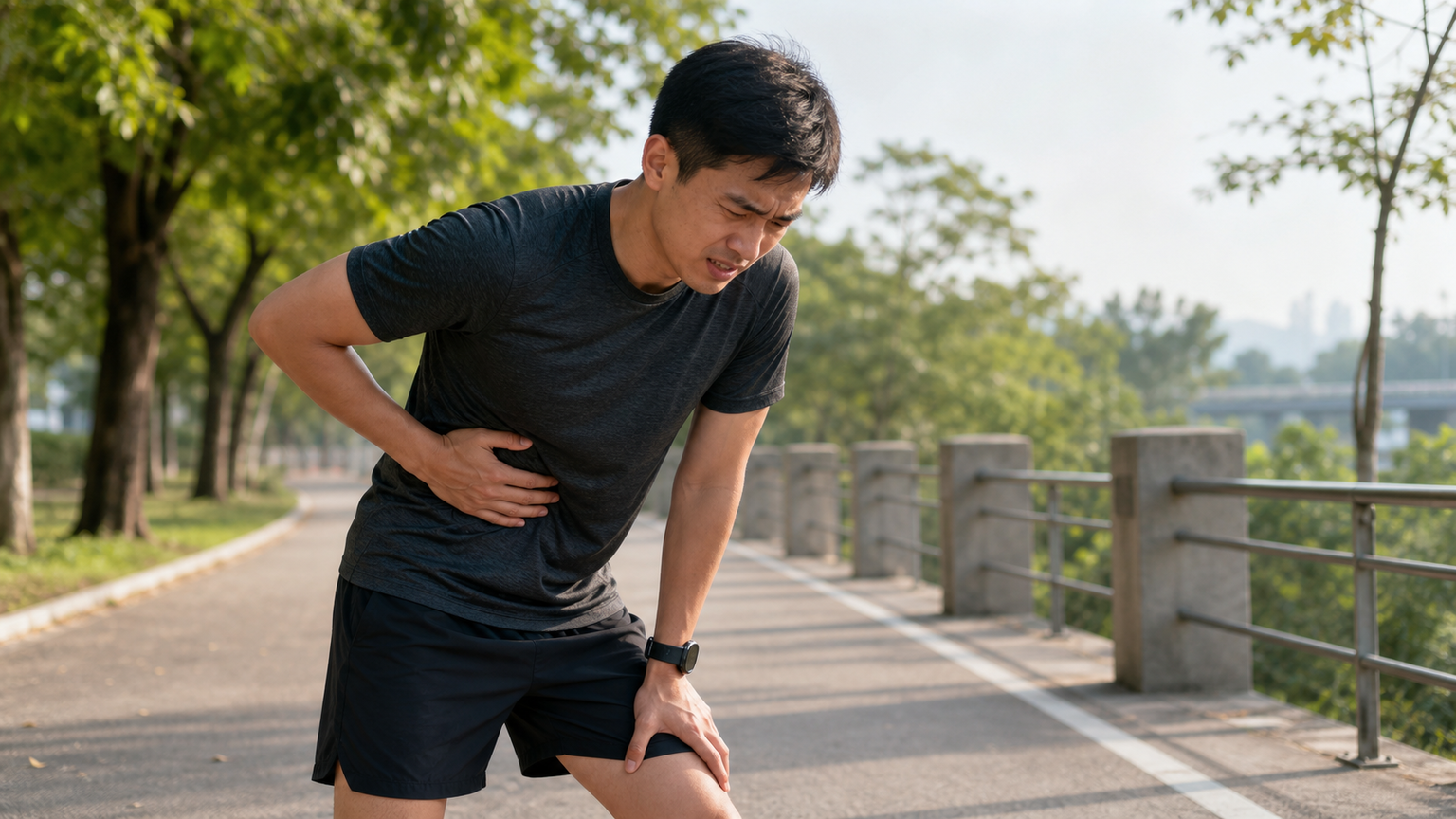
A typical experience for beginner road runners: you sign up for your first serious 10km race, and halfway through, a sharp cramp suddenly strikes your left abdomen, forcing you to stop and bend over, waiting for the pain to subside. This side stitch (commonly known as a “cramp” or “stitch,” medically referred to as a Side Stitch in English), along with the nausea and urge to defecate during running, are gastrointestinal troubles that runners of all levels may encounter—yet they are rarely taken seriously.
Causes of Side Stitch
The formal medical term for a side stitch is Exercise-Related Transient Abdominal Pain (ETAP), but its exact mechanism remains debated. Currently, there are two mainstream hypotheses:
Hypothesis One: Diaphragmatic Ischemia
During high-intensity running, blood flow is prioritized to working muscles. If the diaphragm (the breathing muscle) receives insufficient blood supply while contracting continuously, it may trigger temporary ischemic spasms, producing a “stabbing pain.”
Hypothesis Two: Traction on Abdominal Ligaments
The up-and-down impact of running causes the intestines (especially a stomach full of food or fluid) to pull downward on the mesentery and abdominal ligaments, triggering flank pain. This also explains why overeating or excessive drinking before a run is a major trigger for side stitches.
Common Triggers for Side Stitch
| Factor | Explanation |
|---|---|
| Overeating before a run | A full stomach increases traction on suspensory ligaments |
| Drinking large amounts of water before a run (especially sugary drinks) | Hyperosmolar fluids delay gastric emptying |
| Sudden increase in running intensity | Disrupts breathing rhythm, placing excessive compensatory load on the diaphragm |
| Unstable breathing patterns | Shallow, rapid breathing fatigues the diaphragm |
| Insufficient core strength | Poor torso stability amplifies intestinal vibration |
Immediate Relief Techniques for Side Stitch
When a side stitch occurs during a run:
- Slow down or walk: Reduce impact and give the diaphragm a chance to recover
- Diaphragmatic breathing technique: Inhale deeply and let your abdomen expand outward; exhale as the foot on the same side strikes the ground (if the pain is on the right side, exhale as your right foot lands)
- Press on the affected area: Press the site of the side stitch with your fingers while breathing deeply; most people find relief within 1–3 minutes
- Stretching exercise: Side stretch—raise one arm overhead and lean toward the painful side for 15 seconds
Running-Induced Gastrointestinal Issues (GI Issues)
Beyond side stitches, many runners (especially marathoners) also struggle with broader gastrointestinal problems:
Common Symptom Types
- Upper GI symptoms: Nausea, vomiting, heartburn (especially when breathing heavily)
- Lower GI symptoms: Abdominal cramps, urge to defecate, flatulence, and even uncontrollable bowel movements during running (commonly known as “runner’s diarrhea”)
Research shows that up to 40–50% of marathon runners have experienced gastrointestinal discomfort during races or long training runs, making it one of the factors that significantly impacts race performance.
Physiological Mechanism of Intestinal Vibration
The impact wave generated by each footstrike travels up the spine, combined with periodic changes in intra-abdominal pressure, causing intestinal contents to slosh back and forth within the gut. This accelerates intestinal motility while blood flow is shunted toward muscles and away from the intestines. Together, these factors contribute to gastrointestinal dysfunction.
Prevention and Management Strategies
Pre-Race Meal Timing Guide
| Race Distance | Timing of Last Meal | Recommended Food Types |
|---|---|---|
| 5–10km | At least 1.5 hours before | Easily digestible carbs (white toast, bananas) |
| Half marathon (21km) | At least 2–2.5 hours before | Low-fiber, low-fat carbohydrate foods |
| Full marathon (42km) | At least 3 hours before | Familiar food combinations confirmed through training |
Special reminders:
- Avoid high-fiber foods (brown rice, vegetables, legumes), high-fat foods, coffee, and dairy before a run
- While bubble tea is a beloved treat in Taiwan, its high sugar and dairy fat content mean it should only be consumed in small amounts at least 4 hours before a race
Gut Training During the Training Period
- Let your gut adapt to running: After regular long-run training, most runners’ intestines gradually adapt to the vibration, and initial discomfort diminishes
- Practice your fueling strategy: Test the products you plan to use on race day (gels, sports drinks) during long training runs—never try them for the first time on race day
- Avoid coffee before high-intensity training: Although coffee can enhance running performance, it stimulates intestinal motility; use it cautiously until your tolerance is confirmed
Breathing Rhythm Training
Deep diaphragmatic breathing not only prevents side stitches but also improves overall relaxation while running:
- Training goal: Breathe once every 3–4 steps during easy runs (3 steps inhale + 2 steps exhale, or 4 steps inhale + 3 steps exhale)
- Avoid shallow, rapid chest breathing—this is the primary cause of side stitches in beginners
Conclusion
Although running-related gastrointestinal issues are embarrassing and bothersome, in most cases they can be effectively managed through adjusting meal timing, optimizing your training plan, and improving breathing techniques. If GI symptoms remain severe after these adjustments, or are accompanied by warning signs such as blood in the stool or weight loss, you should see a gastroenterologist to rule out organic disease. Making your gut an ally rather than an obstacle is a crucial part of achieving your long-distance goals.
Related Reading
- The True Mechanism of Side Stitches While Running: Why Does It Always Sting Mid-Race?
- Exercise-Related Side Stitches (Cramps): Mechanisms, Immediate Relief, and Prevention
- Gastrointestinal Distress During Running: A Complete Analysis of Causes and Prevention
- Runner’s Gut Issues: Dietary Strategies to Prevent Abdominal Pain and Diarrhea During Races
一日北高常見問題大集合 | 攻略 | 路線 | 訓練 | 補給 | 自行車 單車 | 一日雙城 | 雙塔 | TWB北高360 | 屁股痛
6 年前
約騎爆笑地獄梗 大腸怎麼了🤣 #公路車 #cycling
3 年前
一日北高/長距離團騎 常見問題補充篇 / 組團或跟團的眉角 / 壯車友容易被瘦車友慢性拉爆 / 原來屁股痛可能是這個原因...? / 風場配速法 / 公路車 / CT Yeh
2 年前
Never Stop 西進武嶺 前後雙機 完整全程錄影 訓練台 實境
8 年前
詳測) 小米 電動打氣筒 公路車胎要充多久? 值得買嗎? 米家充氣寶 小心燙手!
7 年前
FTL 與 SYB 車隊專訪 西進武嶺 實用攻略分享! 2小時 如何練?!你不知道的眉角!新手準備武嶺必看 EP1 | 實力派女車友 | 精華版 | 公路車 | CTYeh
4 年前
CT 喇低賽) 武嶺牽車 才是王道 西進牽車四小時內秘訣 攝手位置 如何判斷 防抽筋小秘訣
7 年前
靠單車減肥35公斤 心得分享與整理
7 年前