Introduction
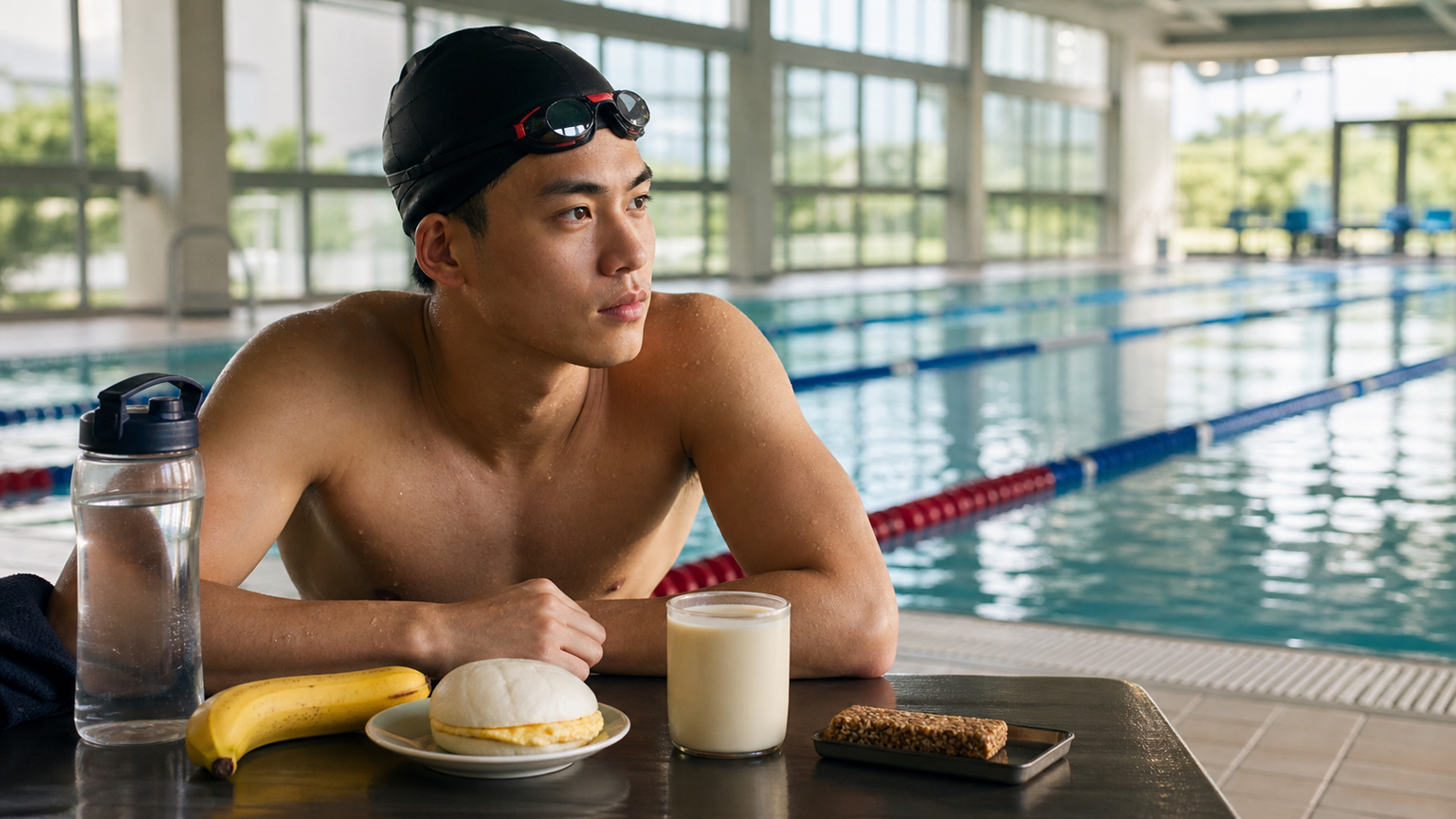
The timing of your pre-swim meal is one of the key factors affecting training quality. Many swimmers in Taiwan are used to hastily eating a bowl of instant noodles or drinking a hand-shaken beverage before getting into the water. Such food choices often lead to stomach discomfort or a sudden drop in blood sugar during training, significantly reducing training effectiveness. Mastering the right pre-training eating strategy allows you to maintain steady energy output during every session and provides your muscles with adequate working fuel.
Principles for Eating 1–2 Hours Before Training
The 1-to-2-hour window before training is the optimal time to eat. Eating during this period gives your body enough time to complete initial digestion while ensuring your blood sugar is at a stable, moderately high level when you hit the water. Key principles are as follows:
- Focus on moderate-glycemic-index carbohydrates: White rice, whole-wheat toast, bananas, etc., provide sustained energy without causing dramatic blood sugar swings
- Pair with an appropriate amount of protein: Eggs, low-fat cheese, soy milk help prevent muscle breakdown
- Avoid high-fat foods: High-fat foods such as fried chicken cutlets and oily rice are slow to digest and can easily cause stomach discomfort while swimming
- Control fiber intake: Excessive dietary fiber (such as a large raw vegetable salad) is hard to digest before training and may lead to bloating
Practical Meal Options for the Taiwanese Context
| Eating Timing | Recommended Meal | Estimated Calories | Features |
|---|---|---|---|
| 2 hours before training | Steamed white bun with egg + unsweetened soy milk | 350–400 kcal | Easy to find, moderate digestion |
| 2 hours before training | Sweet potato congee + boiled egg | 300–380 kcal | Taiwanese home-style, stable blood sugar |
| 1.5 hours before training | Banana + unsweetened yogurt | 250–300 kcal | Light, easy to digest |
| 1 hour before training | 1 banana + energy bar | 200–250 kcal | Quick replenishment, suitable for early-morning training |
| 30 minutes before training | Sports drink + a few salted crackers | 100–150 kcal | For emergency replenishment |
Adjusting Food Intake by Training Intensity
The amount of food before training should be adjusted according to training intensity. If the day’s session is mainly low-intensity aerobic swimming (such as technique drills or easy swimming), the meal size can be moderately reduced; if it is high-intensity interval training or long-distance training, carbohydrate intake needs to be increased:
- Light training (within 1500m): A light snack of 100–200 kcal is sufficient
- Moderate training (2000–3500m): 250–400 kcal, mainly carbohydrates
- High-intensity or long-distance training (4000m and above): 400–600 kcal, needs to be paired with protein
Don’t Overlook Hydration
In addition to food, fluid intake before training is equally important. It is recommended to drink 500 ml of water 2 hours before training, and then top up with 200–300 ml 15–20 minutes before getting into the water. Taiwan’s weather is hot, and fluid needs are even higher for outdoor pool training in summer, so be especially sure to keep a water bottle by the poolside.
Practical Tips
- Develop the habit of preparing meals in advance, especially preparing breakfast ingredients the night before for early-morning training
- Avoid trying new foods before training to prevent gastrointestinal discomfort from affecting your session
- If you cannot finish a full meal within 1 hour before training, choose quick-replenishment foods such as bananas or sports gels
- Keep a record of how different food combinations affect your training performance to find a personalized eating strategy that works for you
- Avoid high-sugar caffeinated drinks (such as commercially available coffee milk tea) before training to prevent rapid blood sugar fluctuations
Conclusion
The pre-swim eating strategy may seem simple, but it is an important aspect that many athletes overlook. By choosing the right types of food, controlling portion sizes, and getting the timing right, you can effectively improve training quality and reduce gastrointestinal discomfort. Taiwan’s rich food culture offers many excellent options—from sweet potato congee to banana and soy milk—all of which can be great pre-training companions for swimmers. Establishing your own pre-training eating routine is the first step toward greater training effectiveness.
Related Reading
CT暗黑廚房) 車友必備 宇宙無敵鮮蚵湯 幫助訓練恢復 天然食補 好市多 超肥鮮蚵 破PR
7 年前
一日北高前的高裝檢 | 北高 360 | 挑戰11小時的裝備 | 一日雙塔 | 補給
6 年前
西進武嶺 免費訓練分析服務 Intervals | 練不夠還是練過頭?你哪一種類型選手?AI模型告訴你! | 備戰神器 | 公路車 訓練 | CT Yeh
4 年前
FTL 與 SYB 車隊專訪 西進武嶺 實用攻略分享! 2小時 如何練?!你不知道的眉角!新手準備武嶺必看 EP1 | 實力派女車友 | 精華版 | 公路車 | CTYeh
4 年前
靠單車減肥35公斤 心得分享與整理
7 年前
live) 超越北高 之一日北高12小時 策略
7 年前
Live) 備戰2019彰化經典百K 賽前攻略 (已完賽請看新影片
7 年前
一日北高/長距離團騎 常見問題補充篇 / 組團或跟團的眉角 / 壯車友容易被瘦車友慢性拉爆 / 原來屁股痛可能是這個原因...? / 風場配速法 / 公路車 / CT Yeh
2 年前