Introduction
After every swimming training session, athletes often rush to shower and change, overlooking the importance of post-training nutrition. Sports science research indicates that the 30 minutes following training (also known as the “golden recovery window”) is the period when muscles absorb protein and glucose most efficiently. Supplementing with the appropriate macronutrients during this time can effectively accelerate muscle repair, replenish glycogen stores, and reduce post-training inflammation. For competitive swimmers who train daily, mastering post-training nutrition is a core strategy for maintaining the sustainability of high-intensity training.
The Physiological Mechanism of the Golden 30 Minutes
During swimming training, muscle glycogen is heavily depleted, while muscle fibers sustain micro-damage from training stimuli. After training, the body enters a highly anabolic state:
- Enhanced muscle glucose uptake: Insulin sensitivity peaks, allowing carbohydrates to be efficiently converted into glycogen
- Accelerated protein synthesis: Muscle absorption and utilization of amino acids is several times more efficient than at rest
- Inflammatory response needs suppression: Appropriate antioxidants and Omega-3 help reduce post-training oxidative stress
Optimal Supplementation Ratio: The Golden Carbohydrate-to-Protein Ratio
Research suggests that the ideal carbohydrate-to-protein ratio after training is 3:1 to 4:1. Using a 60 kg swimmer as an example:
| Training Intensity | Recommended Carbohydrate Intake | Recommended Protein Intake | Total Calories |
|---|---|---|---|
| Light (technique session) | 30–40g | 10–15g | 160–220 kcal |
| Moderate (2500–3500m) | 50–60g | 15–20g | 260–320 kcal |
| High intensity (interval sprints) | 60–80g | 20–25g | 320–420 kcal |
| Long distance (5000m and above) | 80–100g | 25–30g | 420–520 kcal |
Common Post-Training Foods in Taiwan
Taiwan’s convenience stores and supermarkets offer many foods suitable for post-training replenishment, without the need to purchase expensive sports supplements:
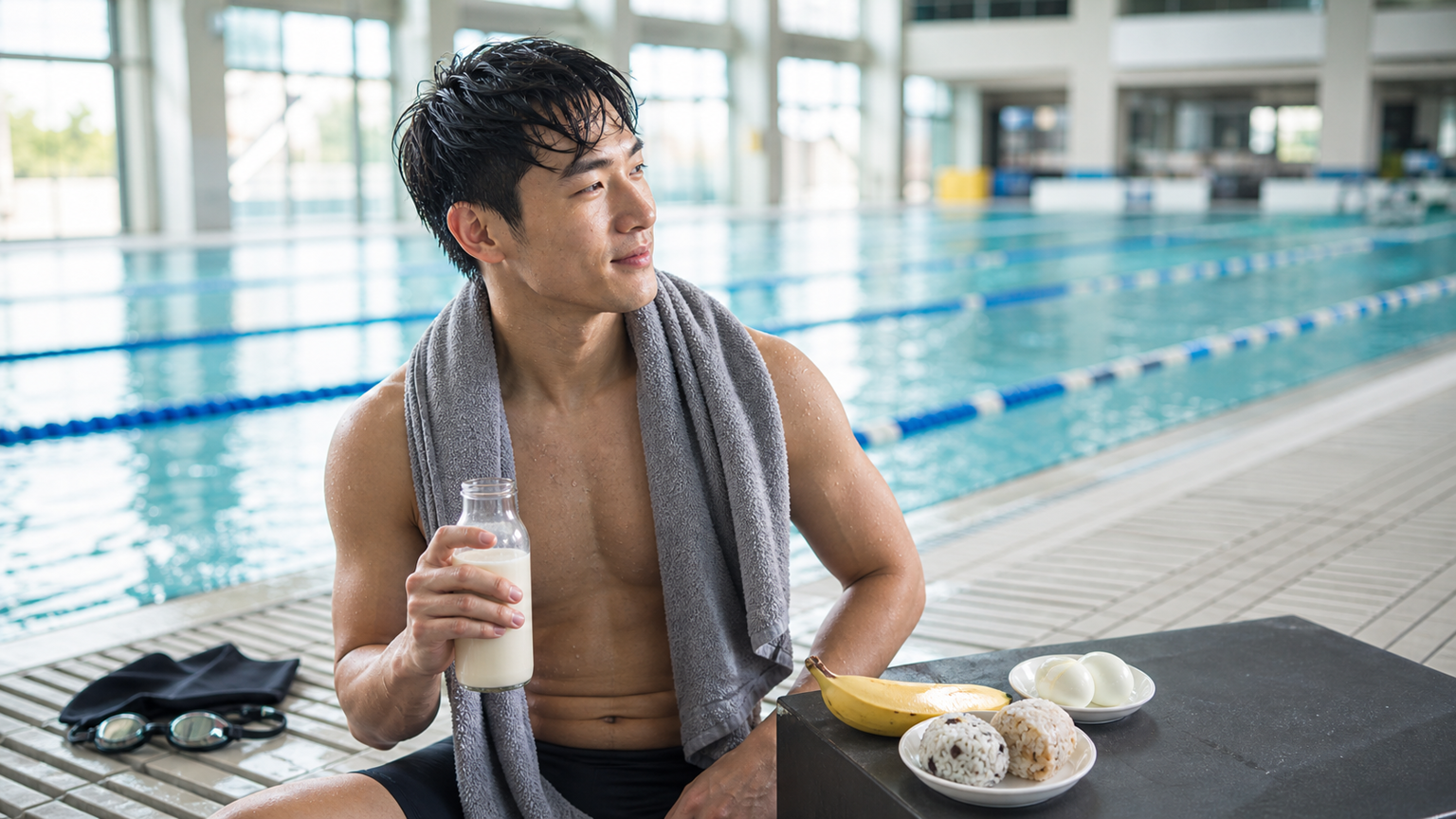
- Chicken breast rice ball + unsweetened soy milk: Balanced carbohydrate-to-protein ratio, available at FamilyMart and 7-Eleven
- 2 bananas + 2 tea eggs: Quick, inexpensive, and easy to carry
- Unsweetened yogurt + oatmeal + honey: Rich in protein and complex carbohydrates, suitable for athletes with time to prepare
- Plain whole milk: Whey protein + lactose provide carbohydrates; research shows it performs no worse than commercial whey protein powder
- Low-fat chocolate milk: Naturally matches the 4:1 carbohydrate-to-protein ratio and contains calcium; it is a commonly used recovery drink among Western swimmers
Special Supplementation Needs After Swimming
Swimming training takes place in a chlorinated water environment, and combined with body heat loss in the water, swimmers have several special post-training considerations:
- Electrolyte replenishment: Even in water, swimmers sweat profusely; sodium, potassium, magnesium, and other electrolytes need to be replenished
- Antioxidants: Chlorine in the water increases oxidative stress; consuming fruits rich in vitamin C (such as guava and kiwi) after training helps alleviate this
- Body temperature recovery: Body temperature tends to be low after swimming in winter; warm foods (such as hot soy milk or hot congee) not only provide nutrition but also aid in body temperature recovery
Practical Recommendations
- Keep bananas, energy bars, or small packs of unsweetened nuts in your swim bag at all times so you can refuel immediately upon exiting the pool
- If you need to wait more than 30 minutes before a full meal, have a small snack (banana + soy milk) as a stopgap first
- Do not use “not feeling hungry” after training as an excuse to skip replenishment; decreased appetite after exercise is normal, but the body still needs nutrition
- For the post-training meal, white rice + a protein source (tofu, chicken, fish) + vegetables is ideal, fitting Taiwanese dietary habits while remaining nutritionally balanced
- Pairing with a pre-bedtime protein source (such as casein powder or low-fat cottage cheese) can further promote overnight muscle repair
Conclusion
The golden 30 minutes after swimming is the dividing line in recovery quality for athletes. Many Taiwanese swimmers miss the optimal muscle repair window because they rush off to class or work after training, or habitually wait until hunger sets in before eating. Simply keeping easy foods in your swim bag or making good use of convenience store options can greatly enhance the recovery benefits of every training session and lay a solid foundation for the next one.
Related Reading
- Recovery Diet After Swimming: Supplementation Principles for the Golden 30 Minutes
- Recovery Meals After Swimming Training: The Best Protein and Carbohydrate Combinations
- The Golden 30 Minutes of Post-Run Recovery: Optimal Timing for Protein and Carbohydrate Supplementation
- The Golden 30 Minutes After Training: The Science and Practice of Recovery Meals
CT暗黑廚房) 車友必備 宇宙無敵鮮蚵湯 幫助訓練恢復 天然食補 好市多 超肥鮮蚵 破PR
7 年前
西進武嶺 免費訓練分析服務 Intervals | 練不夠還是練過頭?你哪一種類型選手?AI模型告訴你! | 備戰神器 | 公路車 訓練 | CT Yeh
4 年前
Live) 備戰2019彰化經典百K 賽前攻略 (已完賽請看新影片
7 年前
靠單車減肥35公斤 心得分享與整理
7 年前
實景訓練台) 彰化經典百K 高強度喵團 90分鐘 跟著一起練功 2019 Indoor workout Changhua Classic 100 Taiwan
7 年前
FTL 與 SYB 車隊專訪 西進武嶺 實用攻略分享! 2小時 如何練?!你不知道的眉角!新手準備武嶺必看 EP1 | 實力派女車友 | 精華版 | 公路車 | CTYeh
4 年前
live) 超越北高 之一日北高12小時 策略
7 年前
一日北高/長距離團騎 常見問題補充篇 / 組團或跟團的眉角 / 壯車友容易被瘦車友慢性拉爆 / 原來屁股痛可能是這個原因...? / 風場配速法 / 公路車 / CT Yeh
2 年前