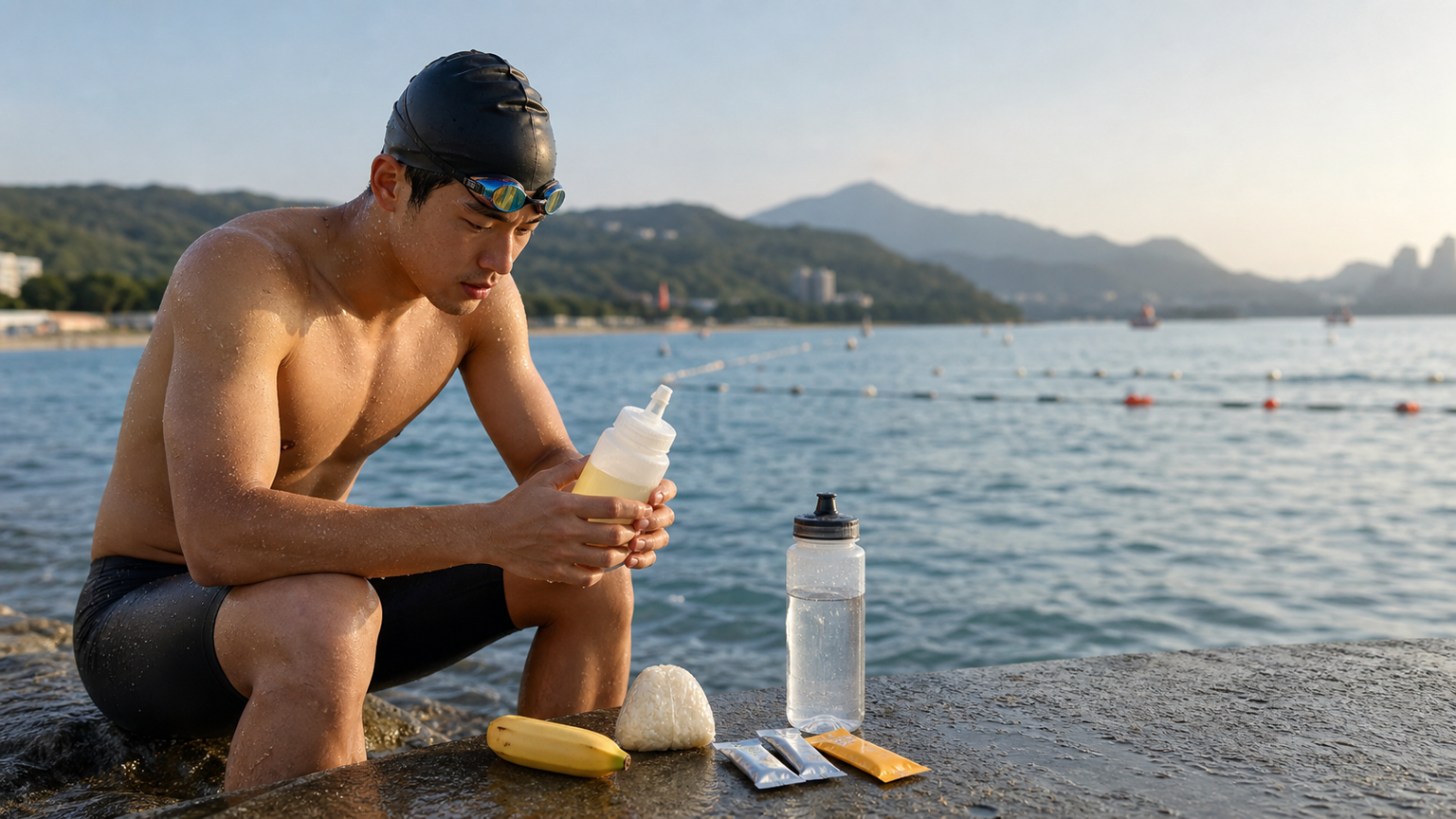
Introduction
Long-distance swimming races, from the 1500m in the pool to the 10km marathon swim in open water, pose a severe challenge to an athlete’s energy management capabilities. Unlike short-distance explosive events that primarily rely on the phosphocreatine system, the main energy sources for long-distance swimming are muscle and liver glycogen, as well as fat oxidation. Once glycogen is depleted (commonly known as “hitting the wall”), an athlete’s pace will drop dramatically, and they may even fail to finish. A scientific pre-race energy preparation and in-race nutrition strategy are indispensable competitive tools for long-distance swimmers.
Energy Demand Analysis for Long-Distance Swimming
Estimated energy expenditure for long-distance swimming:
| Event | Estimated Finish Time | Estimated Calorie Expenditure | Primary Energy Source |
|---|---|---|---|
| Pool 1500m | 15–25 minutes | 300–500 kcal | Glycogen (primary) + Fat |
| Open Water 5km | 60–90 minutes | 600–900 kcal | Glycogen + Fat (equal) |
| Open Water 10km | 2–3 hours | 1200–1800 kcal | Fat (primary) + Glycogen |
| Triathlon Swim Leg (3.8km) | 50–75 minutes | 500–750 kcal | Glycogen (primary) + Fat |
Carbohydrate Loading Strategy for the 3 Days Before the Race
In the 2–3 days before a long-distance swimming race, “carbohydrate loading” can significantly increase muscle glycogen stores and delay the onset of fatigue:
- 3 days before the race: Begin increasing carbohydrate intake to 8–10g per kilogram of body weight, while reducing training volume
- 2 days before the race: Maintain high carbohydrate intake, ensuring the diet consists mainly of easily digestible refined carbohydrates
- 1 day before the race: Avoid high-fiber foods (legumes, raw vegetables); choose white rice, white noodles, and bananas
- Race day breakfast: 3–4 hours before the race, consume 200–300g of carbohydrates (congee, steamed buns, toast)
Race Day Eating Schedule
- 4 hours before the race: Main meal, consisting primarily of white rice, eggs, and a small amount of vegetables, approximately 600–800 kcal
- 2 hours before the race: Light snack (banana, a few biscuits), approximately 200–300 kcal
- 1 hour before the race: Consume 300–400ml of an electrolyte drink; a small amount of energy bar may be added
- 15–30 minutes before the race: One energy gel (approximately 25g of carbohydrates) may be consumed as needed
- After the race: Immediately replenish carbohydrates and protein; do not wait until you feel hungry to eat
Mid-Race Nutrition for Open Water Events
For open water swims lasting over 60–90 minutes, mid-race nutrition is crucial:
- Energy gels: Confirm before the race whether the packaging is waterproof and whether race rules permit carrying them
- Aid stations: Open water races typically have aid stations every 2.5km, providing sports drinks or carbohydrate gels
- Timing of intake: Replenish every 45–60 minutes, with approximately 20–30g of carbohydrates each time
- Common nutrition options in Taiwan: GU Energy Gels (available at convenience stores), PowerBar Gels, BCAA capsules
Specific Pre-Race Preparation for the Pool 1500m
The pool 1500m is an Olympic-distance swimming event. Although the race duration is relatively short (15–25 minutes), the intensity is extremely high. Here are specific recommendations:
- Moderate carbohydrate loading is still recommended 1–2 days before the race to ensure adequate muscle glycogen
- Race day breakfast should consist mainly of light food to avoid stomach discomfort affecting high-intensity performance
- Caffeine may be consumed 30 minutes before the race (3–6mg per kilogram of body weight) to help enhance power output
Practical Recommendations
- Conduct a trial run 4–6 weeks before an important race to test the impact of the pre-race nutrition plan on performance
- Record the diet and performance of each long-distance training session to build personalized energy management data
- Avoid trying new foods or supplements on race day; stick to the nutrition strategies already tested during training
- Share nutrition strategies with teammates or coaches and remind each other of the pre-race eating schedule
Conclusion
The success or failure of a long-distance swimming race largely depends on whether pre-race energy preparation is sufficient. Through scientific carbohydrate loading, a precise pre-race eating schedule, and appropriate in-race nutrition strategies, swimmers can maintain a high level of energy output in the most critical races, avoiding a collapse in pace in the final laps due to glycogen depletion. Race nutrition strategies should be rehearsed repeatedly during daily training so that the body becomes accustomed to a specific fueling pattern, enabling consistent performance in official races.
Related Reading
- Long-Distance Swimming Race Nutrition: No Fueling for 1500m and Beyond vs. Mid-Race Strategies for Open Water
- Open Water Nutrition Strategies: Energy Replenishment for Long-Distance Sea Swims
- Open Water Energy Fueling: How to Eat During Long-Distance Swim Races
- Building Rhythm in Long-Distance Swimming: Pacing Strategies for the 1500m
CT暗黑廚房) 車友必備 宇宙無敵鮮蚵湯 幫助訓練恢復 天然食補 好市多 超肥鮮蚵 破PR
7 年前
Live) 備戰2019彰化經典百K 賽前攻略 (已完賽請看新影片
7 年前
半日 小台灣 極限單車路線挑戰實錄
7 年前
西進武嶺 免費訓練分析服務 Intervals | 練不夠還是練過頭?你哪一種類型選手?AI模型告訴你! | 備戰神器 | 公路車 訓練 | CT Yeh
4 年前
一日北高前的高裝檢 | 北高 360 | 挑戰11小時的裝備 | 一日雙塔 | 補給
6 年前
2019 夏季KOM 5小 完賽心得 準備攻略 東進武嶺 夏季登山王之路 Taiwan KOM Challenge
7 年前
備戰 戀戀197 賽前關門點分析 西濱團練 #公路車 4K高畫質
6 年前
單車 一日北高 ( 雙城 ) 肥宅雙人瘋狂行 紀錄片 REACTO
10 年前