Wuling East Approach Segment Pacing: Power Strategy for Each Section of Provincial Highway 14A
文章導覽
- Introduction
- Understanding Your FTP and Power Zones
- Analysis of the Five Major Sections of Provincial Highway 14A
- Section 1: Wushe (Lushan) → Ren'ai Township Office (approximately 8 km)
- Section 2: Ren'ai Township Office → Chunyang Tribe (approximately 7 km)
- Section 3: Chunyang → Cuifeng (approximately 10 km)
- Section 4: Cuifeng → Kunyang (approximately 10 km)
- Section 5: Kunyang → Wuling (approximately 7 km)
Introduction
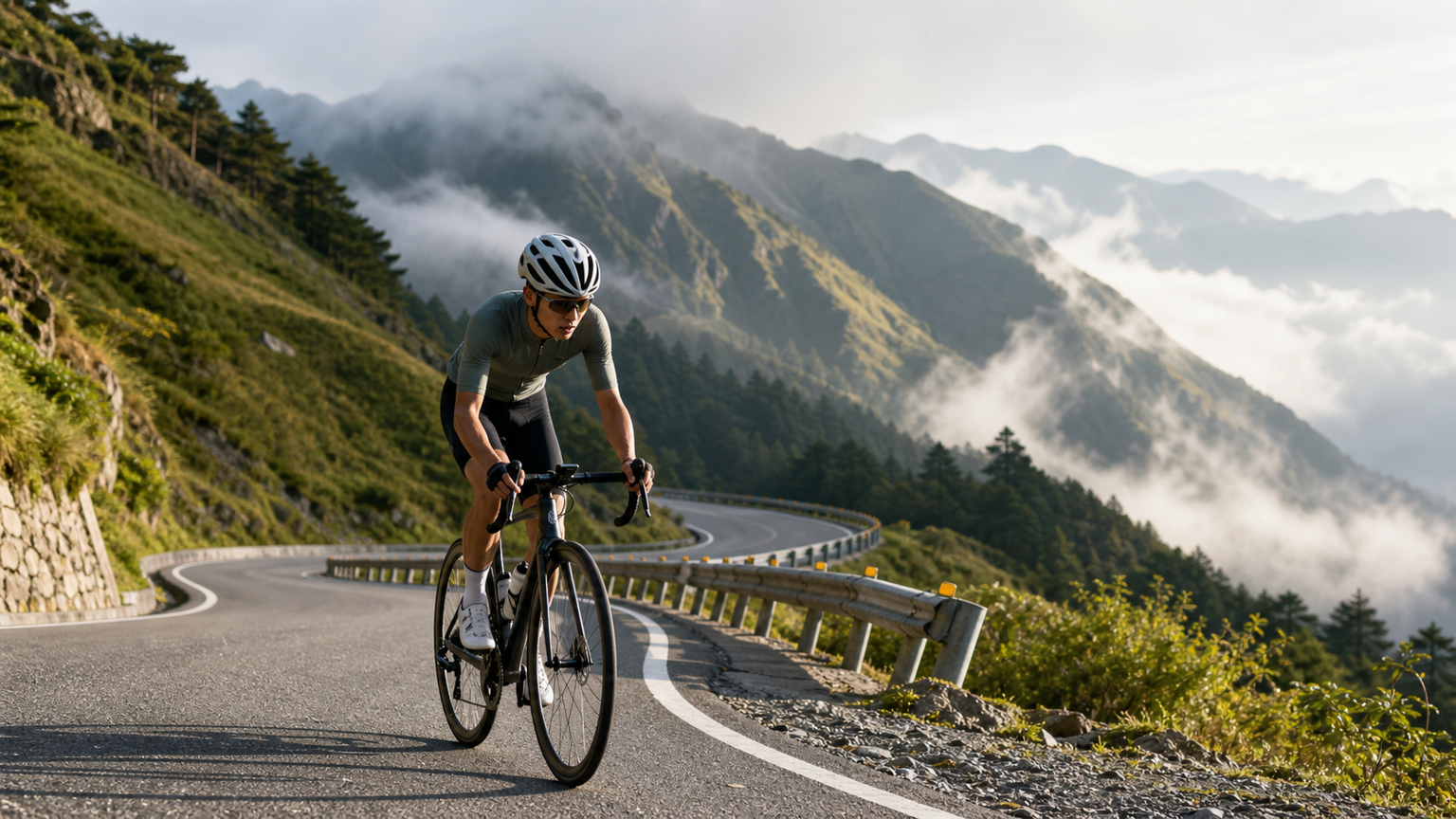
Wuling, at 3,275 meters above sea level, is the highest point on Taiwan’s road network, attracting tens of thousands of cycling enthusiasts every year. The eastbound route from Lushan in Ren’ai Township to Wuling winds its way up along Provincial Highway 14A, covering a total distance of approximately 42 kilometers with nearly 2,000 meters of cumulative climbing and an average gradient of about 4.5%. These seemingly modest numbers, combined with the compound challenge of altitude and distance, cause many riders to fall apart midway. This article divides Provincial Highway 14A into five segments and provides power strategies tailored to the characteristics of each.
Understanding Your FTP and Power Zones
Before planning your pacing strategy, you need to know your Functional Threshold Power (FTP). FTP represents the maximum average power you can sustain for 60 minutes and serves as the baseline for all power-based pacing.
Power zone reference table (calculated as a percentage of FTP):
| Power Zone | FTP Percentage | Perceived Effort | Sustainable Duration |
|---|---|---|---|
| Zone 1 (Recovery) | <55% | Very easy | Unlimited |
| Zone 2 (Aerobic) | 56–75% | Can converse easily | Several hours |
| Zone 3 (Tempo) | 76–90% | Slightly breathless, can speak short sentences | 1–3 hours |
| Zone 4 (Threshold) | 91–105% | Hard to sustain a conversation | 30–60 minutes |
| Zone 5 (VO2max) | 106–120% | Very painful | 3–8 minutes |
For the entire Wuling eastbound route, it is recommended to stay within Zone 2–3 (70–85% of FTP). Riders with a weaker aerobic base should aim for Zone 2 (65–75%).
Analysis of the Five Major Sections of Provincial Highway 14A
Section 1: Wushe (Lushan) → Ren’ai Township Office (approximately 8 km)
Gradient characteristics: Average 3–5%, with local sections at 7–8%; undulating terrain with both gentle and steep pitches.
Strategy: This is the section where most mistakes are made on the entire ride. Fresh legs and high adrenaline at the start lead many riders to push too hard here, and they pay the price later. Recommendations:
- Strictly cap power at 65–70% of FTP
- Maintain a cadence of 80–85 RPM
- Do not follow the pace of faster riders
Section 2: Ren’ai Township Office → Chunyang Tribe (approximately 7 km)
Gradient characteristics: Continuous climbing begins, averaging 5–6%, with few gentle sections for recovery.
Strategy: Your body is now truly settling into climbing mode. Find your rhythm:
- Maintain power at 72–78% of FTP
- If your heart rate exceeds the aerobic threshold, lower your power immediately
- Refuel on the few flatter sections (gels or sports drinks)
Section 3: Chunyang → Cuifeng (approximately 10 km)
Gradient characteristics: The most critical section of the entire route. The gradient rises to 5–8%, altitude continues to climb, and the air begins to thin.
Strategy: This section is the watershed between success and failure:
- Many riders begin to feel the effects of altitude near Cuifeng (increased fatigue)
- You may need to proactively lower power to 68–72% of FTP
- Consume one serving of carbohydrates (30–60g) every 20 minutes
- Heart rate may be inaccurate at high altitude; switch to power or perceived exertion as your pacing reference
Section 4: Cuifeng → Kunyang (approximately 10 km)
Gradient characteristics: Approaching 3,000 meters, with gradients of 4–7% and a noticeable drop in oxygen levels.
Strategy:
- Many riders begin to experience symptoms of altitude sickness here (headache, nausea)
- Lower your expectations and keep power at 62–70% of FTP
- Maintain a steady breathing rhythm; avoid short, forceful efforts
- Increase the frequency of out-of-saddle pedaling to relieve leg muscle fatigue
Section 5: Kunyang → Wuling (approximately 7 km)
Gradient characteristics: The final push to the summit, averaging 5–6%, with some sections reaching 10%.
Strategy:
- Kunyang is a well-known rest and refueling point; decide based on your energy levels whether to take a short break (within 5 minutes)
- If you still have energy left, you can raise power to 80–90% of FTP
- Give everything you have in the final 1–2 kilometers; no need to hold anything back
Overall Power Distribution Recommendations
| Section | Distance | Recommended Power (%FTP) | Estimated Time (FTP=200W) |
|---|---|---|---|
| Wushe→Ren’ai | 8 km | 65–70% | 35–45 min |
| Ren’ai→Chunyang | 7 km | 72–78% | 30–40 min |
| Chunyang→Cuifeng | 10 km | 68–75% | 45–60 min |
| Cuifeng→Kunyang | 10 km | 62–70% | 50–65 min |
| Kunyang→Wuling | 7 km | 75–85% | 35–45 min |
Practical Tips
- One week before the ride, complete two long climbing sessions at low altitude (lasting over 2 hours each)
- Start at 3–4 AM on the day of the challenge to avoid midday heat and crowds
- Carry at least 3 gels or energy bars and refuel every 45 minutes
- If you don’t have a power meter, use a heart rate monitor and set your target heart rate at 78–82% of your maximum heart rate
Conclusion
Conquering Wuling from the east is not about brute force—it’s about strategy. An overly aggressive start often leads to a painful finish, while a steady pacing strategy will leave you with enough energy to raise both arms in celebration when you reach the highest point on Taiwan’s road network. Bring your power meter and let the numbers guide you. That mountain can truly be “ridden up” rather than “survived up.”
Related Reading
- Wuling Climbing Guide: Challenge Strategies and Refueling Plans for Taiwan’s Highest Highway
- The Art of Pacing in Climbing Races: Perfect Strategies for the Wuling Cup and Eastbound Wuling
- Wuling Full 52.2km Segment Pacing Strategy: A Rhythm Map from Puli to the Rooftop
- Wuling Guide Supplement: Comparing the Eastbound vs. Westbound Wuling Routes