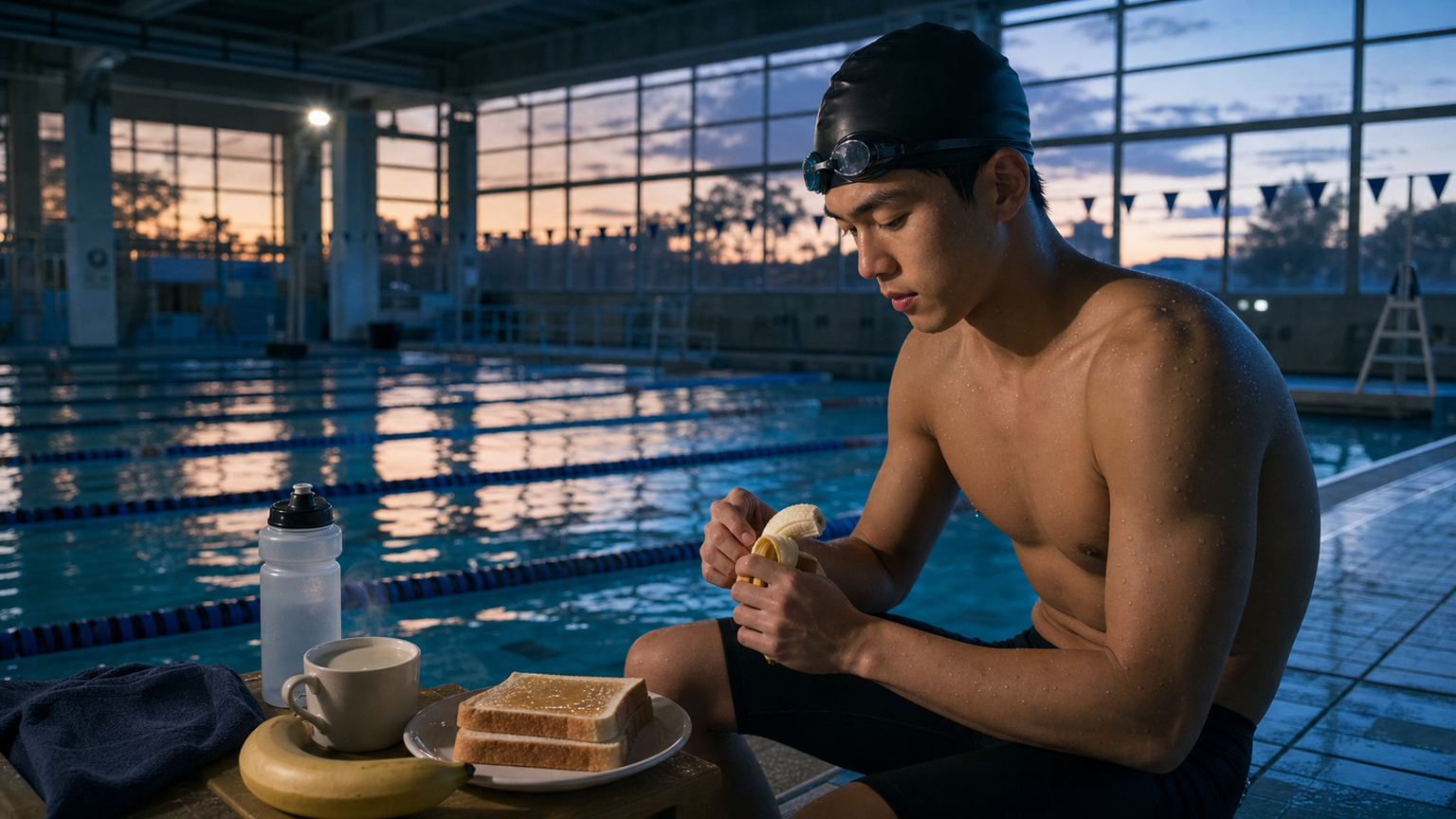
Introduction
“Entering the water at 5 AM” is a daily routine for many swim teams in Taiwan. Whether it’s a high school swim team, a university varsity team, or competitive club swimmers, morning training is almost part of the swimming culture. However, in the early morning, with less than 7 hours of sleep and an appetite that hasn’t fully awakened, consuming enough pre-workout energy within just a few dozen minutes is a dual challenge for both willpower and the digestive system. A poor morning eating strategy can lead to gastrointestinal discomfort during training at best, or at worst, an inability to complete high-intensity training due to low blood sugar.
The Unique Physiological Challenges of Morning Training
The physiological challenges of morning training include:
- Glycogen depletion during sleep: The body continuously uses glycogen to maintain basal metabolism during sleep, so glycogen stores upon waking are approximately 20–30% lower than the previous evening
- The digestive system hasn’t fully activated: Gastrointestinal motility is slower in the morning, and digestion is slower than during the day, making stomach discomfort from undigested food more likely
- Cortisol peak: Cortisol naturally rises in the morning, promoting catabolism; training on an empty stomach increases the risk of muscle breakdown
- Poor appetite: Many people find it difficult to eat in the morning and need to make a conscious effort to fuel up
Eating Strategies for Different Wake-Up-to-Water Times
| Time from waking to entering the water | Recommended eating strategy | Food choice examples |
|---|---|---|
| Less than 30 minutes | Focus on light liquid foods | Banana + sports drink, or a glass of milk |
| 30–60 minutes | Light meal, avoid high fiber | 1–2 slices of white toast + honey, 1 tea egg |
| 1–1.5 hours | Normal light meal | Mantou with egg + soy milk, or sweet potato + tea egg |
| 1.5–2 hours | More complete breakfast | Congee + 2 boiled eggs + a small amount of pickled vegetables |
Best Food Choices Before Morning Training
Food choices before morning training must meet three criteria: quick to digest, easy to obtain, and gentle on the stomach.
Foods suitable for morning supplementation in Taiwan:
- Banana (1–2): Provides rapidly absorbed fructose and glucose, and potassium to replenish electrolytes; it’s the most convenient choice
- White toast + honey or peanut butter: High glycemic index carbohydrates that digest within 10–15 minutes
- Hot soy milk (unsweetened): Provides protein, and the warm liquid helps gently activate the stomach
- Energy bar (oat bar): Available at convenience stores or sports shops, with easy portion control
- Plain congee (small amount): The gentlest option for the stomach; add a salted egg or some pickled vegetables
- Low-fat milk (240ml): Provides both carbohydrates and protein, and is stomach-friendly for most people
Fasted Training vs. Eating Before Training
Some swimmers prefer to enter the water completely fasted. Here’s a comparison of the two strategies:
Fasted Training:
- Pros: Promotes fat oxidation adaptation and aids in weight management
- Cons: Reduced quality in high-intensity training, higher risk of muscle breakdown; only suitable for low-intensity technical sessions
Training After Eating:
- Pros: Maintains training quality, reduces muscle breakdown, and provides a greater psychological sense of strength
- Cons: Requires waking up earlier to prepare food, and carries a risk of gastrointestinal discomfort (which can be reduced through food choices)
Recommendation: Low-intensity technical sessions can be done fasted or with a light meal, but eating is mandatory for moderate-to-high-intensity interval training.
Preparation the Night Before
The success of a morning training nutrition strategy depends largely on preparation the night before:
- Place a banana, energy bar, or toast on the table before bed so you can grab it without thinking the next morning
- Don’t go to bed overly hungry; maintain carbohydrate intake at dinner to ensure sufficient glycogen stores to start the day
- Prepare a thermos; brew soy milk powder or warm milk immediately after waking up to complete your liquid intake within 5 minutes
Practical Tips
- Establish a fixed morning eating routine so your body gets used to the digestion rhythm of specific foods at specific times
- During the first week of training, start with the simplest option (banana + water), observe your gastrointestinal response, then gradually add more
- If you truly cannot eat before training, drink a carbohydrate-containing sports drink (such as 250ml of舒跑) 10–15 minutes before entering the water
- The breakfast after morning training (once you’re home) is even more important; be sure to fully replenish protein and carbohydrates
Conclusion
Training at 5 AM is a test of a swimmer’s mental fortitude and a challenge to the flexibility of their nutrition strategy. With limited preparation time and occasionally poor appetite, finding a morning eating routine that suits your own digestive rhythm is a personal task that every Taiwanese swimmer must repeatedly fine-tune and optimize throughout their training career. Start with the simplest banana, gradually build your own morning fueling strategy, and ensure every early-morning session in the water is backed by sufficient energy.
Related Reading
- Breakfast Design for Swimmers: The Most Important Meal Before Training
- Energy Supplementation Before Swimming: Eating Strategies 1–2 Hours Before Training
- Morning Training for Swimmers: The Physiological Advantages and Adjustment Strategies of Early Practice
- Eating Strategies Before Swimming: What to Eat 1–3 Hours Before Training
CT暗黑廚房) 車友必備 宇宙無敵鮮蚵湯 幫助訓練恢復 天然食補 好市多 超肥鮮蚵 破PR
7 年前
FTL 與 SYB 車隊專訪 西進武嶺 實用攻略分享! 2小時 如何練?!你不知道的眉角!新手準備武嶺必看 EP1 | 實力派女車友 | 精華版 | 公路車 | CTYeh
4 年前
滑雪新手們慘摔學習全紀錄(請開字幕),滑雪好好玩 | Snowboard + Ski | 岩原 スキー場 | 滑雪APP使用 | GoPro Max
6 年前
一日北高前的高裝檢 | 北高 360 | 挑戰11小時的裝備 | 一日雙塔 | 補給
6 年前
#KOM 夏季登山王之路 比賽實況 #東進武嶺
7 年前
一日北高常見問題大集合 | 攻略 | 路線 | 訓練 | 補給 | 自行車 單車 | 一日雙城 | 雙塔 | TWB北高360 | 屁股痛
6 年前
西進武嶺 免費訓練分析服務 Intervals | 練不夠還是練過頭?你哪一種類型選手?AI模型告訴你! | 備戰神器 | 公路車 訓練 | CT Yeh
4 年前
一日北高/長距離團騎 常見問題補充篇 / 組團或跟團的眉角 / 壯車友容易被瘦車友慢性拉爆 / 原來屁股痛可能是這個原因...? / 風場配速法 / 公路車 / CT Yeh
2 年前