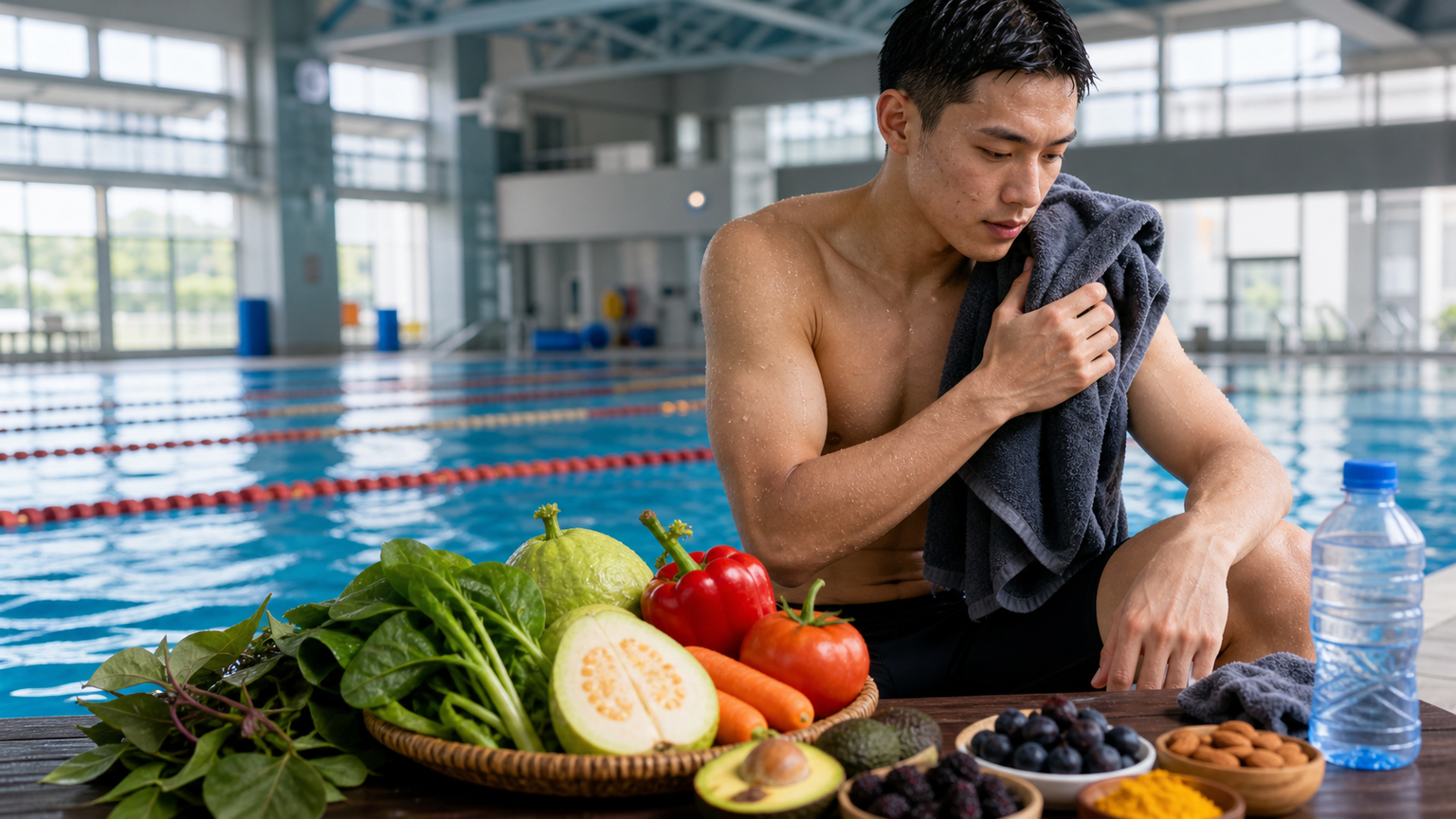
Introduction
High-intensity swimming training produces training stimuli while also generating large amounts of Reactive Oxygen Species (ROS) and free radicals. These highly reactive chemicals attack cell membranes, DNA, and proteins, causing what is known as “Oxidative Stress.” A moderate level of oxidative stress is a necessary trigger mechanism for training adaptation, but if it accumulates excessively and the body’s antioxidant defense system cannot cope, it can lead to chronic inflammation, decreased immune function, and delayed post-training recovery. The abundant antioxidants in fruits and vegetables—including Vitamin C, Vitamin E, β-carotene, and various phytochemicals—are key sources for strengthening the body’s natural antioxidant defenses.
Major Sources of Oxidative Stress in Swimming Training
Swimmers face particularly unique sources of oxidative stress:
- Byproducts of aerobic metabolism: During high-intensity aerobic swimming, mitochondria produce large amounts of ROS
- Chlorinated water exposure: Chlorine is a strong oxidizer; prolonged training in chlorinated pools increases oxidative burden on the skin and respiratory tract
- Post-training inflammatory response: Immune cells (such as neutrophils) release ROS as weapons when clearing muscle damage
- Sun exposure (outdoor pools): UV radiation increases oxidative stress on the skin
Key Antioxidants and Food Sources
| Antioxidant | Function | Common Food Sources in Taiwan |
|---|---|---|
| Vitamin C | Water-soluble antioxidant, regenerates Vitamin E | Guava (highest), kiwi, tomato, bell pepper |
| Vitamin E | Fat-soluble, protects cell membranes | Almonds, sunflower oil, avocado, peanuts |
| β-carotene | Converts to Vitamin A, resists photo-oxidation | Carrots, pumpkin, sweet potato leaves, spinach |
| Anthocyanins | Potent polyphenol antioxidants | Grapes, blueberries, mulberries, eggplant skin |
| Lycopene | Antioxidant, protects DNA | Tomato (higher absorption when cooked), watermelon |
| Curcumin | Anti-inflammatory, antioxidant | Turmeric, curry powder |
| Chlorogenic acid | Polyphenol antioxidant | Coffee, sweet potato |
Antioxidant Strategies with Taiwan’s Seasonal Fruits and Vegetables
Choosing seasonal local produce not only provides higher antioxidant content but is also more affordable:
Spring/Summer (peak training season):
- Lychee, mango: Rich in anthocyanins and β-carotene (but high in sugar, consume in moderation)
- Tomato: Lycopene, especially after heating (scrambled eggs with tomato) for improved absorption
- Bitter melon: Unique to Taiwan’s summer, rich in Vitamin C and has blood sugar-lowering effects
Fall/Winter (competition preparation period):
- Guava: Highest Vitamin C content in Taiwan, over 200mg per 100g
- Tangerines, oranges: Vitamin C + flavonoid compounds
- Cauliflower, broccoli: Sulforaphane, a potent antioxidant
Practical Daily Guide for Fruit and Vegetable Intake
Taiwan’s Ministry of Health and Welfare recommends a daily fruit and vegetable intake of “579” (5 servings for children, 7 for women, 9 for men). Competitive swimmers, due to higher oxidative stress, are advised to aim for 9–12 servings for men and 7–10 servings for women:
- Breakfast: One serving of fruit (half a guava or 1 kiwi)
- Lunch: 2–3 servings of vegetables (add blanched greens when eating out)
- Post-training snack: One banana + 1 cup of 100% pure juice (about 150ml)
- Dinner: 2–3 servings of vegetables, choosing dark-colored options (spinach, sweet potato leaves, broccoli)
- Late-night snack: A small handful of blueberries or grapes, or a slice of papaya
Risks of Excessive Antioxidant Supplementation
It is worth noting that research shows high-dose antioxidant supplements (such as high-dose Vitamin C tablets or Vitamin E capsules) may inhibit training adaptation:
- Some training adaptations (such as mitochondrial biogenesis and upregulation of antioxidant enzymes) require moderate ROS signaling as a trigger
- Supplementing high doses of Vitamin C (>1000mg/day) and Vitamin E (>400IU/day) may weaken these adaptive mechanisms
- It is recommended to obtain antioxidants through food rather than high-dose supplements, especially immediately after training
Practical Recommendations
- Choose fruits and vegetables using the rainbow principle: consume multiple colors—red, orange, yellow, green, purple—daily to ensure antioxidant diversity
- Tomato juice or pure fruit juice can be consumed before or after training, but avoid high-dose supplements
- Keep a jelly pack or small portion of fruit (cherry tomatoes, grape tomatoes) in your swim bag for immediate post-training replenishment
- Try adding vegetables to post-training smoothies (spinach + banana + soy milk), a convenient way to increase vegetable intake
Conclusion
The natural antioxidants in fruits and vegetables are the best allies for swimmers coping with the oxidative stress of high-intensity training. Through a diverse intake of Taiwan’s seasonal produce, athletes can provide their bodies with ample phytochemicals and vitamins while enjoying local food culture, accelerating post-training recovery and adaptation. Remember, antioxidants from food are always superior to supplements—a colorful plate of fruits and vegetables is the most indispensable recovery aid on every swimmer’s dining table.
Related Reading
- Antioxidant Diet for Cyclists: Food Strategies to Reduce Training Oxidative Stress
- Anti-inflammatory Diet for Swimming: Food Choices to Reduce Post-training Inflammation
- The Double-Edged Sword of Antioxidant Supplementation: How High-Dose Vitamins C/E Interfere with Training Adaptation
- The Controversy of Post-exercise Antioxidant Supplementation: Research Evidence on Disrupting Adaptation Signals
CT暗黑廚房) 車友必備 宇宙無敵鮮蚵湯 幫助訓練恢復 天然食補 好市多 超肥鮮蚵 破PR
7 年前
一日北高/長距離團騎 常見問題補充篇 / 組團或跟團的眉角 / 壯車友容易被瘦車友慢性拉爆 / 原來屁股痛可能是這個原因...? / 風場配速法 / 公路車 / CT Yeh
2 年前
西進武嶺 免費訓練分析服務 Intervals | 練不夠還是練過頭?你哪一種類型選手?AI模型告訴你! | 備戰神器 | 公路車 訓練 | CT Yeh
4 年前
一日北高常見問題大集合 | 攻略 | 路線 | 訓練 | 補給 | 自行車 單車 | 一日雙城 | 雙塔 | TWB北高360 | 屁股痛
6 年前
#KOM 夏季登山王之路 比賽實況 #東進武嶺
7 年前
一起升級!海鷗盃LSD團練...JJSC Zone2招待 騎到手抖 / 公路車 / CT Yeh
1 天前
實景訓練台) 彰化經典百K 高強度喵團 90分鐘 跟著一起練功 2019 Indoor workout Changhua Classic 100 Taiwan
7 年前
#公路車 #Vo2Max #最大攝氧量 測驗 體驗 | 心肺測試
6 年前