Introduction
The moment you cross the finish line of a full marathon, you’ve accomplished something remarkable. But behind the elation, your body is quietly telling you: “I need rest.” Many runners rush back into training 1–2 weeks after finishing, or even sign up for the next race, only to suffer an injury without warning, undoing all the hard work of their preparation. Scientific research shows that after a full marathon, immune function may take 2–3 weeks to fully recover, while repair of micro-damage to muscle fibers takes 4–6 weeks. The goal of a post-race recovery plan is to make this repair process safe and efficient.
What to Do Immediately After the Race
The 1–2 hours after crossing the finish line are the golden recovery window:
- Keep walking slowly for 10–15 minutes: Avoid stopping suddenly, which can cause blood to pool in the lower limbs, leading to fainting or low blood pressure
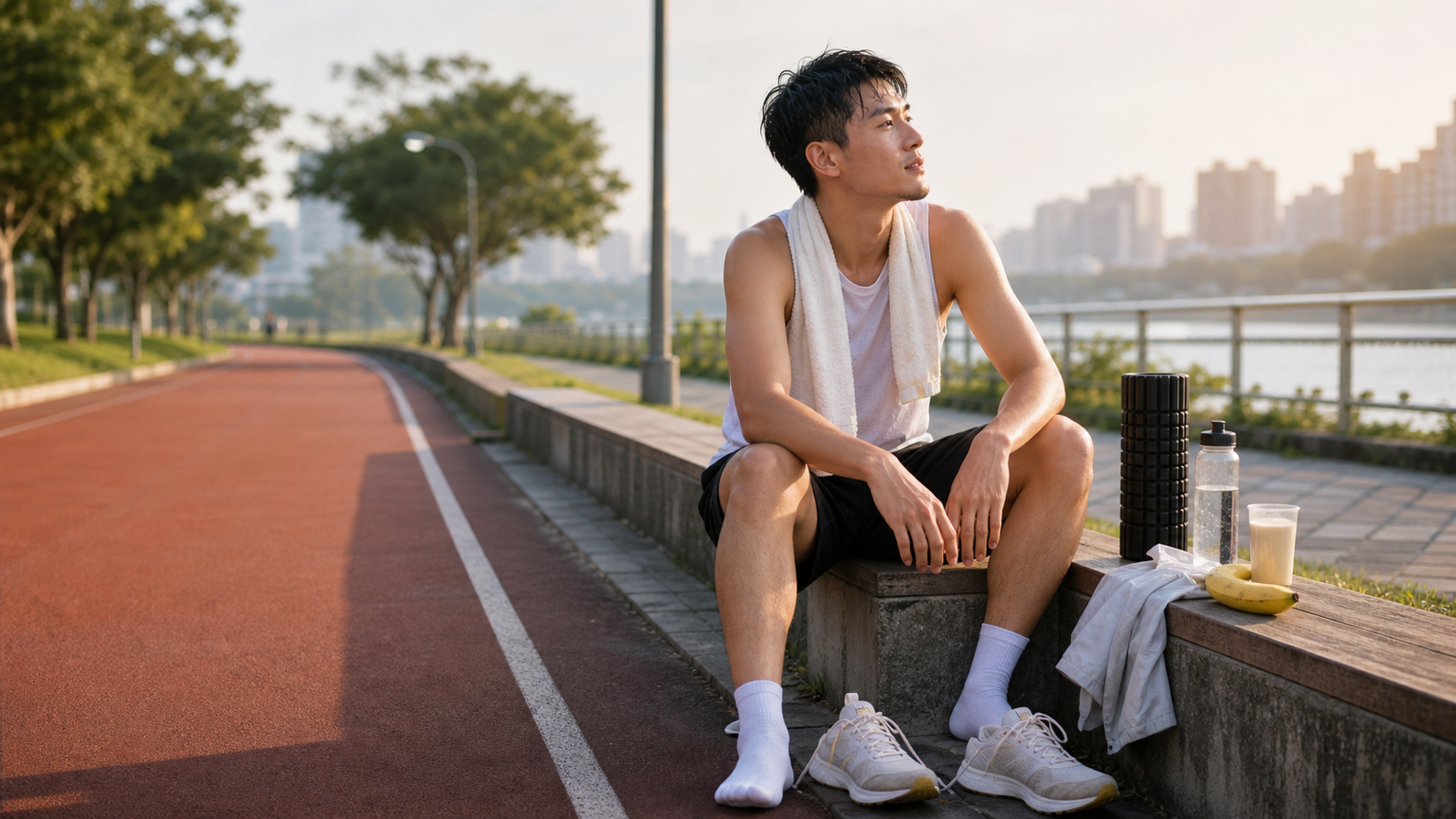
- Refuel with carbs + protein: Within 30–45 minutes, consume 40–50g of carbs + 20–25g of protein. The common “banana + tea egg + soy milk” combo at Taiwanese race venues fits the bill perfectly
- Change out of wet clothing: Avoid hypothermia. At Taiwan’s winter marathons, temperatures after finishing can be as low as 10–15°C, making dry change clothes in your finish bag crucial
- Cold water immersion (optional): If available, a 10–15 minute cold water soak (12–15°C) can accelerate the resolution of acute inflammation
4-Week Post-Race Recovery Schedule
Week 1: Complete Recovery Phase
| Day | Recommended Activity | Avoid |
|---|---|---|
| Race day + 1 | Walking, stretching | Any running |
| Race day + 2–3 | Easy swimming, cycling (< 30 minutes) | Running, excessive stair climbing |
| Race day + 4–5 | Light yoga, foot soaks, massage | Intensity training |
| Race day + 6–7 | May try 20–30 minutes of very easy jogging | Running longer than 30 minutes |
Listen to your body first: If your legs still feel heavy and sore on days 6–7, extending complete rest to day 10 is perfectly normal.
Week 2: Light Activity Phase
- 30–40 minutes of easy activity daily (swimming, cycling, brisk walking)
- If you’re interested in resuming running: no more than 30 minutes per session, heart rate kept below 65% HRmax, with a light, short stride
- Sleep first: after a full marathon, the body is under systemic immune stress; 8–9 hours of sleep accelerates hormonal and immune system recovery
- Dietary support: increase intake of antioxidant-rich foods (dark-colored fruits and vegetables, turmeric, nuts) and replenish electrolytes lost in large amounts during the race
Week 3: Progressive Return-to-Training Phase
You can begin a light weekly running schedule:
- 3–4 runs per week, 30–45 minutes each
- All completed at a pace that feels “easy, like you’re out for a stroll” (30 seconds slower than E pace)
- No intensity workouts of any kind (intervals, tempo runs, MP training)
- Light strength training can be added: bodyweight squats, glute bridges, to gradually reactivate the gluteal muscles
Week 4: Preparation for Normal Training
- Weekly mileage returns to 40–50% of pre-race peak
- One very easy tempo run may be inserted (10–15 minutes, not a full workout—just to wake up the neuromuscular system)
- Complete one long run (16–18 km) at an easy pace to assess how your body is responding
- If recovery after the long run is normal, a new training cycle can begin from Week 5
Common Post-Race Symptoms and How to Handle Them
- Delayed Onset Muscle Soreness (DOMS): Peaks 24–72 hours after the race. Relieve it with light activity, massage, and warm baths; it usually subsides on its own by days 5–6
- Black toenails: Common after ultra-long-distance running. Most will shed and regrow naturally; no treatment is needed unless there are signs of infection
- Post-Race Blues: The psychological emptiness after achieving a major goal. The recommendation is to immediately plan your next small goal (it doesn’t have to be a marathon)
- Suppressed immunity: For 1–2 weeks after the race, avoid crowded places, and supplement with vitamin C and zinc. Be especially mindful of the cold/flu peak after Taiwan’s winter races
Practical Tips
- Book a massage: Schedule a sports massage 48–72 hours after the race (not deep tissue—focus on lymphatic drainage), which can significantly shorten the duration of DOMS
- Stay warm in Taiwan’s winter: Immunity drops after a full marathon, and Taipei’s winters are damp and cold. Change clothes immediately after finishing, keep warm, and don’t linger in the finish area for long
- Record your post-race feelings: Log your daily fatigue, sleep quality, and resting heart rate in your training journal after the race to build a personalized recovery curve for future race preparation
- Recommended interval before the next marathon: The minimum gap before returning to full race preparation is 12–16 weeks. If you want to run two full marathons in the same season, treat the second one as an “experience run” rather than a PR attempt
Conclusion
Finishing a full marathon is an endpoint, but it’s also a new beginning. Giving your body adequate rest after the race is the best reward for its 16 weeks of hard work—and the best investment in ensuring you come back stronger next season. The urge to rush back into training is only human, but the runners who patiently wait for recovery to complete are the ones who stay on the starting line year after year. Rest well—the race has only just begun.
Related Reading
CT暗黑廚房) 車友必備 宇宙無敵鮮蚵湯 幫助訓練恢復 天然食補 好市多 超肥鮮蚵 破PR
7 年前
Live) 備戰2019彰化經典百K 賽前攻略 (已完賽請看新影片
7 年前
摔車後補裝備: 好市多新款單車安全帽& Specialized Romin 北高整路屁股都不痛的坐墊 | 一千元居然有MIPS | CT Yeh | 公路車
4 年前
一日北高 11小時 賽後心得分享篇 | TWB北高360 | 一日雙城 | 單車 | 公路車
6 年前
2019 夏季KOM 5小 完賽心得 準備攻略 東進武嶺 夏季登山王之路 Taiwan KOM Challenge
7 年前
FTL 與 SYB 車隊專訪 西進武嶺 實用攻略分享! 2小時 如何練?!你不知道的眉角!新手準備武嶺必看 EP1 | 實力派女車友 | 精華版 | 公路車 | CTYeh
4 年前
西進武嶺 免費訓練分析服務 Intervals | 練不夠還是練過頭?你哪一種類型選手?AI模型告訴你! | 備戰神器 | 公路車 訓練 | CT Yeh
4 年前
一日北高前的高裝檢 | 北高 360 | 挑戰11小時的裝備 | 一日雙塔 | 補給
6 年前