Introduction
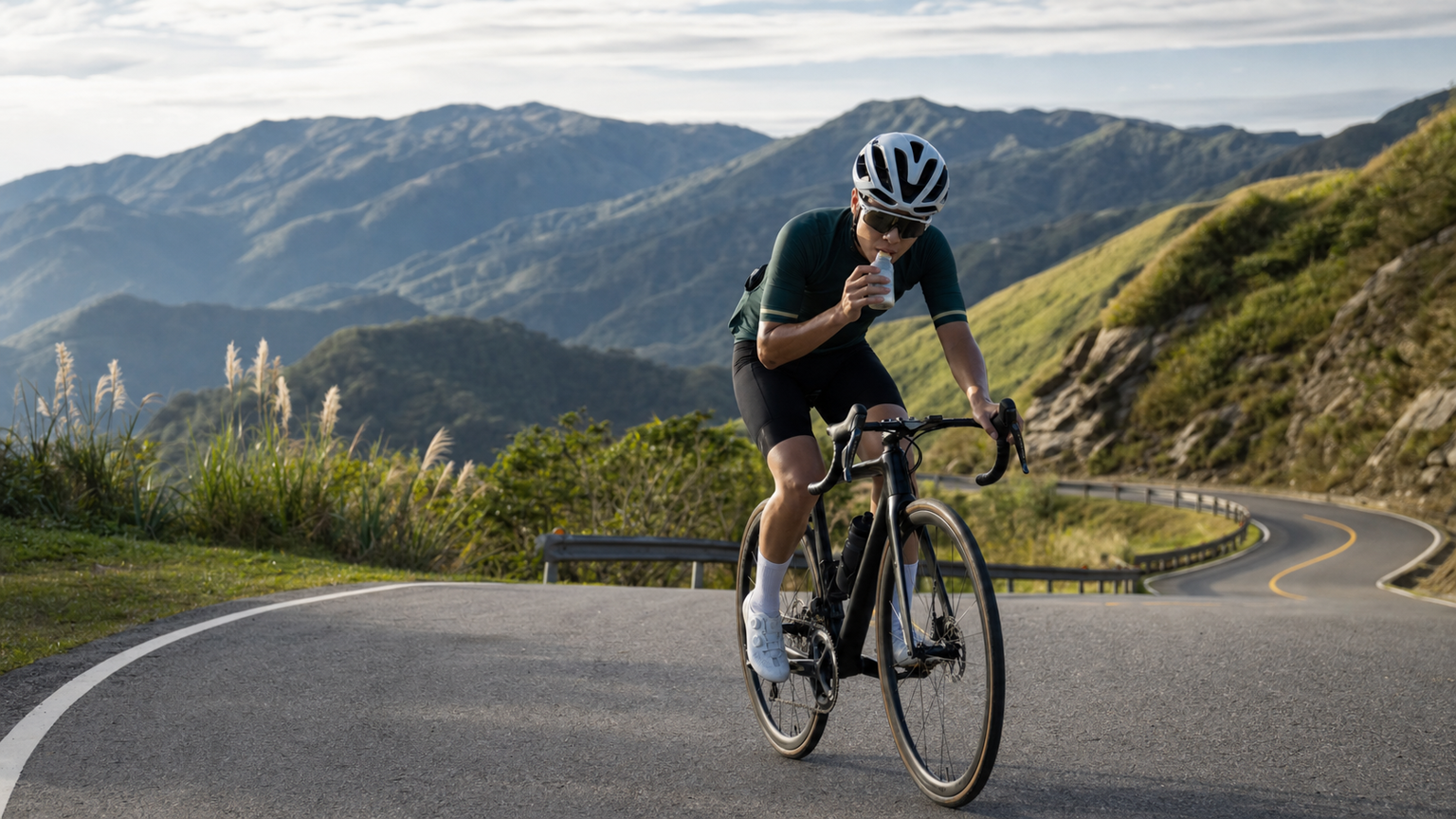
In the final 20 kilometers of climbing Wuling, many riders start to feel a strange phenomenon: heart rate is normal, breathing is fine, but the legs just won’t push. This is what sports physiology calls “Glycogen Depletion”—the primary fast-burning fuel in muscle cells runs out, forcing the body to switch to the less efficient fat oxidation, and power output drops significantly.
Climbing demands high intensity, burning 30–50% more carbohydrates per minute than riding on flat roads, making fueling timing even more critical. This article provides a systematic fueling strategy for long climbs.
Energy Demand Analysis for Long Climbs
Baseline Numbers
| Intensity | Burn Rate (kcal/min) | Carb Ratio | Carb Consumption (g/hr) |
|---|---|---|---|
| Zone 2 (65% FTP) | 8–10 | 45% | 25–30g |
| Zone 3 (75% FTP) | 12–14 | 60% | 50–60g |
| Zone 4 (90% FTP) | 16–18 | 75% | 80–90g |
| Zone 5 (>100% FTP) | 20+ | 85% | 100g+ |
Calculating for a 3-hour finish on the western slope of Wuling, if maintaining Zone 3–4 throughout, total carb demand is approximately 200–240g, while the body’s glycogen storage limit is about 350–400g (including muscle glycogen). This shows that without fueling, glycogen deficiency is highly likely in the final hour.
Three Core Fueling Principles
- Proactive Fueling: Don’t wait until you’re hungry to eat, because by the time hunger is felt, blood sugar has already dropped and performance is already compromised
- Timed Intervals: Refuel every 20–30 minutes, which is more stable than consuming large amounts at once
- Solid-Liquid Combination: Liquid fuel (energy drinks) absorbs quickly, while solid fuel (energy bars, bananas) provides longer-lasting satiety
Fueling Node Design for Long Climbs
Climbs Under 45 Minutes (e.g., Caoling, Bagua Mountain)
- 30 minutes before departure: Regular meal or carb-containing snack (rice, bread), approximately 60–80g carbs
- During the climb: Focus on hydration (150ml every 20 minutes); if intensity is high (Zone 4+), add 1 energy gel
- After finishing: Consume a recovery meal within 30 minutes
60–90 Minute Climbs (e.g., Quantou Mountain, Taiping Mountain)
| Time Point | Fueling Content | Carb Amount |
|---|---|---|
| 60 min before departure | Regular meal (80–100g carbs) | 100g |
| 15 min before departure | Energy gel or banana | 25–30g |
| 20 min into climb | Energy drink 200ml | 20g |
| 45 min into climb | Half an energy bar | 25g |
| 60 min into climb | Energy drink + gel | 35g |
| Within 30 min after finish | Recovery drink (whey or 4:1 carb-to-protein ratio) | 40g carbs + 15g protein |
2–3 Hour Climbs (e.g., Full Western Slope of Wuling)
- First 30 minutes: Warm-up phase, light fueling is sufficient, 20g carbs every 20 minutes
- 30–90 minutes: Entering the high-intensity core section, supplement 30–40g carbs every 20–25 minutes
- 90–150 minutes: Fatigue accumulates, incorporate solid fuel, consider salt tablets for electrolyte replacement
- Final 30 minutes: If the remaining section is short, increase fueling frequency to prepare for the final sprint
Fueling Product Selection Guide
| Product | Advantages | Disadvantages | Best Scenarios |
|---|---|---|---|
| Energy gel | Fast absorption (15 minutes) | Low carb amount (20–25g/pack) | Quick mid-ride top-up |
| Energy bar | Filling, substantial carbs | Requires releasing the handlebar to eat | Gentle gradient sections |
| Banana | Natural, easily available in Taiwan | Hard to carry, bruises easily | Aid stations or spare at the start |
| Energy drink (4–8% sugar) | Hydrates and fuels simultaneously | Can cause discomfort if consumed too much in Taiwan’s summer | Continuous hydration throughout |
| White rice ball | High carb, easy to digest | Requires advance preparation | Pre-race staple or at aid stations |
Realities of Aid Stations on Taiwan Climbs
- Wuling: Convenience store near Lushan gas station, supplies at Cingjing Farm; almost no shops in the final 15 kilometers
- Taiping Mountain: Vendors before Tuchang, but only reliably open on weekends
- Caoling: Supplies available in Gukeng urban area, no aid points after starting the climb
- Recommendation: Aid stations are generally scarce on Taiwan climbs—always carry 20% more fuel than planned
Practical Tips
- Don’t reach too far from the handlebar when fueling—Taiwan’s mountain roads are full of turns, so practice one-handed retrieval while riding
- Those with sensitive stomachs can do a “fueling product test ride” a week before a long ride to confirm tolerance for specific energy gels
- Salt tablets are especially important on climbs exceeding 2 hours; Taiwan’s summer sweat rate is high, and the risk of hyponatremia is not insignificant
- Starting Wuling in the early morning is cold, and you won’t feel thirsty, but you still need to hydrate on schedule—dehydration’s negative impact on power is especially pronounced at high intensity
Conclusion
The outcome of a long climb sometimes isn’t decided by leg strength, but by the fueling strategy in your backpack. Planning the timing and content of each fueling node in advance is like depositing an energy reserve for your final 30 minutes. Next time you climb Wuling, write your fueling plan on the back of your hand before departure—don’t rely on feel to decide when to eat.
Related Reading
- Fueling Timing for Mountain Riding: Carb Supplementation Strategies Before, During, and After Climbs
- Pacing and Fueling Rhythm for Long Gentle Climbs (>30min)
- Energy Fueling Schedule for Long Rides: Practical Carb Intake Per Hour
- Carbohydrate Strategies for Long-Distance Riding: Hourly Intake and Digestion/Absorption
#公路車 #西進武嶺 配速配瓦實驗 坡度分析 四小時內攻略 建大盃 NeverStop #西進武嶺攻略
6 年前
FTL 與 SYB 車隊專訪 西進武嶺 實用攻略分享! 2小時 如何練?!你不知道的眉角!新手準備武嶺必看 EP1 | 實力派女車友 | 精華版 | 公路車 | CTYeh
4 年前
西進武嶺 免費訓練分析服務 Intervals | 練不夠還是練過頭?你哪一種類型選手?AI模型告訴你! | 備戰神器 | 公路車 訓練 | CT Yeh
4 年前
風櫃嘴時間 預測西進武嶺時間?13000名車友統計數據分析告訴你 !
5 年前
西進武嶺各路段 前8000名 大數據分析 配速攻略/功率/心律/推力比/維持率/踏頻/踏瓦比/牽車率 大公開 | 建大盃 NeverStop 可參考 | 公路車 | CT Yeh
5 年前
西進武嶺 8000名單車友數據分析 PART1 | 從新手到高手數量/瓦數/推力比/FTP推力比/功率計使用率 大解析 | 公路車 | CTYeh
5 年前
東進武嶺 西進武嶺 AI 配速 上線囉 公路車
5 年前
大禹嶺 到 武嶺牌樓 全程前後實況錄影 | 北進武嶺 | 東進武嶺 | KOM | 訓練台 | 坡度分析 | Taiwan KOM Last 10 km HARD | 公路車
6 年前