Introduction
“Train by heart rate, not by pace” — this is a golden rule for many running coaches. In Taiwan’s hot summer conditions, the same heart rate output can correspond to a pace that is 30–60 seconds per kilometer slower than in winter. Sticking rigidly to pace-based training can easily lead to overtraining. Heart rate monitoring has therefore become an essential tool for modern runners, but the accuracy gap between chest straps and optical heart rate sensors is larger than you might think.
How the Two Technologies Work
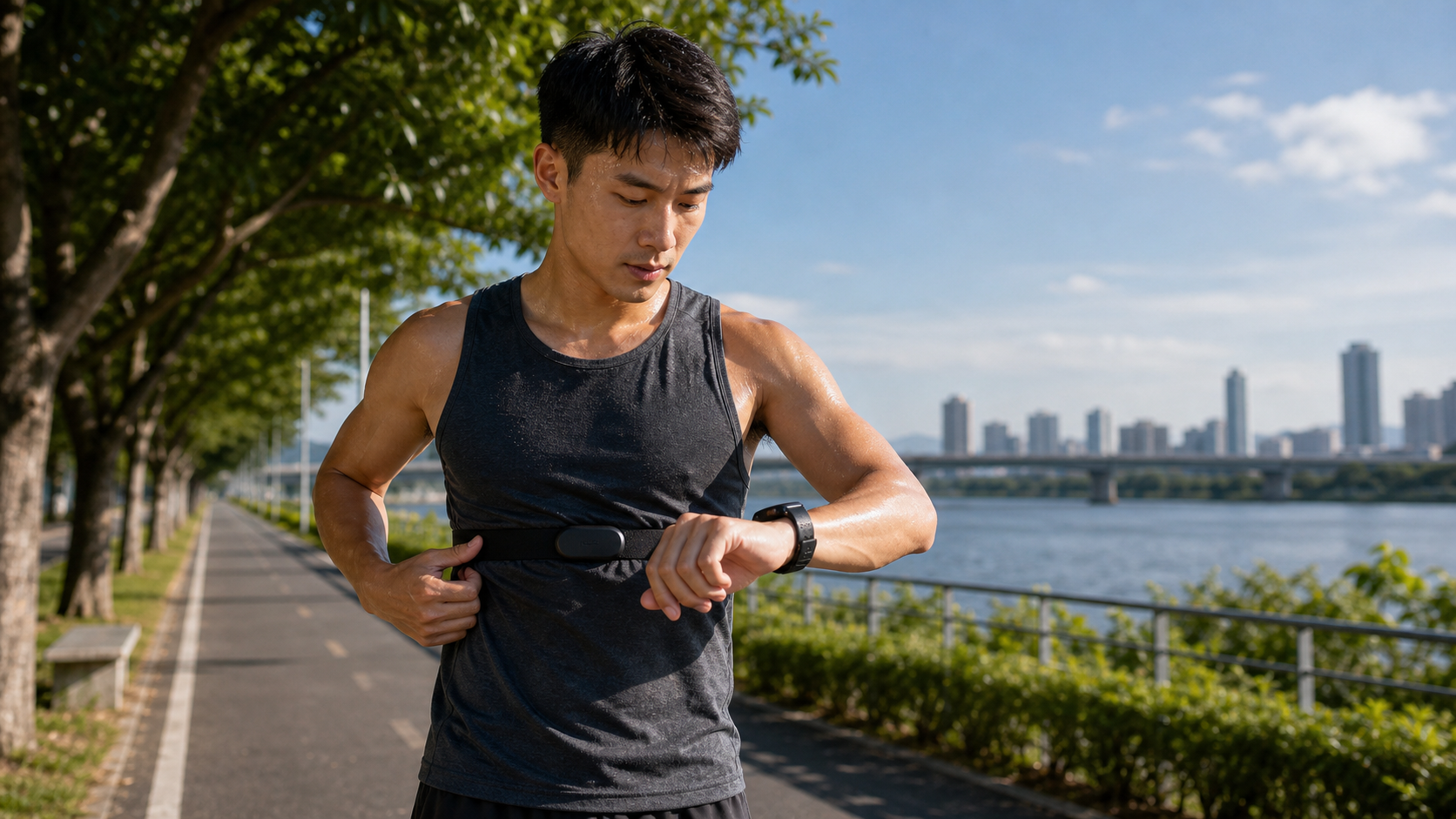
Chest/arm strap heart rate monitors (ECG-based)
These use skin electrodes to detect the heart’s electrical signal (similar to an ECG), the same principle used in medical devices. Major brands include the Polar H10, Garmin HRM-Pro Plus, and the COROS heart rate armband.
Optical heart rate (PPG – Photoplethysmography)
An LED shines light into the skin and detects changes in light reflection caused by blood flow to estimate heart rate. This is the technology built into nearly all smartwatches and running watches today.
Accuracy Comparison
| Scenario | Chest/Arm Strap | Optical (Wrist) |
|---|---|---|
| Steady easy running | ★★★★★ (error <1bpm) | ★★★★ (error 2–5bpm) |
| Interval sprints | ★★★★★ (instant response) | ★★★ (10–30 second lag) |
| Hill climbs/steps | ★★★★★ | ★★ (heavy wrist-motion interference) |
| Heavy sweating in Taiwan summer | ★★★★ (needs to stay moist) | ★★ (sweat and skin-reflection interference) |
| Long distance 4+ hours | ★★★★ | ★★★ (battery and sensor drift) |
Core conclusion: chest straps are clearly superior to optical sensors in situations with rapid dynamic changes. Optical heart rate is fairly accurate during steady easy running, but during high-intensity interval training, the lag can throw off judgment of the entire training zone.
Types of Heart Rate Monitors
Chest Strap
- Examples: Polar H10, Garmin HRM-Pro Plus
- Pros: Highest accuracy, supports both ANT+ and Bluetooth, the Polar H10 can store data onboard
- Cons: Uncomfortable to wear, feels stuffy against the chest in hot weather, may cause skin irritation over long periods
Arm Band
- Examples: Polar Verity Sense, COROS Heart Rate Arm Band
- Pros: More comfortable than a chest strap, optical sensor sits on the upper arm (larger blood vessels give better accuracy than the wrist)
- Cons: Requires carrying an extra device, still feels warm on the upper arm in summer
Wrist Optical (Built into Running Watches)
- Examples: Garmin, COROS, Apple Watch built-in sensors
- Pros: Most convenient, no extra accessories needed, enables 24-hour daily monitoring
- Cons: Accuracy drops during high-intensity training, becomes even more unstable with heavy sweating in summer
Special Considerations for Taiwan’s Summer
Taiwan’s average summer temperature is 32–36°C, and runners sweat heavily, which has a distinct effect on heart rate monitoring:
- Optical watches: Sweat can form air bubbles or a reflective layer between the skin and the sensor, causing readings to spike or suddenly drop abnormally (a common misreading pattern: 180bpm suddenly jumping to 120bpm and then back up)
- Chest straps: By contrast, a moderate amount of sweat actually helps electrode conductivity, so chest straps can be more accurate when slightly damp than when completely dry
- Recommendation: If you’re planning interval training or a triathlon during Taiwan’s summer, it’s strongly recommended to use a chest strap or arm band paired with a running watch as the receiver
How to Choose What’s Right for You
Here are recommendations for different types of runners:
- Beginners / general health monitoring: A watch’s built-in optical heart rate is sufficient; there’s no need for an additional heart rate monitor
- Serious runners chasing a PB: Consider a chest strap or arm band for all key training days (intervals, tempo runs, long runs)
- Triathletes or trail runners: The Polar Verity Sense arm band can be used while swimming and is compatible with multiple devices, making it worth considering
- Ultramarathon runners: A chest strap is recommended for long-distance races to avoid optical drift affecting heart rate zone management in the second half of the race
Practical Tips
- Keep the electrode pads of your chest strap clean; applying a small amount of conductive gel to the electrode surface can improve the signal
- When pairing devices, make sure your running watch is set to prioritize the chest strap over the wrist optical sensor — Garmin devices allow you to switch this in the sensor settings
- Remember to replace the battery in a chest strap that hasn’t been used for a long time; a chest strap suddenly dropping connection is a common issue at Taiwan marathon events
Conclusion
The convenience of optical heart rate makes it a great helper for everyday training, but if you’re chasing training precision or need reliable heart rate data in high-intensity or high-heat conditions, investing in a chest strap or arm band is well worth it. Good heart rate data is the foundation of scientific training.
Related Reading
- Running Heart Rate Monitoring: An In-Depth Comparison of Chest Strap vs. Optical Heart Rate Accuracy
- Chest Strap vs. Optical Heart Rate for Running: Comparing Measurement Accuracy and Wearing Comfort
- Chest Strap vs. Optical Heart Rate Watches for Road Running: Accuracy Differences and Best Use Cases
- Chest Strap vs. Optical Heart Rate Watch: Which Is More Accurate for Running Training?
西進武嶺 免費訓練分析服務 Intervals | 練不夠還是練過頭?你哪一種類型選手?AI模型告訴你! | 備戰神器 | 公路車 訓練 | CT Yeh
4 年前
Garmin Edge 1050 旗艦車錶 全台首測!/ 環法冠軍指定 / 對比Edge 1040改進哪些? / 公路車 / CT Yeh
2 年前
2026 車錶排行榜!誰是最多車友正在使用?練家子最愛哪款?🏆 (2萬名車友數據) / 公路車 / CT Yeh
5 個月前
#公路車 #Vo2Max #最大攝氧量 測驗 體驗 | 心肺測試
6 年前
首發 Garmin Edge 850 車錶 深入開箱!? / 公路車 / CT Yeh
10 個月前
2022 前十五大自行車錶 !? 兩萬名車友大數據統計 | 你的上榜了嗎? | 菁英車友都用哪些錶? | Bryton Garmin 誰能拔得頭籌?| 車錶推薦 | 公路車 CT Yeh
4 年前
Garmin Edge 540/840 Solar 台灣首發開箱!完整車錶功能 道路實測 / ClimbPro 爬坡提示超級牛 / 強大續航實測 / 公路車 / CT Yeh
3 年前
西進武嶺 自製新版AI配速表產生器 x 賽前攻略 抱佛腳! 沒有功率計也可以產生配速表嗎?有什麼其他眉角賽前要注意的呢? | 西進武嶺 / 東進武嶺 KOM 攻略 | 公路車 | CT Yeh
4 年前