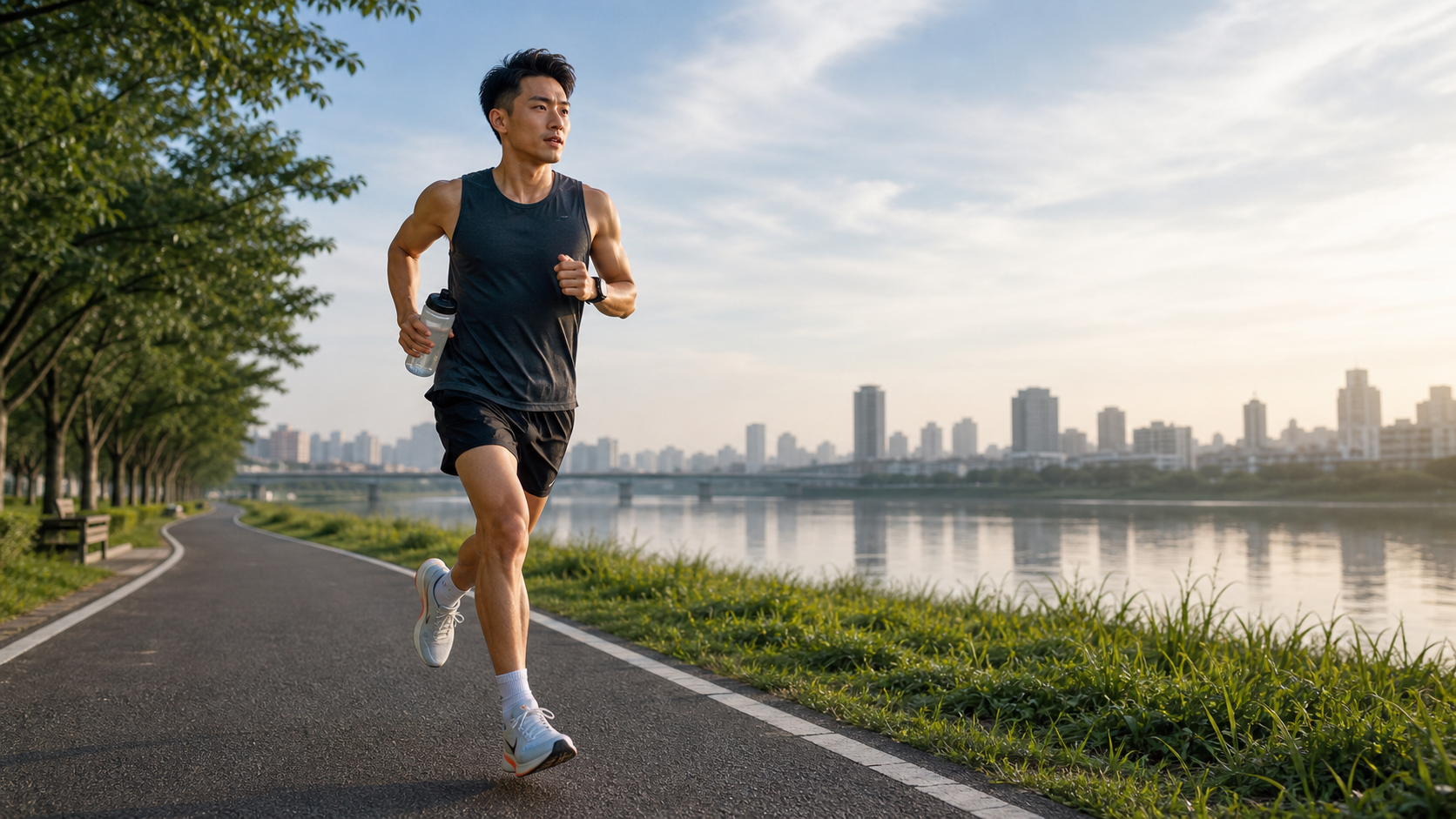
Introduction
Ask any half-marathon coach: “Which workout is the most important in training?” Nine times out of ten, the answer is the Long Run. A weekly long, slow distance run is the core method for building your aerobic base, improving fat-burning efficiency, and strengthening musculoskeletal tolerance. However, many runners either run their long runs too fast (accumulating fatigue) or too slow (insufficient stimulus). This article breaks down precise pacing for 18–22 km long runs for half-marathon goal runners.
The Physiological Goals of the Long Run
The physiological adaptations from half-marathon long runs include:
- Increased mitochondrial density: More “cellular power plants” improve aerobic metabolic efficiency
- Capillary growth: More capillaries in the muscles improve oxygen transport efficiency
- Increased muscle glycogen stores: Prolonged exercise gradually depletes liver glycogen, stimulating the body to store more
- Improved fat utilization: Low-intensity, long-duration training teaches the body to burn fat preferentially, preserving glycogen
- Tendon and bone tolerance: Gradually adapting to the cumulative impact of long distances
The Golden Rule of Pacing
The fundamental principle of the long run is “easy but effective,” typically recommended at a pace 60–90 seconds/km slower than your goal half-marathon pace.
| Goal Half-Marathon Pace | Goal Finish Time | Recommended Long Run Pace |
|---|---|---|
| 5:40/km | 2:00 | 6:30–7:10/km |
| 5:00/km | 1:45 | 5:45–6:30/km |
| 4:30/km | 1:35 | 5:15–6:00/km |
| 7:00/km | 2:28 | 7:45–8:30/km |
Heart Rate Reference: Throughout the long run, your heart rate should stay at 65–75% of your maximum heart rate, maintaining a state of “slightly breathless but able to hold a conversation.”
Pacing Variations for Three Long Run Formats
Format 1: Easy Long Run
When to use: First 4–5 weeks of the training cycle, recovery weeks, or when fatigue levels are high
Maintain a slow pace throughout, 90+ seconds slower than your goal race pace. Taiwan’s riverside trails are excellent venues—the flat terrain keeps your pace steady and makes it easy to set up aid stations.
Format 2: Progression Long Run
When to use: Build phase (weeks 5–9 of the training cycle)
- First 2/3: Easy pace (90 seconds slower than race pace)
- Last 1/3: Gradually increase to goal half-marathon pace or even slightly faster
Example (20 km, 2:00 goal):
- First 13 km: 6:40/km
- Last 7 km: 5:45–5:50/km
Format 3: Specific Long Run
When to use: 4–6 weeks before race day, simulating race conditions
- Warm-up 4 km: Easy
- Middle 14 km: Goal half-marathon pace ± 5 seconds
- Final 4 km: Increase to threshold pace
This is the highest-intensity format of the three; do not do it more than twice per month.
Long Run Nutrition and Hydration Management
Long runs over 18 km require proactive fueling:
- Hydrate every 5 km: Don’t wait until you’re thirsty
- Consume carbs after 75 minutes: Gels (30–45g carbs) or bananas both work
- Special note for Taiwan summers: When temperatures exceed 28°C, you can loosen your long run pace by 10–20 seconds and shorten the distance to 16–18 km
Common long run fueling strategies in Taiwan:
- Pre-plan stops at convenience stores along the route to quickly buy a drink and keep running
- Carry a soft flask belt (500 ml + 2 gels)
- Start at 5–6 AM to take advantage of the cooler morning temperatures and lighter traffic
Long Run Recovery Management
- Refuel immediately after finishing: consume carbs (banana + sports drink) and protein (soy milk or tea egg) within 15 minutes
- Do no other high-intensity training that day
- The next day, schedule a very easy 6–8 km recovery run (heart rate below 70% of max HR)
Practical Tips
- For long runs, tracking “time” rather than pace is more scientific: a runner targeting 2 hours should do long runs of 100–110 minutes, as physiological stimulus is more directly related to time
- Increase long run distance by 1–2 km every 2–3 weeks; don’t jump up too much at once
- If you experience unusual knee or calf pain after a long run, immediately shorten the distance and assess whether rest is needed
- Choosing shaded routes (such as around Daan Forest Park or near Bitan) can reduce the impact of Taiwan’s summer radiant heat
Conclusion
Pacing control on the long run is an art—running “slow enough” is often harder than running “fast enough.” Every easy 18–22 km long run is meant to help you cover the full race distance faster on race day. Make the long run the workout you look forward to most each week, not the challenge you dread.
Related Reading
西進武嶺 免費訓練分析服務 Intervals | 練不夠還是練過頭?你哪一種類型選手?AI模型告訴你! | 備戰神器 | 公路車 訓練 | CT Yeh
4 年前
一日北高前的高裝檢 | 北高 360 | 挑戰11小時的裝備 | 一日雙塔 | 補給
6 年前
西進武嶺 自製新版AI配速表產生器 x 賽前攻略 抱佛腳! 沒有功率計也可以產生配速表嗎?有什麼其他眉角賽前要注意的呢? | 西進武嶺 / 東進武嶺 KOM 攻略 | 公路車 | CT Yeh
4 年前
Live) 備戰2019彰化經典百K 賽前攻略 (已完賽請看新影片
7 年前
西進武嶺各路段 前8000名 大數據分析 配速攻略/功率/心律/推力比/維持率/踏頻/踏瓦比/牽車率 大公開 | 建大盃 NeverStop 可參考 | 公路車 | CT Yeh
5 年前
FTL 與 SYB 車隊專訪 西進武嶺 實用攻略分享! 2小時 如何練?!你不知道的眉角!新手準備武嶺必看 EP1 | 實力派女車友 | 精華版 | 公路車 | CTYeh
4 年前
#公路車 #Fitting 靠人工智慧APP 幫你調整單車
6 年前
#公路車 #西進武嶺 配速配瓦實驗 坡度分析 四小時內攻略 建大盃 NeverStop #西進武嶺攻略
6 年前