Introduction
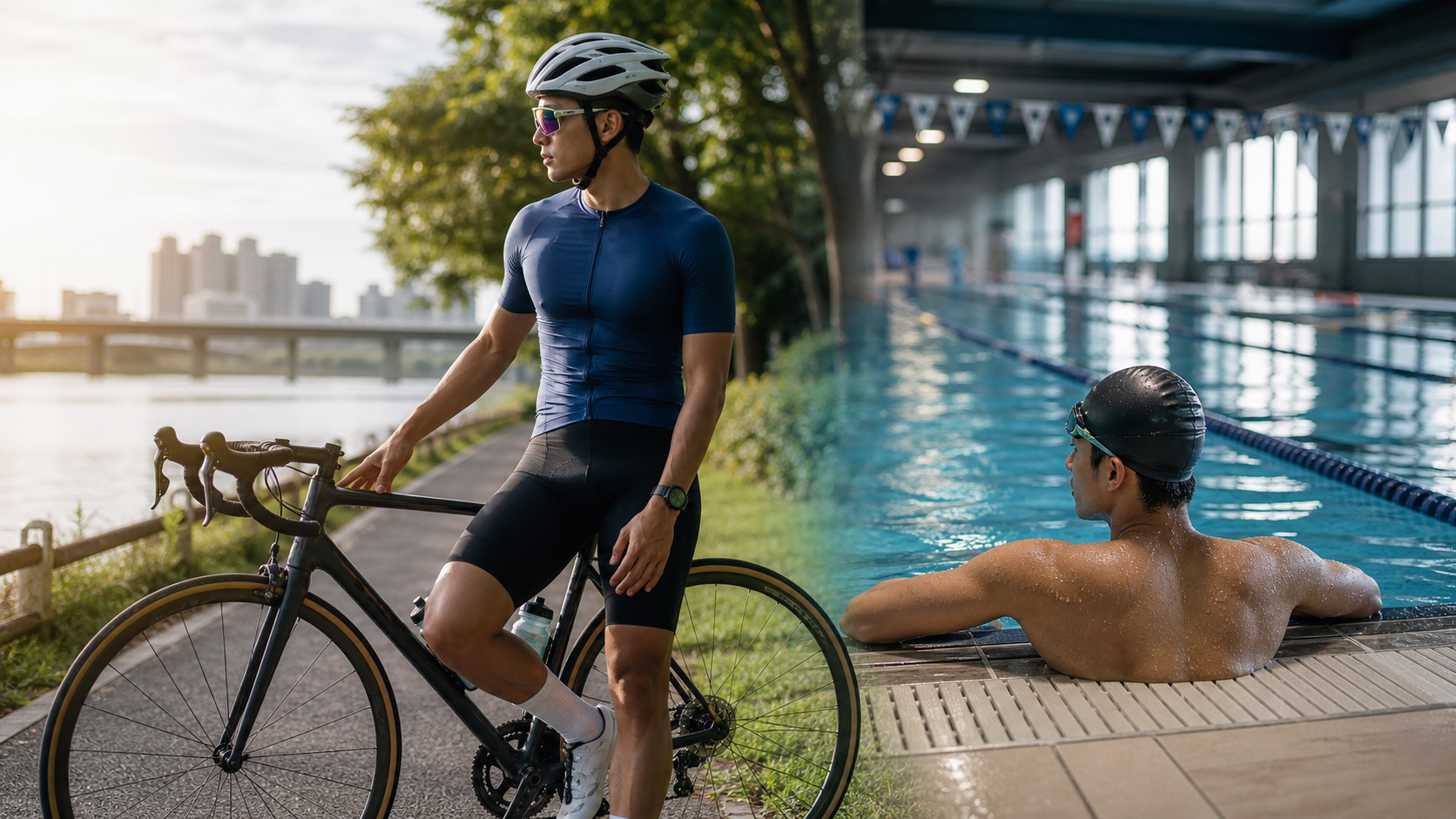
During half-marathon preparation, weekly running volume can reach 40–60 km, and the cumulative impact places sustained stress on the knees, ankles, and plantar fascia. Cross-training is a smart solution to this problem: by engaging in non-running aerobic exercise, you can maintain or even improve cardiovascular capacity while giving your running muscles ample time to recover. Swimming and cycling are the two most commonly recommended cross-training modalities for half-marathon runners.
Why Cross-Training Works for Half-Marathon Runners
Research shows that cross-training can deliver the following benefits:
- Maintains cardiovascular fitness: Swimming or cycling at the same heart-rate intensity continuously stimulates the cardiovascular system
- Reduces cumulative impact: Running generates 2–3 times body weight in impact force with every foot strike, while swimming and cycling are nearly impact-free
- Engages different muscle groups: Swimming trains the core and upper body, while cycling trains the quadriceps, complementing the muscles that running underutilizes
- Keeps aerobic training uninterrupted after injury: If you have a minor injury, water-based training or cycling is the best alternative for maintaining fitness
Swimming as Half-Marathon Cross-Training
Advantages and Limitations
Advantages:
- Full-body aerobic work with strong cardiovascular stimulation
- Water buoyancy eliminates gravitational impact, making it the best choice during recovery periods
- Relieves lower-body muscle tightness (especially the hamstrings and calves)
- Cold-water swimming helps reduce muscle inflammation
Limitations:
- Higher technical barrier (if you are unfamiliar with swimming strokes, the cardiovascular benefit drops significantly)
- Indoor pools in Taiwan require admission fees and sometimes reservations
- Limited transfer to running muscles (swimming has low running specificity)
Sample Swimming Workouts (1–2 times per week)
| Workout Type | Content | Duration | Equivalent Aerobic Benefit |
|---|---|---|---|
| Recovery Swim | 600m freestyle, heart rate 60–70% | 30 minutes | Easy run of 40–45 minutes |
| Aerobic Swim | 1200m mixed strokes, heart rate 70–80% | 45 minutes | Moderate-intensity run of 50 minutes |
| Interval Swim | 10 × 50m, heart rate 85–90% | 30 minutes | Tempo run of 25–30 minutes |
Swimming resources in Taiwan: Sports center pools in various cities and counties (such as Taipei City public pools and New Taipei City sports centers) offer affordable options. Check opening hours before training.
Cycling as Half-Marathon Cross-Training
Advantages and Limitations
Advantages:
- Greater overlap with running muscles (especially the quadriceps and glutes)
- Outdoor riding lets you enjoy the scenery, offering excellent psychological relaxation
- Using a trainer allows you to train at home, avoiding Taiwan’s summer heat
- Climbing strengthens cardiovascular fitness and leg power
Limitations:
- Requires cycling equipment (or a stationary bike at the gym)
- Outdoor riding involves traffic safety concerns
- Intensity is harder to control (heart rate drops on descents)
Sample Cycling Workouts (1–2 times per week)
- Low-intensity ride: 60–90 minutes, heart rate maintained at 60–70%, equivalent to the recovery effect of a long run
- Moderate-intensity ride: 45–60 minutes, heart rate 75–80%, add climbing sections to increase intensity
- Cycling intervals (using a trainer): 4 sets of 10 minutes, intensity 85–90%, equivalent to tempo-run benefits
Popular cycling routes in Taiwan: Bitan in Xindian to Wulai (a mix of flats and climbs), the Tamsui Riverside Bikeway (flat and easy), and Yangmingshan (a climbing challenge).
Placing Cross-Training Within the Training Week
- Monday (the day after a long run): 30 minutes of swimming (recovery swim) or complete rest
- Friday (the day before a long run): an easy 45-minute bike ride (without draining your running legs)
- Avoid adding cross-training on the same day as interval runs or tempo runs
Practical Advice
- Allow 3–4 weeks to adapt to the feel of the water before swimming, otherwise technical issues will reduce the aerobic benefit
- A cycling cadence of 85–95 rpm is recommended to mimic the neuromuscular rhythm of running cadence
- After injury (mild knee pain, mild plantar inflammation), switch immediately to swimming or aqua jogging to replace land-based training
- Do not exceed 3 cross-training sessions per week; running remains the core focus, so avoid spreading your resources too thin
Conclusion
Swimming and cycling are not substitutes for running—they are a support system that makes running more sustainable. Proper cross-training can extend your running career, reduce injury risk, and help you maintain training volume during Taiwan’s summer heat. Treat it as a backup tool in your training toolbox, deploy it wisely, and your half-marathon preparation will go much more smoothly.
Related Reading
- Cross-Training in Full-Marathon Training: When to Add Swimming and Cycling
- Cross-Training for Full-Marathon Training: Aerobic Supplementation with Swimming and Cycling
- Cross-Training in Marathon Training: When and Why to Replace Running with Swimming and Cycling
- Integrating Cross-Training into Marathon Training: Timing and Methods for Swimming and Cycling as Supplementary Training
西進武嶺 免費訓練分析服務 Intervals | 練不夠還是練過頭?你哪一種類型選手?AI模型告訴你! | 備戰神器 | 公路車 訓練 | CT Yeh
4 年前
靠單車減肥35公斤 心得分享與整理
7 年前
Never Stop 西進武嶺 前後雙機 完整全程錄影 訓練台 實境
8 年前
Zwift 元宇宙單車世界 如何與全世界同步騎車運動
6 年前
一日北高常見問題大集合 | 攻略 | 路線 | 訓練 | 補給 | 自行車 單車 | 一日雙城 | 雙塔 | TWB北高360 | 屁股痛
6 年前
單車 梅山36灣 坡度介紹 路段介紹 空拍 (相關遊記影片,請參考說明或我的頻道喔,歡迎訂閱)
6 年前
大家都在開箱的...單車用藍芽對講耳機真的有幫助嗎? SENA BiKom 20 長距離旅遊 & 海鷗繞圈賽 實際體驗心得 / 公路車 / CT Yeh
9 個月前
4K 東眼山 x 水蜜桃冰沙 百人單車約騎! 操完再吃冰 多爽快
7 年前