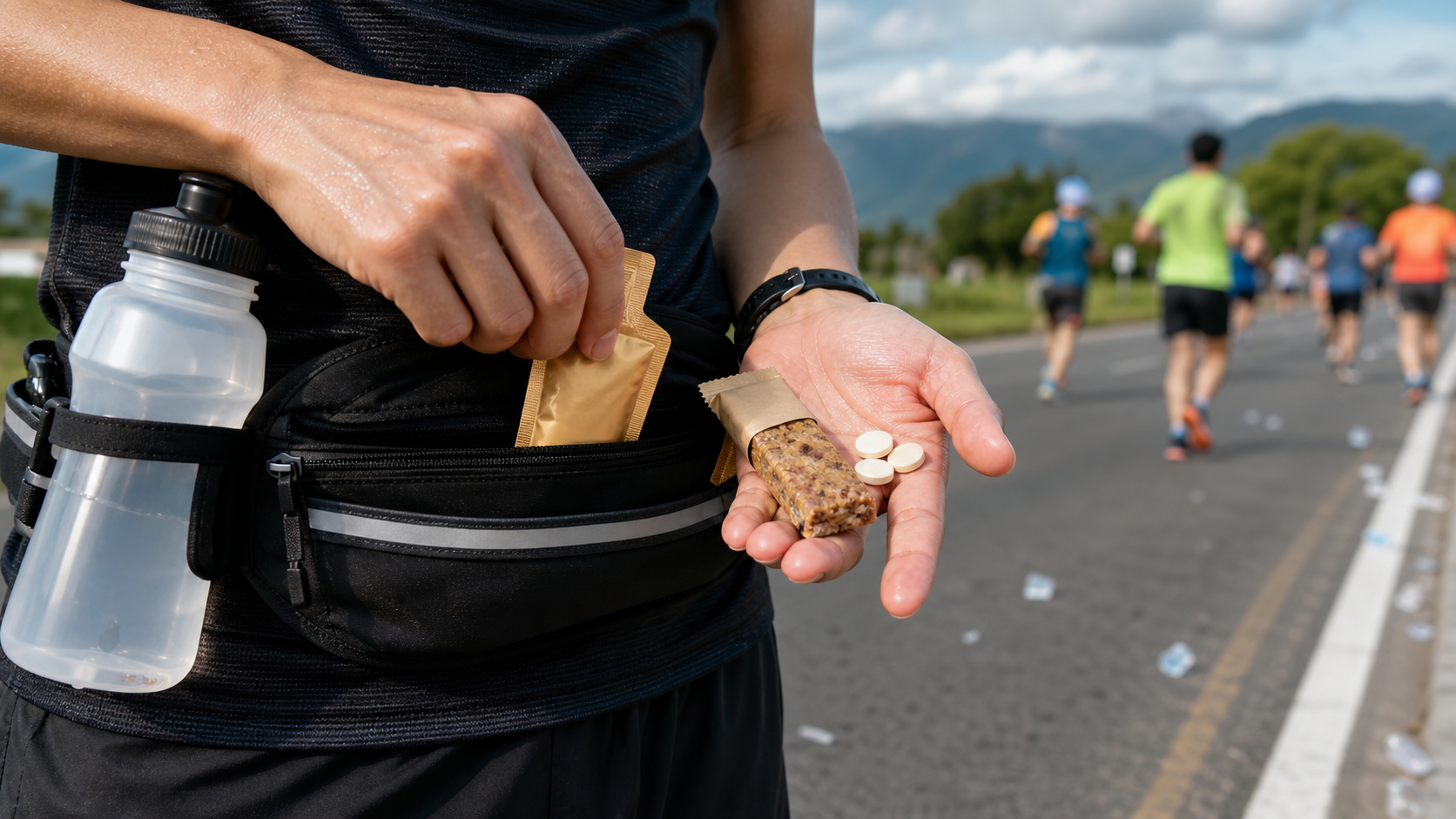
Introduction
“Hitting the Wall” is the most feared term among marathon runners. After passing the 30–32 km mark, muscle glycogen is depleted, and runners suddenly feel their legs go weak, their mind becomes foggy, and their pace drops rapidly. A proper energy supplementation strategy is the key weapon to break through this wall. At major Taiwanese events such as the Standard Chartered Taipei Marathon and the Taipei Ultra-marathon, aid stations are limited, so learning to carry and use energy supplements is a required course for advanced runners.
How Glycogen Works
The body’s main energy sources during running:
- Glycogen: Stored in muscles and the liver, providing about 90 minutes of high-intensity exercise
- Fat: Abundant in supply but slower to metabolize, accounting for the majority during low-intensity exercise
- When pace exceeds the lactate threshold (approximately 80% or more of maximum heart rate), the body relies almost entirely on glycogen
For full-marathon runners aiming to maintain a steady pace, carbohydrate supplementation should begin 60–75 minutes into the run, with a recommended intake of 60–90g of carbohydrates per hour.
Comparison of the Three Supplement Types
| Type | Carbohydrate Content | Absorption Rate | Gastrointestinal Burden | Portability |
|---|---|---|---|---|
| Energy Gel | 20–25g per packet | Fast (15–30 minutes) | Moderate (some experience stomach discomfort) | Excellent (light and thin) |
| Energy Bar | 25–45g per bar | Moderate (30–45 minutes) | Low (feels like food) | Average (requires chewing) |
| Chews | 20–25g per packet | Moderate-fast | Low | Good (can be consumed in portions) |
Using Energy Gels
Energy gels are the primary supplement for marathons, with a liquid texture that is easy to swallow and convenient to carry. Major brands:
- GU Energy: The most common in Taiwan, with a variety of flavors; some contain caffeine (75mg)
- Maurten Gel 100: Low-osmolarity design, touted as “gentlest on the stomach,” suitable for those who experience stomach discomfort with regular gels
- CLIF Shot: Made with organic ingredients; caffeinated versions speed up absorption
- Taiwanese local brands: Some domestic nutrition brands produce energy gels, available at running gear stores
When and how to use:
- Take the first packet 45–60 minutes after the race starts, then one packet every 40–45 minutes thereafter
- Gels must be taken with 150–200ml of plain water to dilute the osmolarity and avoid stomach discomfort
- Never take gels with sports drinks simultaneously (double high-osmolarity beverages are a leading cause of gastrointestinal cramping)
- Caffeinated gels are recommended for the latter half of the race (beyond 20km), making good use of caffeine’s energizing effect
Using Energy Bars
Energy bars are closer to real food, with higher carbohydrate content and generally better gastrointestinal tolerance than gels. They are suitable for:
- Long-duration, low-intensity training runs (at slower paces, the digestive system can still handle solid food)
- Early-stage ultra-marathon fueling (first 40km)
- Pre-race energy top-ups 2–3 hours before the start
Recommended in Taiwan: CLIF BAR series and KIND Bar (natural nut flavors), both available at Taiwanese running gear stores.
Using Energy Chews
Chews fall between gels and bars. Their gummy-candy texture makes them more palatable for many runners, and they can be consumed “in portions”—for example, eating a few every 15 minutes, offering more flexibility than downing an entire gel packet at once.
Special advantages:
- Some varieties contain electrolytes (sodium, potassium), covering both sugar and salt in one go
- In Taiwan’s summer heat, chews are less prone to thinning and leaking than gels
- The psychological act of “chewing” helps alleviate the boredom of long distances
Fueling Strategy for Taiwanese Races
Using the Taipei Marathon as an example (distance 42.195km, aid stations approximately every 5km):
- 0–15km: Warm-up phase; water only, no energy supplementation needed
- 15–30km: Drink water at aid stations every 5km, while supplementing with a gel every 40 minutes
- 30–42km: Entering the “wall danger zone”; if carrying caffeinated gels, use them around the 30km mark
- Recommended to carry throughout: 3–4 gels, or 2 gels + 1 packet of chews
Practical Tips
- Test supplements 2–3 weeks before the race: Try your chosen gel brand during long training runs to find a variety your stomach can tolerate. Never try a new product for the first time on race day
- Store in an easily accessible location: Front pocket of a waist pack, compression shorts pocket, or attached to a race-bib belt
- Track your fueling schedule: Set a 40-minute reminder on your running watch to avoid forgetting to fuel while focused on running
Conclusion
Energy supplements are a strategic resource for the latter half of a marathon. Choosing the right products and taking them at the right times allows you to maintain your rhythm through the “devil’s zone” after 30km. Start practicing your fueling strategy on your next long training run, so that race-day fueling becomes a powerful ally rather than a variable.
Related Reading
- Complete Comparison of Road Running Energy Supplements: Gastrointestinal Tolerance Analysis of Gels, Bars, and Liquid Fuel
- Sports Supplement Buying Guide: Differences Between Energy Gels, Bars, and Electrolytes
- Marathon Aid Station Strategy: When to Drink Water and When to Take Energy Gels
- Energy Supplementation During Exercise: Comparing Gels, Bars, and Real Food
CT暗黑廚房) 車友必備 宇宙無敵鮮蚵湯 幫助訓練恢復 天然食補 好市多 超肥鮮蚵 破PR
7 年前
一日北高前的高裝檢 | 北高 360 | 挑戰11小時的裝備 | 一日雙塔 | 補給
6 年前
一日北高/長距離團騎 常見問題補充篇 / 組團或跟團的眉角 / 壯車友容易被瘦車友慢性拉爆 / 原來屁股痛可能是這個原因...? / 風場配速法 / 公路車 / CT Yeh
2 年前
單車 一日北高 ( 雙城 ) 肥宅雙人瘋狂行 紀錄片 REACTO
10 年前
西進武嶺 免費訓練分析服務 Intervals | 練不夠還是練過頭?你哪一種類型選手?AI模型告訴你! | 備戰神器 | 公路車 訓練 | CT Yeh
4 年前
詳測) 小米 電動打氣筒 公路車胎要充多久? 值得買嗎? 米家充氣寶 小心燙手!
7 年前
2021 96聯賽 桃園市長盃 4K多視角實況 當天選手瓦數/推力比/均速/時間 即時數據分析 | 公路車 | CT Yeh
5 年前
水金九不厭五分 10度寒流冷到不願停!feat. 卡卡 / 公路車 / CT Yeh
6 個月前