Introduction
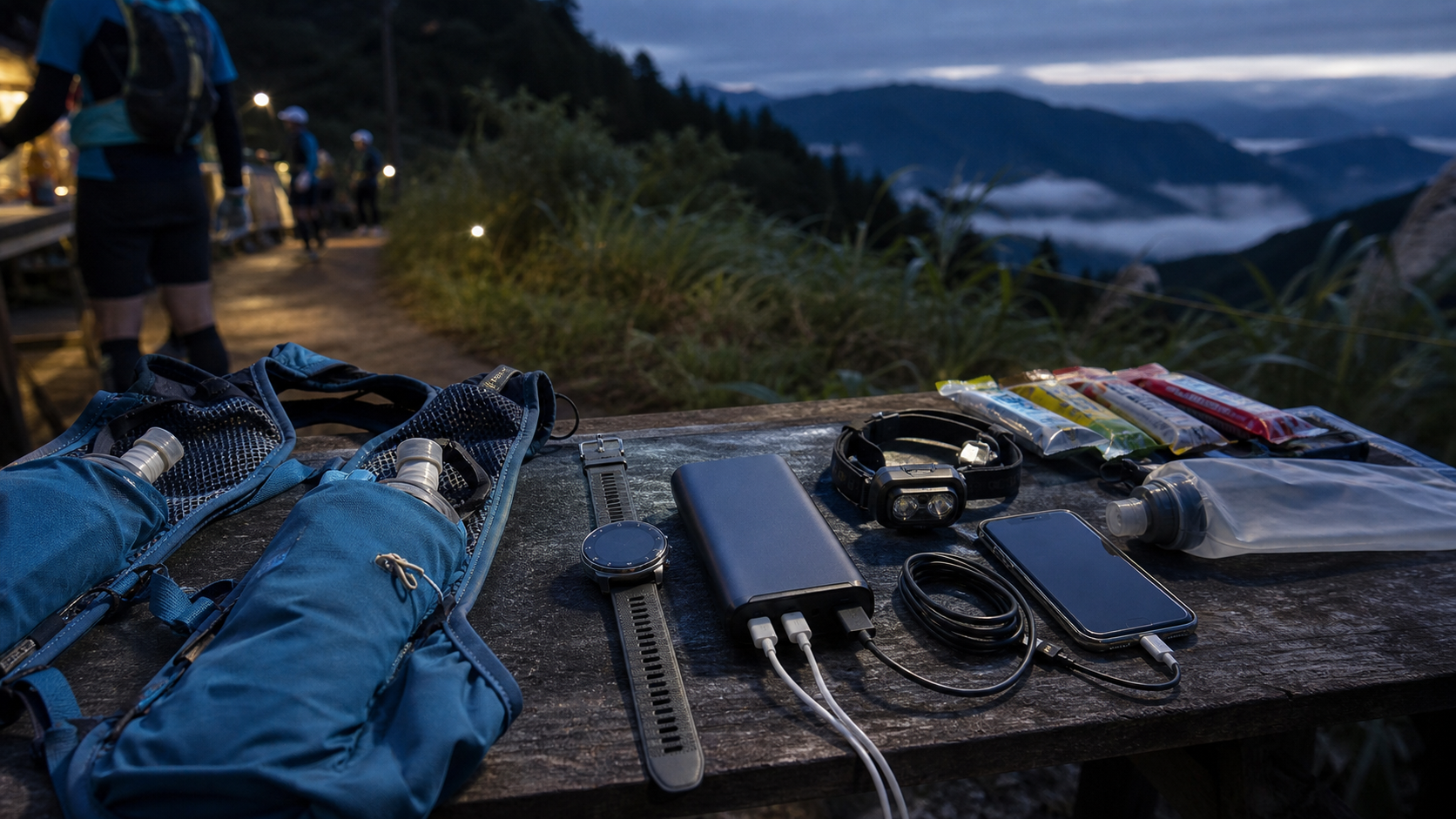
In Taiwan’s ultramarathon events, such as TNF 100 and the Formosa Trail, which can last 24–36 hours, power management has become an essential skill for runners. GPS watches need daily charging, headlamps are critical for night sections, and phones are used for emergency communication and navigation. Without a solid power plan, these tech devices may shut down one by one at the very moment you need them most.
Analyzing the Power Needs of Modern Runners
Long-distance runners typically carry the following electronic gear:
| Gear | Average Battery Life (GPS/in use) | Ultramarathon Hours Required |
|---|---|---|
| GPS Watch (Garmin Forerunner 965) | Approx. 31 hours | 24–36 hours |
| GPS Watch (COROS VERTIX 2) | Approx. 140 hours | 24–36 hours |
| Headlamp (medium mode) | 8–15 hours | 12–18 hours (night sections) |
| Heart Rate Strap (e.g., Polar H10) | Approx. 400 hours | 24–36 hours |
| Smartphone (navigation + GPS) | Approx. 8–12 hours (high drain) | 24–36 hours |
| Bone Conduction Headphones | Approx. 8–10 hours | Depends on personal preference |
As the table shows, the GPS watch is the primary power management challenge for most long-distance runners, while the smartphone is almost always the biggest bottleneck in ultramarathon power management.
Choosing a Power Bank
Capacity Calculation Principles:
- One phone charge requires approximately 3000–5000mAh
- One watch charge requires approximately 300–600mAh
- A headlamp (USB rechargeable) requires approximately 1000–2000mAh
- Recommended capacity = total of all gear requirements × 1.3 (to account for loss and conversion efficiency)
Recommended Power Bank Capacities for Taiwan Events:
- Full marathon (6–7 hours): A lightweight 5000mAh unit is sufficient
- 100K ultramarathon (24 hours): 10000–20000mAh
- 24+ hour ultramarathon: 20000mAh or above, or pair with a charging strategy using aid stations at A9
Key Buying Points:
- Weight: Every 10000mAh of power bank weighs roughly 180–250g; choose lightweight designs (such as Anker 723, ASUS ZenPower Ultra)
- Simultaneous Charging Ports: Support for charging 2–3 devices at once reduces time spent at aid stations
- Fast Charging Specs: Power banks supporting PD (Power Delivery) fast charging can charge a phone to 50% in 30 minutes
- Water Resistance: Taiwan’s mountain trails are humid and rainy; choose power banks with at least IPX4 water resistance
Ultramarathon Power Management Strategies
Aid Station Charging Method
Large ultramarathon events usually have aid stations equipped with power outlets:
- While at aid stations, charge your phone, watch, and headlamp simultaneously
- Carry two charging cables (USB-C + Lightning/Micro-USB)
- Use magnetic charging cables (such as MagSafe designs) for quick connection on the move
Power Bank Allocation Strategy:
- Daytime Sections: Prioritize conserving power bank capacity; charge the watch at aid stations
- Night Sections: Prioritize charging the headlamp; set the watch to power-saving mode (showing only time and heart rate)
- Emergency Reserve: Keep at least 20% of the power bank’s capacity reserved for emergency communication
Power-Saving Settings for GPS Watches
In long-distance events, power-saving settings on your watch can significantly extend battery life:
- Lower GPS sampling rate: Change from once per second to once every 2 seconds (sacrificing a little accuracy for battery life)
- Turn off wrist heart rate monitoring (use an external heart rate strap instead): Saves approximately 10–15% of power
- Turn off Bluetooth sync: No need for real-time phone syncing during the race
- Lower screen brightness: Reduce to minimum brightness during daytime sections
- COROS VERTIX 2 Ultramarathon Mode: Built-in ultra-long battery mode with 140 hours of GPS battery life, enough for most ultramarathons
Special Power Considerations for Taiwan Events
- TNF 100 Ultramarathon: Long night sections make headlamp power planning the top priority; aid stations have outlets, but competition for them is fierce
- Yushan Ultramarathon / Hundred-Peak Related Events: High altitude and low temperatures reduce battery capacity by approximately 20–30%, so calculate power needs in advance
- Taiwan Summer: High heat accelerates battery drain and aging; do not leave power banks in direct sunlight for extended periods
Organizing Charging Cables and Connectors
The “charging cable kit” for an ultramarathon pack should include:
- 1 USB-C to USB-C short cable (30cm, for phone fast charging)
- 1 USB-A to USB-C short cable (for watch charging)
- 1 magnetic fast-charging adapter (for quick and easy connection)
- Use short cables (20–30cm) instead of standard 1-meter cables for a tidier setup in your running pack
Practical Tips
- Confirm all gear is fully charged 2 days before the race; all equipment should be at 100% at the start of an ultramarathon
- Recommended power bank brands: Anker (durable, great value), Samsung, ASUS ZenPower (Taiwanese brand)
- The actual capacity of a power bank is usually 15–20% lower than stated (due to conversion loss), so don’t buy one that barely meets your minimum requirements
- Track your power consumption data from each ultramarathon/long-distance event to build a personalized power management plan
Conclusion
In a running world increasingly integrated with tech gear, power management has become an essential skill for ultramarathon runners, just as important as fueling strategy and pacing plans. Choosing the right power bank capacity, making good use of aid station charging opportunities, and setting your watch to power-saving mode will let you enjoy the challenge of ultramarathons across Taiwan’s magnificent mountains and forests—without power becoming the stumbling block on your path forward.
Related Reading
- Choosing Running Lights: Lumen Requirements and Battery Life for Night Running Headlamps
- Maintaining Running Gear: Proper Methods for Cleaning Running Shoes and Waterproofing Watches
- Running Belts and Packs: The Logic Behind Choosing Long-Distance Fueling Gear
- Gear and Safety Strategies for Night Road Races: Lights, Reflective Vests, and Fueling Adjustments
大家都在開箱的...單車用藍芽對講耳機真的有幫助嗎? SENA BiKom 20 長距離旅遊 & 海鷗繞圈賽 實際體驗心得 / 公路車 / CT Yeh
9 個月前
2025 自行車錶排行榜 兩萬車友大數據 / Garmin Bryton 排名會大洗牌嗎? / 全新的碼表前身分析 /公路車 / CT Yeh
1 年前
單車 一日北高 ( 雙城 ) 肥宅雙人瘋狂行 紀錄片 REACTO
10 年前
一日北高前的高裝檢 | 北高 360 | 挑戰11小時的裝備 | 一日雙塔 | 補給
6 年前
車錶新黑馬? / 超狂續航 / 超好用錶冠 / 無敵準定位 / Dash圖表合成!?/ COROS DURA 評測!/ 公路車 / CT Yeh
2 年前
2026 車錶排行榜!誰是最多車友正在使用?練家子最愛哪款?🏆 (2萬名車友數據) / 公路車 / CT Yeh
5 個月前
Garmin Edge 540/840 Solar 台灣首發開箱!完整車錶功能 道路實測 / ClimbPro 爬坡提示超級牛 / 強大續航實測 / 公路車 / CT Yeh
3 年前
2020 前十五名 台灣車友還在用的車錶? 同場加映武嶺四小時內的車友都用哪些車錶,以及車錶靈異經驗分享 北高居然騎了960公里!? | 車錶送修分享 | 公路車 | CT Yeh
5 年前