How Swimsuit Choice Affects Performance: The Second Differences Between Racing Suits and Training Suits
Introduction
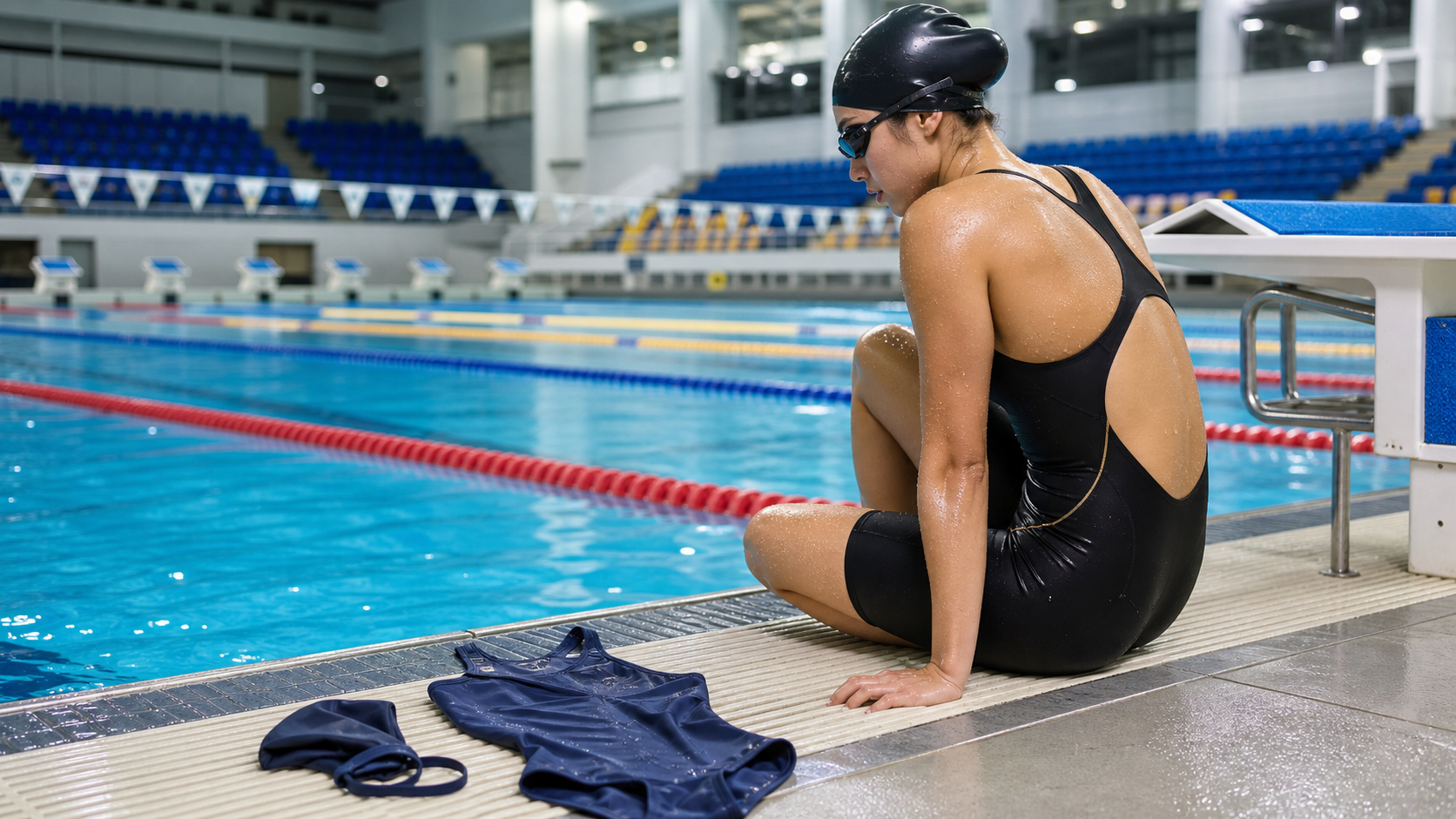
The “tech swimsuit revolution” triggered by polyurethane full-body suits at the 2008 Beijing Olympics made the world realize how dramatically swimwear can affect performance. Although World Aquatics banned full-body polyurethane suits starting in 2010, modern legal competitive swimsuits still use high-compression fibers and precision tailoring to provide a 0.5–3% speed advantage over standard training suits. For a swimmer who needs 55 seconds to complete 100 meters, this could mean a difference of 0.3–1.5 seconds—enough to change rankings at national competitions.
Core Differences Between Competitive and Training Swimsuits
| Item | Competitive Swimsuit | Training Swimsuit |
|---|---|---|
| Fabric | High-compression polyester (e.g., Xtra Life LYCRA®) | Standard polyester or nylon |
| Thickness | Ultra-thin (0.5–0.8mm) | Thicker (1.0–1.5mm) |
| Compression effect | Strong muscle compression, reduces body vibration | Light or no compression |
| Buoyancy assistance | Some high-end models offer slight buoyancy support | None |
| Durability | Low (degrades after 20–50 uses) | High (hundreds of uses) |
| Average price | NT$3,000–15,000+ | NT$500–2,000 |
The Science Behind Compression Effects
Competitive swimsuits improve performance through the following mechanisms:
- Muscle compression: Reduces muscle vibration in the water, lowering energy loss
- Streamlined body shape: Tight tailoring contours the body, reducing water drag
- Buoyancy assistance: Certain designs position the body slightly higher in the water, reducing resistance
- Psychological effect: The ritual of wearing a race suit can elevate an athlete’s mental arousal
Research shows that, compared with training suits, wearing high-end competitive swimsuits (within legal limits) yields an average time difference of approximately 0.5–1.5 seconds in the 100m freestyle, with potentially larger differences in longer events (400m and above).
Comparison of Major Brands and Product Lines
High-End Competitive Lines (Recommended for National Championships and Above)
- Speedo LZR Racer/Fastskin: The most widely used among Olympic swimmers; strong compression, but requires practice to put on
- Arena Carbon series: European brand; waist and abdominal compression design is well received
- Mizuno GX-SONIC: Japanese brand; suits Asian body types well and is highly accepted by Taiwanese swimmers
Mid-Tier Competitive Lines (Suitable for County/City Meets to National Invitationals)
- Speedo Endurance series
- Arena Powerskin series (entry-level models)
- Taiwanese local brands (e.g., CAMUI) offer better value for money
How to Choose the Right Size
Competitive swimsuits typically require selecting 1–2 sizes smaller than your everyday size to achieve the compression effect. Criteria for a proper fit:
- There should be a slight tightness when worn, but it should not affect normal breathing
- It should not loosen or wrinkle while swimming
- Slight red compression marks on the skin after removal are normal
- Wearing time should not exceed 4 hours (prolonged wear damages fabric elasticity)
Care and Lifespan of Competitive Swimsuits
The short lifespan of competitive swimsuits is their biggest drawback; proper care can extend the number of uses:
- Hand wash immediately in cold water after each use; never machine wash
- Avoid exposure to excessively high chlorine concentrations (training pool chlorine levels are far higher than competition pools)
- Air dry naturally, away from direct sunlight
- Store flat when not in use; do not fold
- A high-end competitive swimsuit used only for races can typically maintain race-quality performance for 20–30 events
Practical Recommendations
- Try on and train in your competitive swimsuit 1–2 times before race day: The first time wearing a competitive suit may feel unfamiliar; do not wear it for the first time on race day
- If budget is limited, prioritize mid-tier competitive lines: The gap between mid-tier and high-end competitive suits is usually 0.2–0.5 seconds, offering better value
- Consider different suits for different events: Sprinters need higher compression, while distance swimmers may consider more relaxed competitive cuts
- Do not use competitive swimsuits in training: Their lifespan drops rapidly in chlorinated water; reserve them for races
Conclusion
Although swimwear is an external aid, it is a legal and highly effective competitive tool. In Taiwan’s competitive swimming landscape, wearing an appropriate competitive swimsuit at national-level events is already standard practice. Swimmers should treat swimwear as part of their equipment investment, choosing the competitive suit that best fits their body type and events within budget, and learning proper care methods to maximize the value of each suit. Technique and equipment complement each other—only then can athletes achieve their best results on race day.
Related Reading
- Competitive Considerations in Swimsuit Selection: An Analysis of Drag and Pressure Benefits in Tech Suits
- Equipment Adjustments for Swimmers: The Details of Race Suit and Goggle Fit
- The Technology of Racing Swimsuits: A Guide to Compression Levels, Materials, and Fit
- Racing Swimsuit Buying Guide: The Speed Difference Between Bonded Seams vs. Sewn Seams and When to Use Each
3D 列印車褲墊 / 舒適改善? / 無痕 x 分區壓縮 / ATK & Decider系列 / JE22黑科技 / #公路車 #CTYEH
11 個月前
西進武嶺 免費訓練分析服務 Intervals | 練不夠還是練過頭?你哪一種類型選手?AI模型告訴你! | 備戰神器 | 公路車 訓練 | CT Yeh
4 年前
Live) 備戰2019彰化經典百K 賽前攻略 (已完賽請看新影片
7 年前
實景訓練台) 彰化經典百K 高強度喵團 90分鐘 跟著一起練功 2019 Indoor workout Changhua Classic 100 Taiwan
7 年前
Unaas X50 全碳纖幅條輪 數據實測對比PK | Lun Hyper 的高階版 | 板輪爬坡也可以很厲害? ! 武嶺2小時大師一起親測! CP值超高 | 公路車 | CT Yeh
4 年前
崇越盃武嶺冠軍高手 賽前JJSC 群峰會精華!對應大數據分析,會有落差嗎?/ feat. JJSC中部公路車約騎 /公路車 / CT Yeh
2 年前
鉅齒紋輪組!? ControlTech MEG-T50 EVO 碳纖維幅條輪組/ 功率對比實驗 / 公路車 / CT Yeh
2 年前
一日北高前的西濱集訓 | 跟著11小時軍團 | 300W踩不動的大逆風 | 輪車破風差幾瓦?
6 年前