Road Running and Environmental Awareness: Practicing Leave No Trace Running and Reducing Single-Use Supplies
文章導覽
Introduction
After a marathon with tens of thousands of participants, thousands of paper cups, plastic bags, and energy gel wrappers are scattered along the course. The Taipei Marathon is estimated to use over 100,000 paper cups each year, and the environmental burden of large-scale events is an issue that cannot be ignored. Yet running itself is an activity that brings people close to nature, and this contradiction is prompting more and more Taiwanese runners to reflect on how they run.
The concepts of “Leave No Trace Running” and “zero-waste fueling” are gradually gaining traction in Taiwan’s road-running community. From changes in personal habits to policy adjustments by race organizers, this environmental movement is reshaping Taiwan’s running culture.
The Environmental Impact of Road Running
The environmental impact of running events comes mainly from several aspects:
| Type of Impact | Main Source | Estimated Scale | Potential for Improvement |
|---|---|---|---|
| Single-use paper cups | Race aid stations | Over 100,000 for a 10,000-participant event | High (can switch to personal cups) |
| Plastic bags and packaging | Energy gels, fuel packs | Thousands per event | Medium (requires manufacturer cooperation) |
| Transportation carbon emissions | Runners driving to and from events | Difficult to quantify | Medium (encourage carpooling/public transit) |
| Trail erosion | Trail and mountain running | Noticeable on specific routes | High (education on proper routes) |
| Event waste | Banners, balloons, posters | Each event generates large amounts of waste | High (improvements at the design stage) |
Leave No Trace Running Practices at the Individual Level
Carrying your own hydration bottle: This is the most direct and effective personal environmental action. Use a collapsible soft flask (such as the Salomon Soft Flask) or a rigid running bottle, and refill from your own container at aid stations instead of using paper cups. Some races in Taiwan have already begun setting up “water refill stations” rather than pre-poured paper cups—a design that responds directly to runners who bring their own cups.
Reducing energy gel use: Commercial energy gels are convenient, but their packaging is almost entirely single-use plastic. Alternatives include:
- Jujube cake (a red date product, a traditional Taiwanese fueling food)
- Ginger candy (electrolyte replenishment that also helps prevent motion sickness)
- Homemade banana mash or date paste packed into reusable tubes
- Commercially available natural organic fuel products with paper or compostable packaging
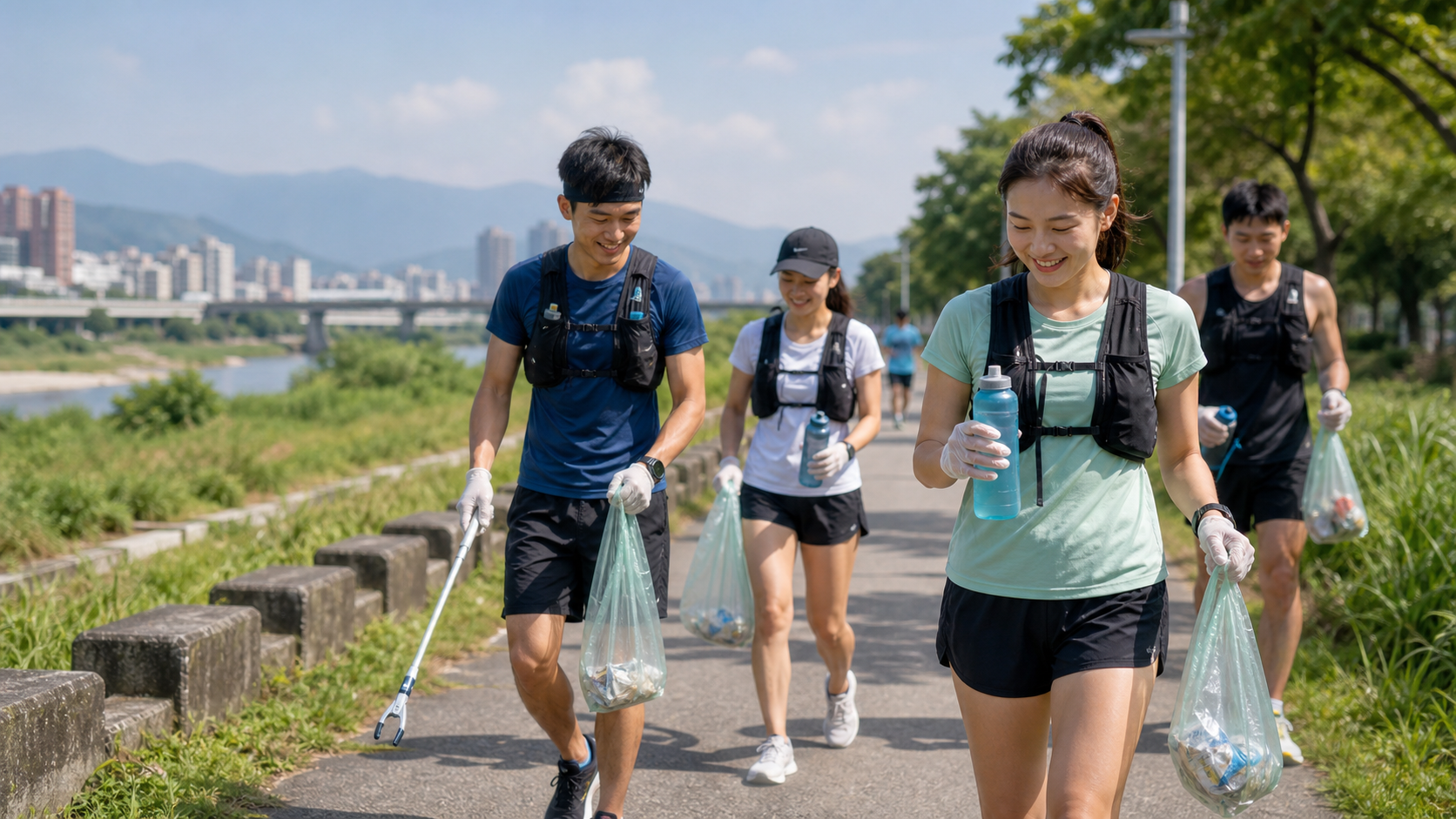
Plogging during daily runs: The plogging trend, which originated in Sweden, has reached Taiwan. Pick up trash you see along your run, combining exercise with environmental stewardship. Many Taiwanese runners who run along riverside paths or mountain trails regularly carry a ziplock bag to collect litter along the way, sorting it properly once they get home.
Choosing sustainable gear brands:
- Choose shoe brands that use recycled materials (Nike Space Hippie, adidas Parley series)
- Choose biodegradable running apparel or certified recycled fiber materials
- Repair and extend the life of your gear whenever possible; don’t rush to replace it unless necessary
Environmental Evolution at the Race Level
Some races in Taiwan have already begun actively implementing environmental measures, which deserve support and promotion:
Bring-your-own-cup races: Some races require runners to bring their own cups, do not provide single-use paper cups at aid stations, and offer runners who bring their own cups additional discounts or priority bib numbers at the finish.
No-medal options: Some races now offer a “no medal” registration option at a slightly lower price, with the difference donated to environmental organizations, attracting environmentally conscious runners.
Electronic bibs: Traditional paper bibs are used in massive quantities; switching to reusable electronic or fabric bibs is one emerging trend.
Logistics waste reduction: Event banners switched to recyclable materials, reduced balloon decorations at expo venues, and no single-use packaging included with official merchandise.
Environmental Action Cases from Taiwanese Runners
- Taipei Riverside Plogging Week: A monthly riverside run-and-pick-up-trash event that attracts anywhere from dozens to over a hundred runners each time
- Cup Free Run: Some Taiwanese runners have formed a “bring-your-own-cup run” advocacy community, sharing tutorials on carrying personal cups before each race
- Old running shoe recycling program: Several brand stores have partnered with environmental organizations to collect and recycle old running shoes, encouraging runners to participate regularly
Practical Advice
- Buy a 150–250ml collapsible soft flask, costing about NT$400–600, which can last for years and replace hundreds of single-use paper cups
- Try making your own training fuel: banana + peanut butter wraps, date + almond flour balls—natural and packaging-free
- When registering for races, prioritize events with environmental certifications or concrete commitments; use your consumer vote to drive change
- Join plogging-related communities in Taiwan to find like-minded people to take action with
- Share your Leave No Trace running practices on social media to raise awareness among more runners
Conclusion
There is a natural emotional connection between road runners and the natural environment—no one understands the preciousness of nature better than the runners who tread along riverbanks, mountain trails, and park paths every day. For this very reason, the running community has the potential to become one of the most powerful grassroots forces driving environmental action. Leave No Trace running is not about stripping away the joy of running; it is about continuing to enjoy all the goodness this land beneath your feet has to offer, in a more responsible way.
Related Reading
- Road Running Volunteer Culture: Reflections and Community Meaning of Participating in Race Services
- Road Running Fashion Culture: The Balance Between Taiwanese Runners’ Aesthetic Sense and Functionality
- Taiwan Road Running Volunteer Culture: The Emotion and Meaning of Serving at Aid Stations
- Road Running and Volunteer Service: Multiple Ways Runners Give Back to Society