Benefits and Precautions of Cycling for Seniors: A Guide to Riding in Your Golden Years
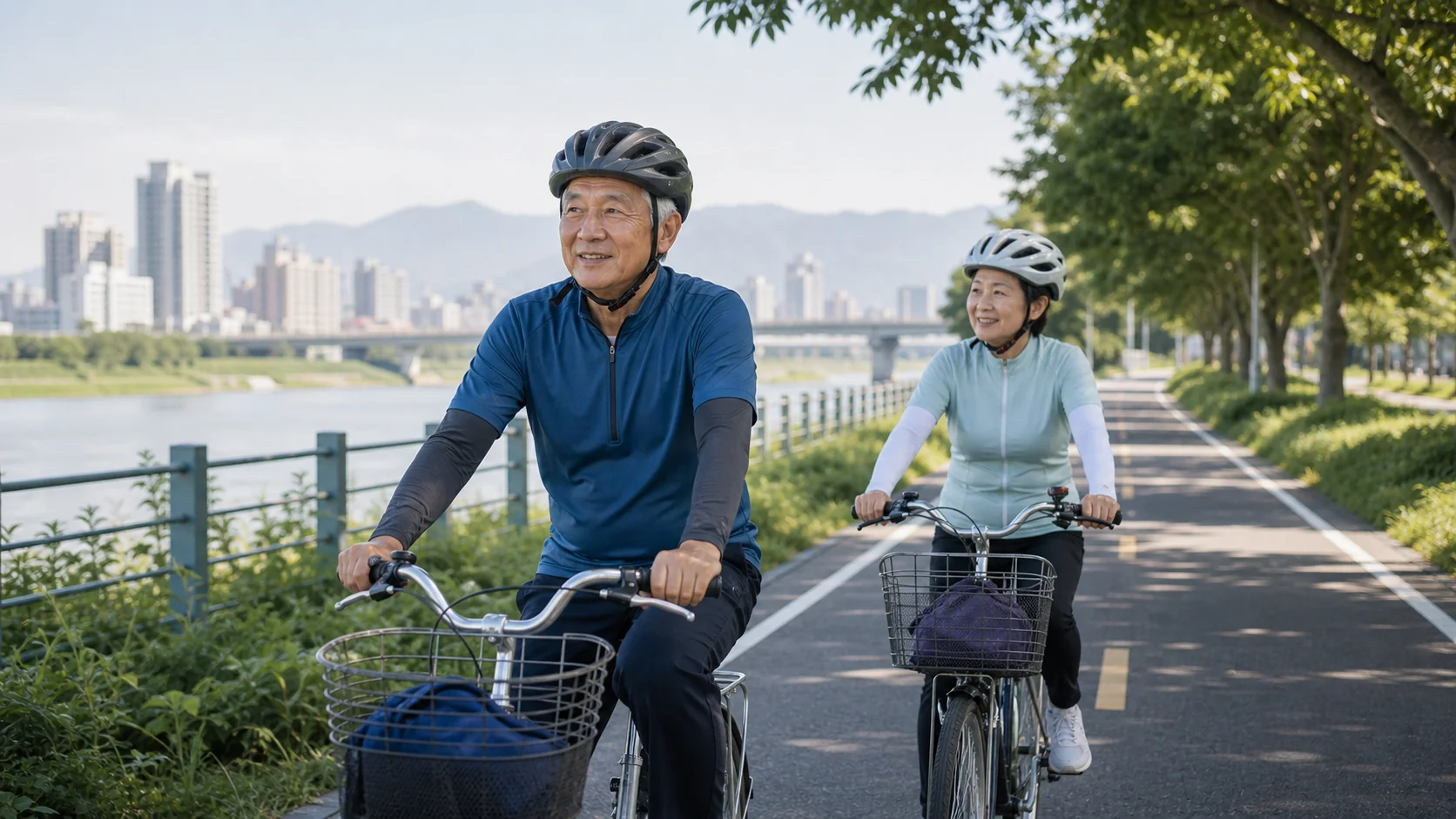
Cycling is one of the few sports suitable for people of all ages, and it is especially well suited for seniors over 60 who want to maintain their physical and mental health. Low impact, adjustable intensity, and the chance to enjoy outdoor scenery are why more and more older adults are choosing cycling as their main form of exercise.
Health Benefits of Cycling for Seniors
1. Cardiovascular Health
According to research, seniors who cycle regularly experience:
- 46% lower risk of heart disease
- Average blood pressure reduction of 5-10 mmHg
- 20% lower risk of stroke
- Improved blood circulation
2. Joint-Friendly
| Exercise Type | Joint Impact | Suitable for Degenerative Arthritis |
|---|---|---|
| Running | High | Not recommended |
| Brisk Walking | Medium | Suitable |
| Swimming | Very Low | Excellent |
| Cycling | Low | Excellent |
While cycling, the knees don’t need to bear body weight, making it especially suitable for seniors with degenerative knee conditions.
3. Muscle Maintenance
After age 60, people lose about 1-2% of muscle mass each year (sarcopenia). Cycling helps maintain:
- Quadriceps strength
- Calf muscles
- Core muscles
- Gluteus maximus
4. Bone Density
While cycling doesn’t help bone density as much as weight-bearing exercise, combining it with appropriate resistance training can still help slow bone loss.
5. Mental Health
- Reduces feelings of loneliness (group riding is social)
- 30% lower risk of depression
- Improved sleep quality
- Maintains cognitive function
- Boosts confidence and sense of achievement
Preparing Before You Start Cycling
Health Check-ups
Before starting a cycling routine after age 60, it’s recommended to undergo:
- ECG (Electrocardiogram): To rule out heart disease
- Exercise stress test: To assess exercise tolerance
- Bone density scan: To understand bone health status
- Eye exam: To confirm vision is adequate for safe riding
- Balance test: To assess balance ability
Choosing a Bike
| Bike Type | Pros | Cons | Recommendation |
|---|---|---|---|
| City/Step-through Bike | Easy to mount/dismount, upright posture | Heavier, slower | ★★★★ |
| E-Bike (Electric Assist) | Effortless, longer range | More expensive, heavier | ★★★★★ |
| Tricycle | Won’t tip over, stable | Needs care when turning | ★★★★ |
| Folding Bike | Easy to store | Small wheels, slightly less stable | ★★★ |
| Road Bike | High efficiency | More hunched posture, harder to mount/dismount | ★★☆ |
Most recommended: E-bikes (electric-assist bicycles), which let you adjust the level of assistance based on your fitness.
The Importance of Bike Fitting
Bike fitting is even more important for seniors:
- Saddle height: Too high puts pressure on the hips; too low strains the knees
- Handlebar height: Recommended to be 5-10 cm higher than the saddle to maintain an upright riding position
- Saddle choice: A wider, cushioned saddle
- Handlebar width: Should match shoulder width — not too wide
Safe Riding Guidelines
1. Essential Safety Gear
- Helmet: Absolutely essential, as fall risk increases with age
- Gloves: Protect the palms and reduce vibration
- Reflective vest: Improves visibility
- Front and rear lights: Recommended even during the day
- Rearview mirror: Makes it easier to see vehicles from behind
2. Choosing a Route
- Prioritize dedicated bike paths
- Avoid roads with heavy traffic
- Choose flat routes and avoid steep slopes
- Familiar routes are preferred
3. Timing Your Ride
- Avoid the midday heat (11:00 AM - 3:00 PM)
- Avoid early morning or evening hours with poor visibility
- Avoid rainy days (higher risk of slippery roads)
- Best times: 7:00-10:00 AM or 3:00-5:00 PM
Training Recommendations
Beginner Phase (Weeks 1-4)
- 15-20 minutes per ride
- 2-3 times per week
- Keep heart rate at 50-60% of maximum heart rate
- Choose flat, safe routes
Intermediate Phase (Weeks 5-12)
- Gradually increase to 30-45 minutes
- 3-4 times per week
- Keep heart rate at 60-70% of maximum heart rate
- Try routes with mild elevation changes
Maintenance Phase (Week 13 onward)
- 45-60 minutes per ride
- 3-5 times per week
- Can join casual group rides
- Occasionally try longer-distance rides
Estimating maximum heart rate: 220 minus your age (e.g., for a 70-year-old, roughly 150 bpm)
Common Issues and Solutions
Knee Pain
- Lower the saddle height
- Use a lighter gear ratio
- Maintain a cadence of 70-80 rpm
- See a doctor if pain persists
Hand Numbness
- Use cushioned gloves
- Adjust the handlebar angle
- Change hand position every 15 minutes
- Add shock-absorbing handlebar tape
Neck and Back Discomfort
- Raise the handlebar position
- Use a shorter stem
- Do periodic neck stretches while riding
- Consider an upright-style bike
Balance Issues
- Consider a tricycle
- Start practicing on a stationary trainer
- Choose wider tires for added stability
- Practice low-speed balance in an open area
Cycling Routes in Taiwan Suitable for Seniors
| Route | Distance | Features | Difficulty |
|---|---|---|---|
| Taipei Riverside Bikeway | Flexible | Flat and safe, easy access to supplies | ★☆☆ |
| Sun Moon Lake Loop | 30km | Beautiful scenery, moderate grade | ★★☆ |
| Dongfeng Bikeway | 12km | Green tunnel, no cars allowed | ★☆☆ |
| Houfeng Bikeway | 4.5km | Features tunnels and an iron bridge | ★☆☆ |
| Kaohsiung Love River Bikeway | Flexible | Flat route through the city | ★☆☆ |
Conclusion
Age is not a limitation — it’s an opportunity for a fresh start. Cycling helps seniors maintain fitness, expand their social circles, and enjoy the outdoors, making it one of the best ways to age healthily. With proper preparation, attention to safety, and a gradual approach, every senior can find their own joy and freedom on two wheels.
Related Reading
靠單車減肥35公斤 心得分享與整理
7 年前
高雄綠園道鐵路自行車道 / 外地人能輕鬆駕馭 還是整路崩潰? / 2025 全線開通 春節實地探索一次!(附GPS連結)/ 公路車 / CT Yeh
1 年前
碟煞公路車 優缺點?換車一年半實際經驗分享 / 公路車 / CT Yeh
2 年前
#公路車 #Fitting 靠人工智慧APP 幫你調整單車
6 年前
碟煞公路車 銑面器 !? 原來銑完差這麼多! 降低蹭碟機率! | TIME 公路車 保養小記錄 | CT Yeh
3 年前
2025 自行車錶排行榜 兩萬車友大數據 / Garmin Bryton 排名會大洗牌嗎? / 全新的碼表前身分析 /公路車 / CT Yeh
1 年前
太平山單車員工旅遊 | 這樣玩CP值最高!| 公路車
5 年前
大家都在開箱的...單車用藍芽對講耳機真的有幫助嗎? SENA BiKom 20 長距離旅遊 & 海鷗繞圈賽 實際體驗心得 / 公路車 / CT Yeh
9 個月前