Open Water Sighting and Wetsuit Science: The Complete Practical Handbook (Series 345)
This article was written in collaboration between our sports science editorial team and professional coaches, bringing you the most authoritative knowledge and training advice for the Triathlon Zone.
In today’s Triathlon Zone, more and more athletes are embracing “scientific training.” Whether you’re a beginner aiming simply to finish, or an elite athlete chasing a new personal best (PB), precise physiological data management and systematic training plans are the keys to painless progress. This article takes a deep dive into the relevant physiological mechanisms and training practices.
Open Water Swimming and the Key Technique of Sighting
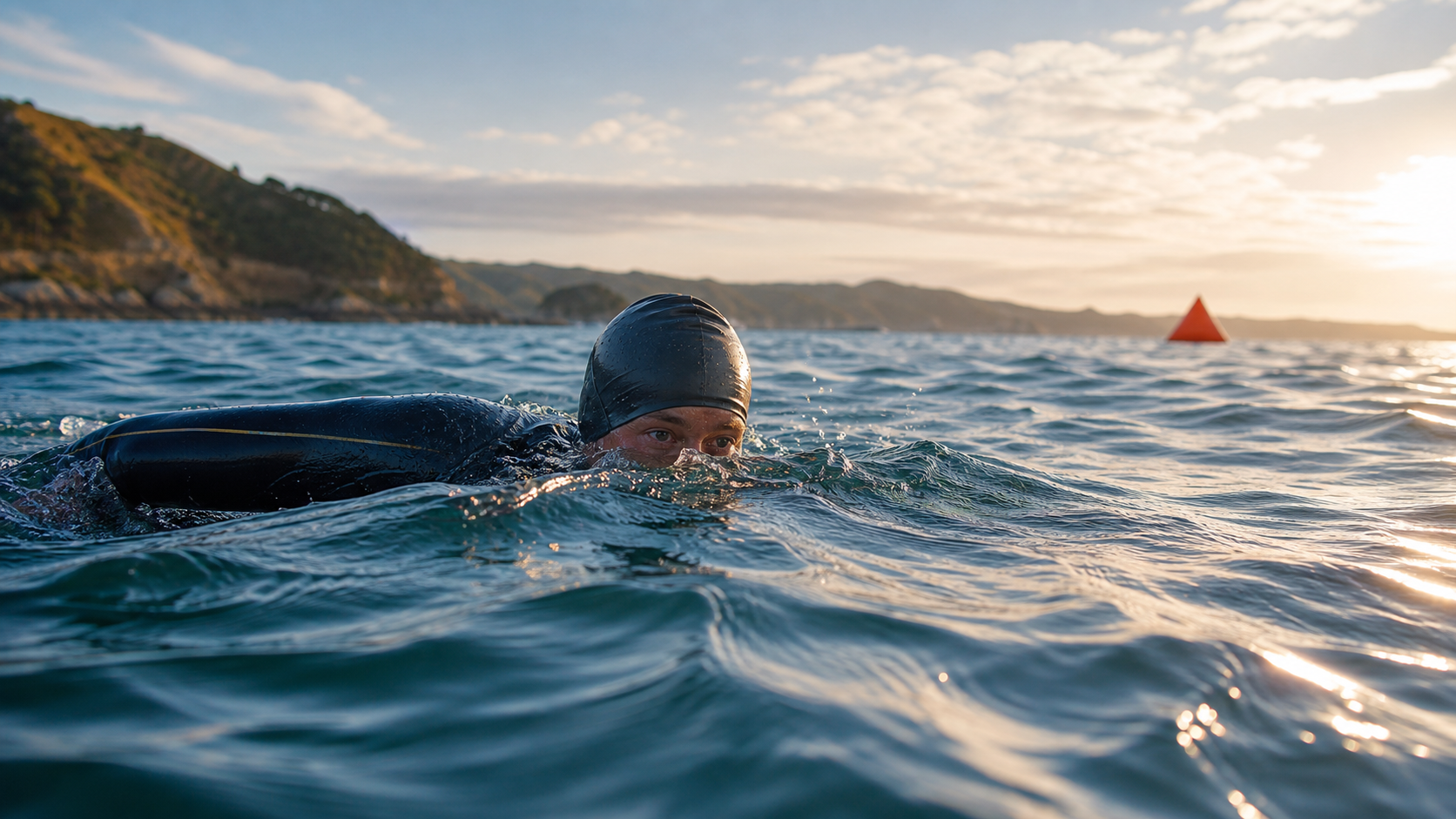
Unlike a swimming pool, open water (sea or lake) has no lane lines or clearly visible bottom, and is affected by waves and currents. Without sighting, athletes can easily drift off course and end up swimming hundreds of extra meters. The correct sighting technique is the “crocodile eyes” method: as your hand prepares to catch water and you lift your head, raise only your eyes above the surface to confirm the position of the buoy ahead, then immediately turn your head to the side to breathe. This motion should be repeated every 6-8 strokes to minimize the drag created by lifting your head on your body’s horizontal waterline.
Pacing Strategy for a Painless Ironman-Distance (226) Finish
The Ironman-distance triathlon (226) consists of a 3.8K swim, 180K bike, and 42K marathon — a long battle of endurance management. The key tactic is “banking energy.” During the 180K bike leg, you must strictly stay at 65-70% of FTP (Zone 2) and absolutely avoid entering Zone 4 lactate-accumulation intensity. Every bit of energy you save on the bike lets you use a steady “run-walk strategy” on the final marathon, helping you avoid a collapse and DNF in the final 20 kilometers. For nutrition, aim to consistently take in 80g of carbohydrates and 500-800ml of electrolyte fluid per hour.
Ironman-Distance (226) Pacing and Timing Plan by Discipline
Here is a practical data table with recommended settings:
| Discipline | Distance | Target Heart Rate Zone | Hourly Fueling Target | Tactical Goal |
|---|---|---|---|---|
| Open Water Swim | 3.8 km | Aerobic E Heart Rate (130-140 bpm) | One gel pre-race, none in the water | Draft off another swimmer to save 20% drag |
| Road Cycling | 180 km | Aerobic Zone 2 (60-70% FTP) | 70-90g carbs + 700ml water | Maintain even cadence; absolutely avoid standing sprints on steep climbs that risk a blowout |
| Full Marathon | 42.2 km | Aerobic Running Pace (135-145 bpm) | One gel every 45 minutes + salt tablets | Control pace in the first half; switch to a fast walk through aid stations |
Essential Gear and Nutrition Checklist
For this type of training or race, we recommend preparing the following:
- Electrolyte/Salt Tablets: Prevents electrolyte imbalance and muscle cramps caused by heavy sweating in high heat.
- Lightweight, Breathable Gear: Highly breathable fiber materials reduce sweat resistance and prevent chafing injuries.
- Post-Race Golden Recovery Drink: A carbohydrate-to-protein ratio of 3-4:1, consumed within 30 minutes of finishing your race or workout.
- High-Osmolarity Energy Gels: Each packet provides roughly 25-30g of complex carbohydrates; fuel every 40-45 minutes.
Frequently Asked Questions (FAQ)
Q: What is the buoyancy compensation principle behind wetsuits?
A: The neoprene used in wetsuits contains tiny gas bubbles that provide excellent buoyancy. It’s especially effective at lifting an athlete’s lower body, improving the waterline so the body sits more horizontally. For swimmers whose legs tend to sink, this can improve speed over 100m by roughly 5-10 seconds.
Q: How should you handle big waves when swimming in the sea?
A: When a breaking wave is rushing toward you, duck your head and dive under it to pass beneath. On the return leg, when riding waves in your favor, extend your stroke length in rhythm with the waves to enjoy the extra “surfing” propulsion.
Conclusion and Outlook
Sport is a lifelong journey — results are just numbers of the moment, while a healthy body and strong willpower are the true treasures. Bring this scientific knowledge into your daily training and feel your body transform!
Related Reading
- Open Water Sighting and Wetsuit Science: The Complete Practical Handbook (Series 396)
- Open Water Sighting and Wetsuit Science: The Complete Practical Handbook (Series 135)
- Open Water Sighting and Wetsuit Science and Gear Selection: The Complete Guide (Series 150)
- Open Water Sighting and Wetsuit Science: The Secret Weapon of Professional Runners (Series 90)
3D 列印車褲墊 / 舒適改善? / 無痕 x 分區壓縮 / ATK & Decider系列 / JE22黑科技 / #公路車 #CTYEH
11 個月前
備戰 戀戀197 賽前關門點分析 西濱團練 #公路車 4K高畫質
6 年前
[防寒衣體驗] 鐵人魂 三鐵 防寒衣試穿會 於松運 深水游泳池 鯨魚池
8 年前
#公路車 #Fitting 靠人工智慧APP 幫你調整單車
6 年前
西進武嶺 免費訓練分析服務 Intervals | 練不夠還是練過頭?你哪一種類型選手?AI模型告訴你! | 備戰神器 | 公路車 訓練 | CT Yeh
4 年前
CT 喇低賽) 武嶺牽車 才是王道 西進牽車四小時內秘訣 攝手位置 如何判斷 防抽筋小秘訣
7 年前
類空拍神器 Feiyu Pocket 2s (有優惠連結)三軸穩定 運動攝影機 開箱!比GoPro 還強的滑順視角!三小時長時間錄影 行車記錄器 | 環花東365實測 | 公路車 CT Yeh
4 年前
單車AI教練!全新 ChatGPT4o 幫你分析訓練成果!排武嶺課表,分析騎車姿勢! 太神了! / 公路車 / CT Yeh / feat. 緯緯
2 年前