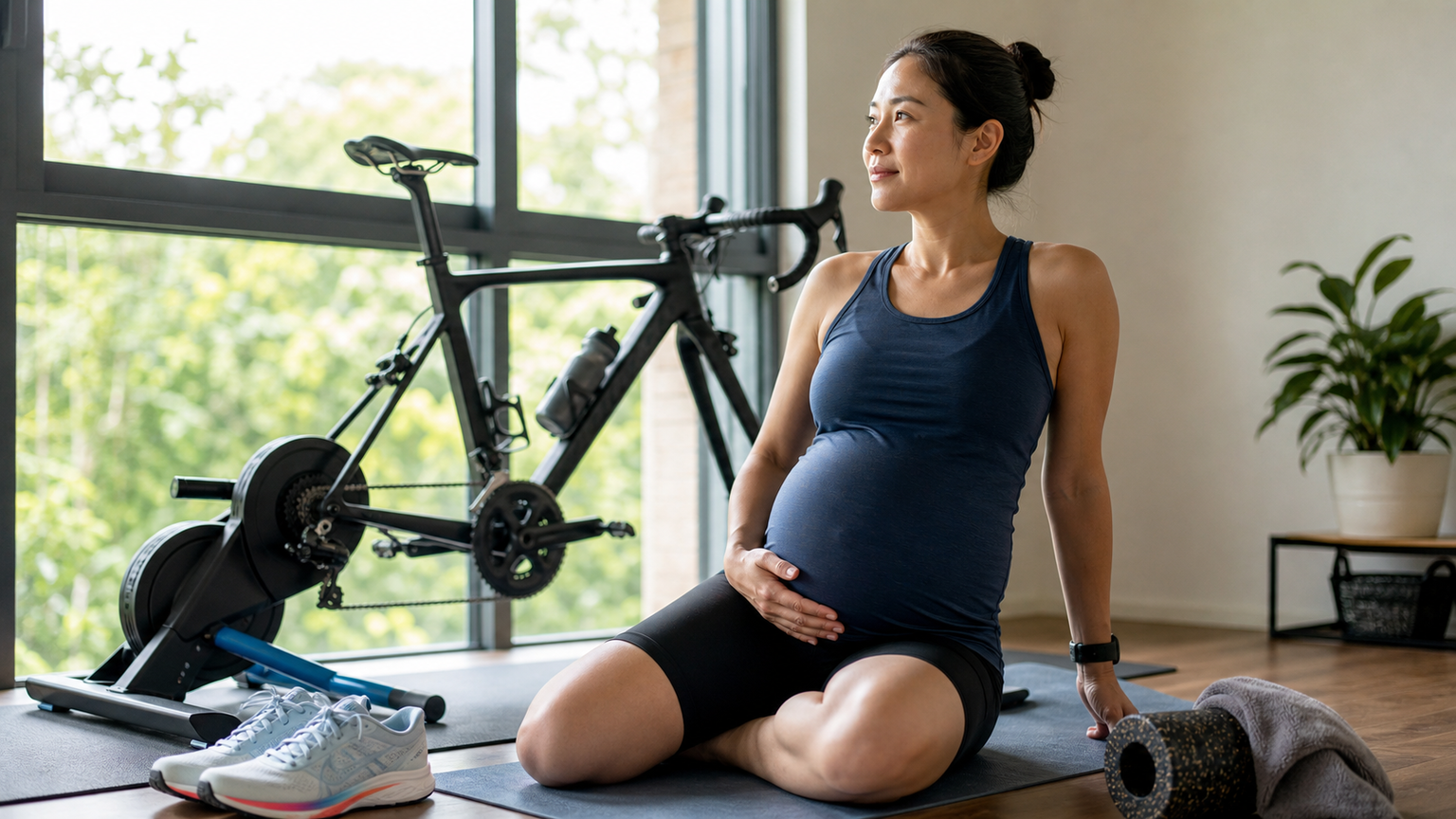
Exercise During Pregnancy and Postpartum Return: A Complete Guide for Endurance Sportswomen
For women who love endurance sports, pregnancy often brings an anxiety-inducing question: “Can I still ride and run?” The good news is that, in most cases, the answer is yes. Modern sports medicine research consistently agrees that moderate exercise during pregnancy is not only safe but also offers significant benefits for both maternal and fetal health. The key lies in understanding how to adjust, when to adjust, and how to safely return to sport after childbirth.
Benefits of Exercise During Pregnancy
The American College of Obstetricians and Gynecologists (ACOG) recommends that healthy pregnant women engage in at least 150 minutes of moderate-intensity aerobic exercise per week. Research confirms that exercise during pregnancy provides the following benefits:
- Reduces the risk of gestational diabetes by approximately 25-30%
- Decreases the incidence of preeclampsia
- Controls weight gain within the recommended range
- Improves mental health, reducing pregnancy-related depression and anxiety
- Shortens labor and reduces the likelihood of cesarean delivery
- Accelerates postpartum recovery
- Improves sleep quality and overall quality of life
Exercise Adjustments Across the Three Trimesters
First Trimester (Weeks 1-12)
This is a critical period for embryo implantation and organ formation. Many women experience morning sickness, extreme fatigue, and drowsiness.
Exercise principles:
- Those with an existing exercise routine can maintain 70-80% of their usual training volume
- Reduce intensity, using the “talk test” instead of heart rate monitoring—you should be able to hold a normal conversation while exercising
- Cycling remains safe, but begin to pay attention to changes in balance
- Avoid exercising in hot environments (core body temperature should not exceed 39°C)
- Stay well hydrated and eat small, frequent meals to maintain energy
When to pause:
- Vaginal bleeding
- Persistent dizziness or shortness of breath
- Chest pain or calf swelling and pain
- High-risk conditions specifically flagged by your physician
Second Trimester (Weeks 13-27)
Often called the “honeymoon period,” morning sickness subsides and energy returns, but the abdomen gradually grows and the body’s center of gravity begins to shift.
Exercise principles:
- Many women feel their best during this stage and can maintain steady moderate-intensity training
- Indoor trainers begin to become the safer option for cycling training
- Running can continue, but pay attention to pressure sensations in the pelvic floor muscles
- Incorporate pelvic floor muscle training (Kegel exercises), 3 sets of 10 repetitions daily
- Avoid supine (lying on your back) exercises (after week 20) to prevent compression of the inferior vena cava
- Appropriate core training can be maintained, but avoid movements that excessively separate the rectus abdominis (such as sit-ups)
Special considerations for cycling:
- An enlarging abdomen may affect riding position; consider using a more upright handlebar setup
- Be mindful of crash risk when riding outdoors—altered center of gravity combined with ligament laxity reduces balance
- Many professional female cyclists transition entirely to indoor training during this stage
Third Trimester (Weeks 28-40)
This is the most physically demanding stage, with shallower breathing, joint laxity, frequent urination, and lower back pain being common complaints.
Exercise principles:
- Aim to maintain mobility rather than pursue fitness gains
- Swimming and water-based exercise are excellent options—buoyancy reduces joint strain
- Indoor trainer riding can continue as long as your body allows
- Walking is the safest and easiest exercise to perform
- Continue pelvic floor training and gentle stretching
- Fully respect your body’s signals—rest when fatigued
The Scientific Path to Postpartum Return
The pace of returning to exercise after childbirth varies from person to person, depending on the mode of delivery, physical recovery, and individual fitness baseline. Rushing the return is the most common mistake.
0-6 Weeks Postpartum: Foundation Repair Phase
Whether by vaginal delivery or cesarean section, the primary goal during this period is healing and recovery.
- Breathing exercises: Re-establish the connection between the diaphragm and pelvic floor muscles
- Gentle pelvic floor activation: Not forceful contraction, but learning to activate correctly
- Short walks: Start with 10-15 minutes and gradually increase
- Avoid running, jumping, weight training, and high-intensity aerobic exercise
6-12 Weeks Postpartum: Foundation Rebuilding Phase
It is recommended to obtain your physician’s clearance for exercise at the six-week postpartum checkup.
- Begin low-intensity cycling (indoor trainer preferred)
- Gradually increase walking duration and pace
- Add basic core stabilization training
- Check for diastasis recti—if the separation exceeds two finger-widths, specialized rehabilitation training is needed
- Assess pelvic floor function—leaking urine is not normal, even if it only happens when coughing or jumping
3-6 Months Postpartum: Progressive Return Phase
- Can begin attempting light running (such as run-walk intervals)
- Cycling volume can be gradually increased
- Begin incorporating interval training, but progress intensity gradually
- Strength training starts with bodyweight exercises, gradually adding load
- Pay attention to your body’s recovery signals—the energy demands of sleep deprivation and breastfeeding should not be underestimated
6-12 Months Postpartum: Full Return Phase
- Most women can return to near pre-pregnancy training levels during this stage
- Racing can be resumed, but set reasonable expectations
- Continue to monitor pelvic floor health
- Accept that your body may differ from pre-pregnancy—this does not mean worse, just different
Breastfeeding and Exercise
A common myth is that “exercise makes breast milk sour.” Research shows that moderate-intensity exercise does not affect breast milk quality or supply. Points to note:
- Nurse or pump before exercising to reduce breast engorgement discomfort
- Wear a high-support sports bra
- Add an extra 300-500 calories to maintain milk production
- Stay well hydrated
- Lactic acid temporarily rises after very high-intensity exercise, which may affect infant acceptance—wait 30-60 minutes before nursing
Mental Adjustment Matters Equally
Returning to exercise postpartum is not just a physical challenge—it is also a psychological journey. Watching routes that were once easy become difficult, and seeing Strava data far below previous levels, can all bring feelings of frustration.
Remember:
- Your body has just accomplished an incredible endurance feat—bringing new life into the world
- Temporary declines in fitness are reversible
- Many women have achieved career-best performances after childbirth
- Set short-term goals and celebrate every improvement
- Join a mothers’ running group or cycling club for peer support
Seeking Professional Help
It is recommended that every woman wishing to return to exercise postpartum receive at least one pelvic floor physical therapy assessment. In Taiwan, an increasing number of physical therapy clinics offer postpartum exercise assessment services. This is not a luxury, but a necessary investment in your long-term athletic career.
Pregnancy and childbirth are not the end of an athletic career, but the beginning of a new chapter. With scientific knowledge, a patient attitude, and respect for your body, you can absolutely continue pursuing your passion in endurance sports while becoming a mother.
Related Reading
- The Complete Guide to Running During Pregnancy: When to Run, How to Run, When to Stop
- Returning to Exercise During Pregnancy and Postpartum: Staged Principles and Absolute Contraindications (All subject to individual assessment by an obstetrician)
- Exercise and Pregnancy: A Safety Guide for Exercise During Pregnancy—A Comprehensive Analysis from Coaching and Sports Science Perspectives
- Endurance Training During Pregnancy and Postpartum: Safety Boundaries and Return Timeline
靠單車減肥35公斤 心得分享與整理
7 年前
摔車後補裝備: 好市多新款單車安全帽& Specialized Romin 北高整路屁股都不痛的坐墊 | 一千元居然有MIPS | CT Yeh | 公路車
4 年前
西進武嶺 免費訓練分析服務 Intervals | 練不夠還是練過頭?你哪一種類型選手?AI模型告訴你! | 備戰神器 | 公路車 訓練 | CT Yeh
4 年前
大家都在開箱的...單車用藍芽對講耳機真的有幫助嗎? SENA BiKom 20 長距離旅遊 & 海鷗繞圈賽 實際體驗心得 / 公路車 / CT Yeh
9 個月前
一日北高常見問題大集合 | 攻略 | 路線 | 訓練 | 補給 | 自行車 單車 | 一日雙城 | 雙塔 | TWB北高360 | 屁股痛
6 年前
白沙屯媽祖進香在家走!UREVO 坡度自調走步機 / 可連接訓練遊戲APP MyWhoosh / 邊看直播邊走起來 / CT Yeh
11 個月前
2018 田中馬拉松 全程健跑 VR 360 環景錄影 體驗現場狂野加油氣氛! Insta 360
7 年前
#公路車 #Fitting 靠人工智慧APP 幫你調整單車
6 年前