The Iron Deficiency Crisis: The Most Common Yet Most Overlooked Nutritional Issue for Female Endurance Athletes
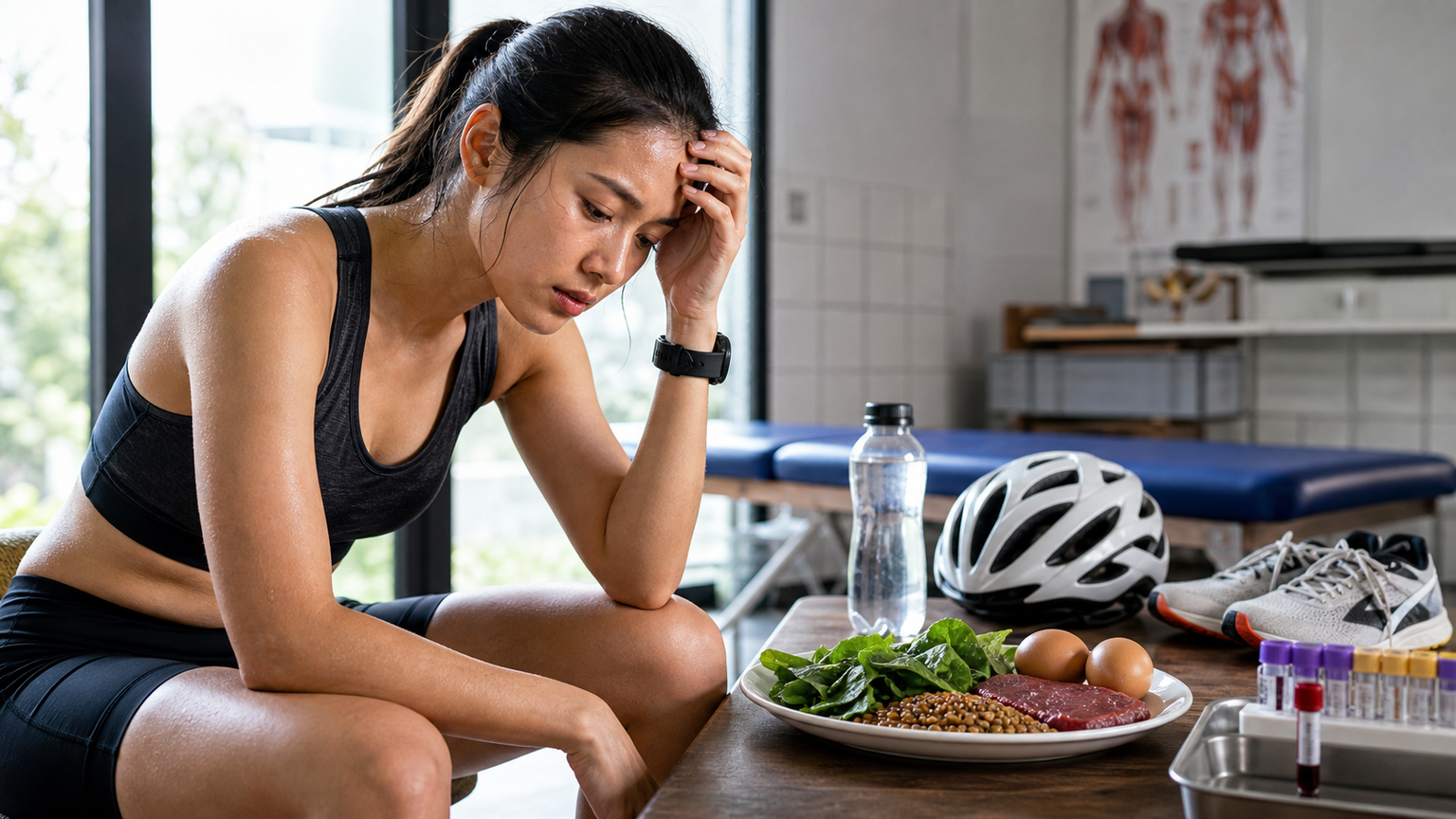
Iron Deficiency Crisis: The Most Common Yet Most Overlooked Nutritional Issue for Female Endurance Athletes
You’re training harder than ever, sleeping enough, eating a balanced diet, yet your performance is inexplicably declining. Your legs feel heavy as lead on climbs, your heart rate spikes higher than usual during intervals, and recovery has become unusually slow. After ruling out overtraining, there’s one often-overlooked suspect worth investigating—iron deficiency.
Iron’s Critical Role in Endurance Performance
Iron is one of the most important trace elements in the human body and plays a central role in endurance performance:
Oxygen Transport
Iron is a core component of hemoglobin. Hemoglobin is responsible for transporting oxygen from the lungs to working muscles throughout the body. Iron deficiency = hemoglobin deficiency = reduced oxygen transport capacity = lowered VO2max.
Energy Metabolism
Iron is a cofactor for multiple enzymes in the mitochondrial electron transport chain. Mitochondria are the “power plants” of cells, and iron deficiency directly impacts the efficiency of aerobic energy production.
Myoglobin Function
Myoglobin in muscles also requires iron to store and deliver oxygen. Iron deficiency affects oxygen supply to muscles during high-intensity exercise.
Immune Function
Iron participates in the proliferation and functional maintenance of immune cells. Iron-deficient athletes are more susceptible to respiratory infections.
Why Are Female Endurance Athletes Particularly Prone to Iron Deficiency?
Female endurance athletes face the dual challenge of increased iron loss and inadequate intake:
Factors Increasing Iron Loss
Menstrual blood loss: This is the primary factor. Each menstrual period results in approximately 15-30mg of iron loss, and women with heavy menstrual flow may lose even more.
Exercise-induced iron loss:
- Foot-strike hemolysis: Repeated foot strikes during running destroy red blood cells, and some of the released iron is lost
- Gastrointestinal micro-bleeding: Prolonged high-intensity exercise can increase intestinal permeability, causing minor blood loss
- Sweat loss: Although each liter of sweat contains only about 0.3-0.5mg of iron, the large volume of sweat produced during prolonged exercise accumulates significantly
- Post-exercise inflammatory response: The iron-regulating hormone (hepcidin) rises within 3-6 hours after exercise, suppressing intestinal iron absorption
Factors Contributing to Inadequate Intake
- Energy restriction: Limiting total caloric intake to control body weight
- Vegetarian or semi-vegetarian diets: The absorption rate of plant-based iron (non-heme iron) is only 2-5%, far lower than the 15-35% of animal-based iron
- High-fiber diets: Phytates and oxalates inhibit iron absorption
- Excessive coffee and tea consumption: Polyphenolic compounds bind with iron, reducing absorption rates
The Three Stages of Iron Deficiency
Iron deficiency is a gradual process, not something that happens suddenly:
Stage 1: Iron Store Depletion
- Serum ferritin decreases
- Hemoglobin remains normal
- May have no obvious symptoms
- But athletic performance may already be affected
Reference values: Ferritin < 30 ng/mL indicates low stores; athletes are advised to maintain levels above 35-50 ng/mL
Stage 2: Iron-Deficient Erythropoiesis
- Ferritin continues to decline
- Transferrin saturation decreases
- Red blood cell production becomes limited
- Athletic performance noticeably declines
Stage 3: Iron-Deficiency Anemia
- Hemoglobin below normal (women < 12 g/dL)
- Red blood cell volume decreases (MCV drops)
- Severely impacts athletic performance and daily life
Recognizing the Symptoms
The symptoms of iron deficiency are often gradual and non-specific, easily mistaken for overtraining or other causes:
Exercise-Related Symptoms
- Unexplained performance decline: FTP drops, pace slows down
- Abnormally elevated exercise heart rate: Heart rate 5-10 bpm higher than usual at the same intensity
- Prolonged recovery time: Takes longer to recover from training sessions
- Lowered lactate threshold: Hitting the “wall” earlier than usual
- Declining interval workout quality: Unable to maintain target power or pace
Systemic Symptoms
- Persistent fatigue: Not the usual post-training tiredness, but an unshakable sense of exhaustion
- Pallor: Paler lips, nail beds, and inner eyelids
- Shortness of breath: Getting winded just from climbing stairs
- Dizziness: Especially when standing up suddenly
- Cold hands and feet: Poor peripheral circulation
- Difficulty concentrating: Brain fog
- Pica: Craving ice or non-food substances (a distinctive symptom of severe iron deficiency)
- Brittle or spoon-shaped nails
Testing and Diagnosis
All female endurance athletes are advised to have their iron status checked at least once per year. High-risk groups (heavy menstrual flow, vegetarians, high training volume) should be tested every 3-6 months.
Recommended Tests
| Test | Normal Range | Recommended Values for Athletes |
|---|---|---|
| Serum Ferritin | 12-150 ng/mL | > 35-50 ng/mL |
| Hemoglobin | 12-16 g/dL | > 13 g/dL |
| Transferrin Saturation (TSAT) | 20-50% | > 20% |
| Complete Blood Count (CBC) | Normal range | Normal range |
Important note: Blood tests should be performed on rest days or after light training. The acute inflammatory response following intense exercise can temporarily affect ferritin levels (ferritin is also an inflammatory marker).
Prevention and Supplementation Strategies
Food-First Principle
Iron-rich food sources:
| Food | Iron Content (per 100g) | Absorption Rate |
|---|---|---|
| Pork liver | 18 mg | High (heme iron) |
| Beef (lean) | 3.5 mg | High |
| Duck blood | 15.6 mg | High |
| Clams | 12.9 mg | High |
| Black sesame | 10.3 mg | Low (non-heme iron) |
| Red amaranth | 11.8 mg | Low |
| Seaweed (nori) | 56.2 mg | Low |
Tips for Improving Iron Absorption
- Vitamin C is the best partner: Consuming it simultaneously with iron-containing foods can increase non-heme iron absorption by 3-6 times
- The MFP factor in meat: Even small amounts of meat can enhance the absorption of plant-based iron from the same meal
- Avoid coffee or tea with meals: It’s recommended to leave at least 1 hour between them
- Cooking methods: Using cast-iron cookware can slightly increase the iron content of food
- Fermented foods: The fermentation process reduces phytate content, improving iron absorption
Iron Supplements
When diet alone cannot meet the demand or iron deficiency has been confirmed, supplements may be necessary:
Oral iron supplements:
- Common dosage: 30-60mg of elemental iron per day
- Best absorbed on an empty stomach, paired with vitamin C
- Taking it every other day may result in better absorption than daily dosing (due to the influence of hepcidin)
- Common side effects: constipation, nausea, stomach discomfort—try different formulations or take with a small amount of food
- Avoid taking simultaneously with calcium supplements or antacids
Timing considerations around exercise:
- Avoid taking iron supplements within 1-2 hours before or after exercise
- Elevated hepcidin after exercise reduces absorption
- Recommended to take on an empty stomach in the morning on rest days
Intravenous iron therapy:
- Suitable for cases where oral supplements cannot be tolerated or absorption is impaired
- Works faster but must be administered in a medical setting
- Appropriate for athletes with severe deficiency or when competition is imminent
Conclusion: Don’t Let Iron Be Your Ceiling
Iron deficiency is a problem that is entirely preventable and treatable, yet the performance losses it causes can be enormous. Research shows that after correcting iron deficiency, athletes’ VO2max can improve by 5-10%, which translates to significant performance gains in endurance sports.
Don’t wait until symptoms are obvious to take action. Proactively monitor your iron status, focus on iron intake in your diet, and work with sports medicine professionals to develop a supplementation plan when necessary. Your body deserves every micronutrient it needs to reach its true potential.
Related Reading
- Iron and Anemia: A Nutritional Issue Female Endurance Athletes Cannot Ignore
- Iron and Anemia in Female Athletes: Why the Risk Is Higher, Common Symptoms, Dietary Strategies, and When to Seek Medical Care
- Iron Deficiency and Athletic Performance: A Warning for Female Endurance Athletes
- Iron in Female Athletes: The Double Drain of Menstrual Blood Loss and Endurance Training
福隆鐵人團練隨拍
8 年前
CT 喇低賽) 單車 比賽總是沒照片? 攝影師的觀點大公開 姿勢就是力量! 請加速1.25倍收看
7 年前
FTL 與 SYB 車隊專訪 西進武嶺 實用攻略分享! 2小時 如何練?!你不知道的眉角!新手準備武嶺必看 EP1 | 實力派女車友 | 精華版 | 公路車 | CTYeh
4 年前
西進武嶺 免費訓練分析服務 Intervals | 練不夠還是練過頭?你哪一種類型選手?AI模型告訴你! | 備戰神器 | 公路車 訓練 | CT Yeh
4 年前
靠單車減肥35公斤 心得分享與整理
7 年前
CT暗黑廚房) 車友必備 宇宙無敵鮮蚵湯 幫助訓練恢復 天然食補 好市多 超肥鮮蚵 破PR
7 年前
一日北高常見問題大集合 | 攻略 | 路線 | 訓練 | 補給 | 自行車 單車 | 一日雙城 | 雙塔 | TWB北高360 | 屁股痛
6 年前
CT 喇低賽) 武嶺牽車 才是王道 西進牽車四小時內秘訣 攝手位置 如何判斷 防抽筋小秘訣
7 年前