文章導覽
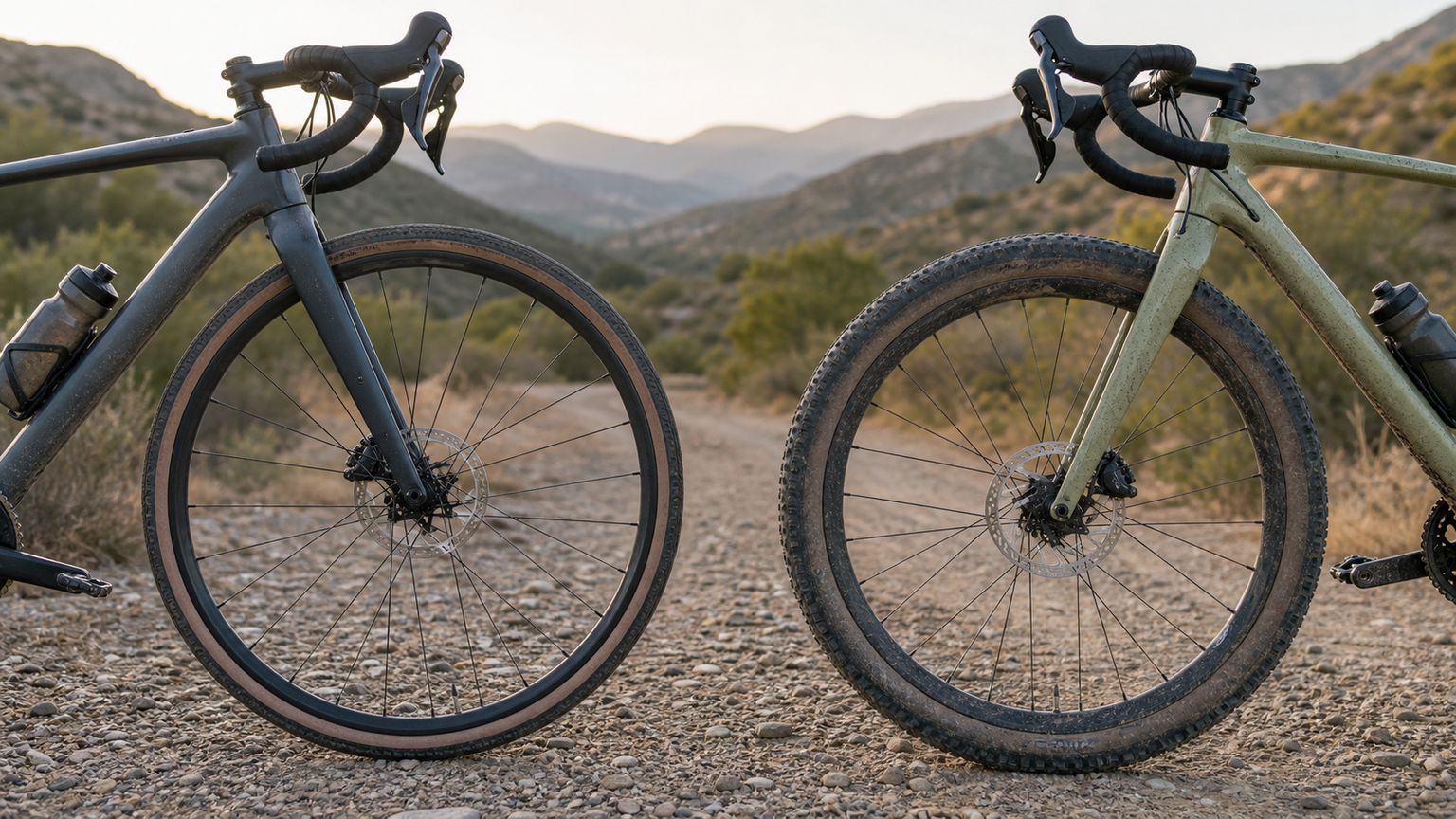
650B vs 700C: The Complete Guide to Gravel Bike Wheel Size
In the world of gravel riding, wheel size is a debate that never seems to end. 700C is the traditional road bike standard and comes stock on most gravel bikes. 650B (equivalent to 27.5" on a mountain bike) is the alternative that has rapidly gained traction in gravel circles in recent years. So which is actually better? The answer depends entirely on how you ride.
Basic Physical Characteristics
700C (ISO 622mm)
The 700C rim has an outer diameter of 622mm. With a tire mounted (using a 40mm tire as an example), the overall diameter comes to roughly 702mm. This is the standard wheel size for road bikes and most gravel bikes.
650B (ISO 584mm)
The 650B rim has an outer diameter of 584mm, 38mm smaller than 700C. However, since 650B is usually paired with wider tires (47-50mm), the overall diameter with a tire mounted comes to roughly 678-684mm — a smaller gap versus a narrow-tired 700C setup than you might expect.
Key Physical Differences
| Characteristic | 700C x 40mm | 650B x 47mm |
|---|---|---|
| Overall diameter | ~702mm | ~678mm |
| Tire volume (air volume) | Smaller | Larger |
| Rotational inertia | Larger | Smaller |
| Contact patch | Smaller | Larger |
| Weight (wheelset + tire) | Slightly lighter | Slightly heavier |
Advantages of 700C
1. Rolling Efficiency
The physical advantage of a larger wheel is rolling efficiency. When a wheel rolls over an obstacle, a larger wheel needs to overcome a smaller angle of attack, letting it “roll over” gravel and small obstacles more easily. At the same rider power output, 700C typically cruises 1-3% faster than 650B on flat and rolling terrain.
This difference compounds over long distances. Over a 100km gravel ride, 700C might save you 5-10 minutes — that may not sound like much, but for competitive riders it can be the decisive margin.
2. Inertial Advantage
A larger wheel diameter means greater rotational inertia. Once the wheel is spinning, it tends to keep spinning. This is an advantage on long flat cruising sections — you can maintain speed with less power input.
3. Versatility and Parts Availability
700C is currently the dominant wheel size on the market, with a far wider selection of tires and wheelsets than 650B. From race-weight lightweight tires to expedition-grade heavy-duty tires, the 700C product line covers nearly every need.
If you need to replace a tire mid-trip, you’re far more likely to find 700C tires at any bike shop in the world than 650B.
4. Interchangeability with Road Bikes
If you own both a road bike and a gravel bike, 700C wheelsets can be swapped between the two bikes (assuming compatible disc brake specs). 650B wheels can only be used on a gravel bike.
Advantages of 650B
1. Greater Tire Volume
This is the core advantage of 650B. Given the same frame tire clearance, 650B allows for a much wider tire than 700C. For example, a frame designed for 700C x 45mm can fit 650B x 50-53mm tires.
Wider tires deliver:
- Greater air volume, allowing lower tire pressures
- Larger contact patch for better grip
- Stronger shock absorption, significantly improving comfort
- Better flotation, less likely to sink into soft terrain
2. Lower Center of Gravity
The smaller overall diameter of 650B wheels lowers the frame’s center of gravity by roughly 10-15mm. On technical sections and high-speed gravel descents, a lower center of gravity provides better stability and handling confidence.
3. Responsive Acceleration
A smaller wheel diameter means lower rotational inertia. The wheel accelerates and decelerates more easily. On technical sections that demand frequent speed changes, 650B responds more nimbly.
4. Frame Stress
A smaller wheelset places less stress on the frame. With the same frame paired to 650B wheels, the structural load is theoretically lighter. This is a small advantage when loaded up for bikepacking.
5. Comfort
Combining wider tires with lower tire pressure, 650B is generally more comfortable than 700C. On long gravel rides, this difference compounds over time — by hour five or six, arm and hip fatigue is noticeably lower on 650B.
Real-World Riding Performance Comparison
Paved Roads
Winner: 700C
On asphalt, 700C’s rolling efficiency and inertial advantages are most pronounced. If your route is more than 60% paved, 700C is the more sensible choice.
Hardpacked Gravel
Winner: 700C (slight edge)
On well-compacted gravel, the road surface itself provides enough support that 700C’s rolling efficiency advantage still holds — though the gap narrows to something you’d barely notice.
Loose Gravel
Winner: 650B
Loose gravel is the tipping point where 650B starts to pull ahead. Wider tires provide more flotation and won’t sink into loose gravel the way narrow tires do. On loose surfaces, 650B can actually be faster than 700C in practice, because it spends less energy “swimming” through the surface.
Technical Singletrack
Winner: 650B
On technical sections with roots, rocks, and puddles, 650B’s advantages are most obvious. Lower center of gravity, more responsive acceleration, better grip — these are all real, tangible advantages on technical terrain.
Muddy Terrain
Winner: 650B
Muddy terrain demands a large contact patch and high flotation, and 650B’s wide-tire advantage is maximized here. The smaller wheel diameter also makes it less likely for mud to clog between the frame and tire.
Long-Distance Cruising
Winner: 700C
On rides beyond 100km, the cumulative effect of 700C’s rolling efficiency becomes most significant. But if the road surface is poor, 650B’s comfort advantage may offset or even outweigh the efficiency deficit.
The Two-Wheelset Strategy
Many modern gravel bike frames are designed to be compatible with both 700C and 650B wheelsets. If your budget allows, owning both wheelsets is the ideal solution:
- 700C wheelset: paired with 38-42mm tires, for routes and races that are mostly paved
- 650B wheelset: paired with 47-50mm tires, for routes and bikepacking trips that are mostly gravel and singletrack
Swapping wheelsets takes only 5-10 minutes, giving the same bike two completely different personalities.
Note: Switching wheel sizes may require adjusting your brake pad position. On some frames, switching wheel size also changes bottom bracket drop, which may require a minor saddle height adjustment.
Recommended Tires by Wheel Size
Recommended 700C Tires
| Tire | Width | Characteristics | Best For |
|---|---|---|---|
| Panaracer GravelKing SS+ | 40-43mm | Lightweight, low rolling resistance | Mixed surfaces, racing |
| WTB Riddler | 37-45mm | All-around tread pattern | Varied gravel terrain |
| Maxxis Receptor | 40mm | Speed-oriented | Light gravel, fast cruising |
| Continental Terra Trail | 40-45mm | Puncture resistant | Multi-day touring, rough terrain |
Recommended 650B Tires
| Tire | Width | Characteristics | Best For |
|---|---|---|---|
| WTB Byway | 47mm | Semi-slick design | Mixed surfaces |
| WTB Venture | 47mm | All-around knobby tread | Varied gravel terrain |
| Teravail Cannonball | 47mm | High-speed gravel tire | Gravel racing, fast cruising |
| Maxxis Rambler | 47mm | Dense knob pattern | Loose gravel, mud |
Conclusion: It’s Not About Which Is Better, But Which Fits You
There’s no absolute winner between 700C and 650B. If we had to sum it up in one line:
- 700C: faster, especially on good surfaces
- 650B: more stable, especially on rough surfaces
If you can only pick one, think about what makes up more than 70% of your riding surface. Go with 700C if you’re mostly on pavement and hardpacked gravel; go with 650B if you’re mostly on loose gravel and singletrack.
If your budget allows for two wheelsets, that’s the ultimate solution — let the route decide which wheels come out with you today. That’s the beauty of gravel riding: there’s always a new combination to try, and always a new route waiting for you.
Related Reading
- Gravel Tire Selection: 700c vs 650b and When to Use 35-50mm Widths
- Gravel Bike vs Road Bike: A Complete Breakdown of the Differences and Buying Guide
- Beginner’s Guide to Gravel Bikes: The Perfect Balance Between Road and Mountain
- Choosing Bike Tires: The Speed vs Comfort Trade-off of 25c vs 28c vs 32c