Leisurely Cycling Through Chishang's Rice Fields in Taitung: A Slow Ride Along Brown Boulevard and the Valley Countryside
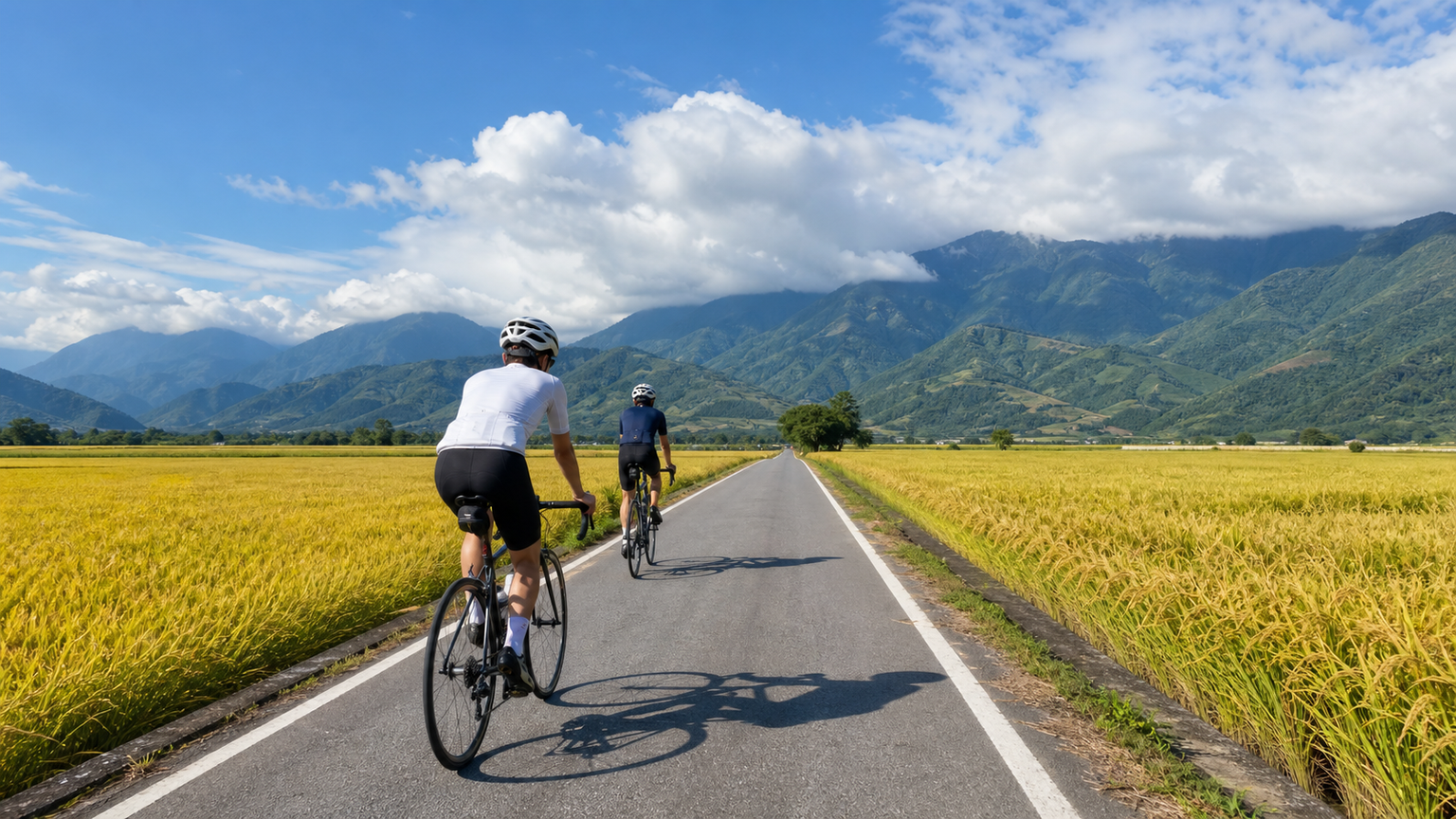
Cycling through the Rice Fields of Chishang, Taitung: A Slow Ride on Brown Boulevard and Through the Valley Countryside
Chishang, a small town in the middle of the Huatung Valley, is known worldwide for its rice paddies. In 2013, an airline filmed a commercial here, and the image of Takeshi Kaneshiro cycling through the rice fields on Brown Boulevard spread across the globe, making Chishang synonymous with Taiwan’s rural scenery. But Chishang’s beauty is more than just one boulevard—it is a microcosm of the entire valley’s way of life. Cycling slowly through Chishang, you’ll discover that its charm goes far beyond what any photograph can capture.
Route Basics
Core Route: Chishang Countryside Loop
- Start/Finish: Chishang Railway Station
- Distance: Approximately 25 km
- Total Elevation Gain: Approximately 80 m (almost entirely flat)
- Difficulty: ★☆☆☆☆
- Estimated Time: 2 to 3 hours (including stops for photos)
Extended Route: Chishang → Guanshan Loop
- Start/Finish: Chishang Railway Station
- Distance: Approximately 55 km
- Total Elevation Gain: Approximately 200 m
- Difficulty: ★★☆☆☆
- Estimated Time: 4 to 5 hours
Core Route: Chishang Countryside Loop
Stop 1: Departing from Chishang Railway Station
Chishang Railway Station was renovated in 2017, and the new station building, designed in a Japanese wooden style, is an attraction in itself. In front of the station, there are several bicycle rental shops offering city bikes, geared bikes, and electric-assist bikes. If you bring your own bike, the plaza in front of the station is a great starting point.
Rental Advice: If you’re mainly sightseeing, an electric-assist bike is the best choice, allowing you to save your energy for the scenery rather than the pedaling. If you’re a serious cyclist, bring your own road bike to experience the exhilarating openness of this plain.
Stop 2: Dapo Lake (2 km)
Ride approximately 2 km southeast from the station to reach Dapo Lake. This is a natural freshwater lake covering about 28 hectares, making it one of the largest natural lakes in the Huatung Valley. Lotus flowers bloom on the lake surface (June-August), waterbirds inhabit the area, and the lakeside trail is perfect for getting off your bike and taking a stroll. Every autumn, the “Chishang Autumn Harvest Rice Art Festival” is held in the rice paddies next to Dapo Lake.
Time to Stay: 15-30 minutes
Stop 3: Brown Boulevard (5 km)
Riding west from Dapo Lake, you’ll quickly enter Chishang’s most scenic rice field area. Brown Boulevard is about 2.2 km long, officially named “Jinxin No. 3 Road.” This straight rural path has no utility poles on either side (they’ve been placed underground), with only endless rice paddies stretching to the foot of the mountains on both sides. The space between heaven and earth is so clean that only the waves of rice and drifting clouds remain.
Best Times to Visit:
- Mid-June to early July (first rice crop): Golden rice ears ripen, creating the most iconic scene
- Late October to November (second rice crop): Another wave of golden rice
- January to March: Rape flower fields planted during the fallow period, a sea of gold
- April to May: Early transplanting stage, when flooded paddies mirror the sky like glass
Notes: Motor vehicles are prohibited on Brown Boulevard; only pedestrians and bicycles are allowed, making it a very safe cycling environment. There are many visitors on holidays, so it’s recommended to go in the early morning or late afternoon.
Stop 4: Takeshi Kaneshiro Tree (6 km)
In the middle of Brown Boulevard stands a solitary camphor tree, dubbed the “Takeshi Kaneshiro Tree” after the commercial. A typhoon toppled it in 2014, but it was rescued and stood upright again. This tree has become Chishang’s most iconic landmark, and nearly every visitor stops here.
Photo Tips: Early morning light comes from the east, making it the best time to shoot with the mountains as a backdrop. Avoid the harsh midday sun and large crowds.
Stop 5: Paradise Road (8 km)
Continuing north from Brown Boulevard, you’ll connect to Paradise Road. This is another path through the rice fields, winding and undulating like a ribbon floating on the waves of rice. Paradise Road is slightly less famous than Brown Boulevard, but the scenery is in no way inferior, and with fewer visitors, it’s a better place to enjoy in quiet.
Stop 6: Chishang Granary Art Museum → Chishang Bento (12-15 km)
Turn back from Paradise Road and follow the rural roads around to return to Chishang’s town center. Along the way, you’ll pass the Chishang Granary Art Museum, an art space converted from an old granary that hosts exhibitions from time to time; the building itself is a work of art.
Back in the town center, the one thing you absolutely cannot miss is the Chishang bento. Chishang rice is renowned for its quality, and only rice that meets certification standards across Taiwan can be labeled “Chishang rice.” The Chishang Rice Bag Cultural Story House, Chuanmeixing Chishang Bento, and Jiaxiang Chishang Rice Bag are all local recommendations.
Lunch Recommendations: Chishang bento (NT$60-100), Chishang tofu skin, and mochi made from Chishang rice
Back to the Start (25 km Loop Completed)
Follow the small roads through Chishang’s town center back to the railway station, completing the approximately 25 km countryside loop.
Extended Route: Chishang → Guanshan Loop
If 25 km isn’t enough for you, you can extend the route south to Guanshan Township.
Chishang → Guanshan (15 km)
Head south along Provincial Highway 9 or a parallel rural road to Guanshan. Traffic moves faster on Provincial Highway 9, so it’s recommended to take County Road 197 (a rural alternative road from Chishang to Guanshan) with less traffic and better scenery.
Guanshan Town Loop Bicycle Path (12 km)
Guanshan Township boasts Taiwan’s first town-loop bicycle path, stretching about 12 km along the Guanshan Main Drainage Ditch and rice paddies. The path surface is smooth and completely separated from vehicle roads, making it very safe to ride. Along the way, you’ll pass Guanshan Waterfront Park (where you can play in the water and rest) and several rice field viewing platforms.
Guanshan → Chishang (15 km)
Return the same way or take different rural roads back to Chishang, enjoying the valley scenery once more along the way.
Bicycle Rental Information
Both Chishang and Guanshan have well-established bicycle rental services:
| Bike Type | Price (Approx.) | Suitable For |
|---|---|---|
| City Bike | NT$100-150/day | Short-distance sightseeing |
| Geared Bike | NT$150-250/day | General riding |
| Electric-Assist Bike | NT$300-500/day | Leisurely touring |
| Tandem Bike | NT$200-350/day | Two riders together |
Four Seasons Scenery Guide
Chishang’s rice paddies take on different appearances with the four seasons, each period having its own unique beauty:
Spring (March-May): Water Mirrors and Fresh Green
Before and after transplanting, the flooded paddies reflect the sky and clouds like mirrors, a favorite for photography enthusiasts. After transplanting, tender green seedlings line up in rows on the water’s surface, full of vitality.
Summer (June-August): Golden Rice Ears
The first rice crop matures, covering the entire valley with golden waves of rice that ripple like a golden ocean when the breeze blows. This is Chishang’s most iconic and most visited season.
Autumn (September-November): Second Crop and Autumn Harvest
The second rice crop matures in October-November, turning golden once again. The Chishang Autumn Harvest Rice Art Festival is usually held in October-November, with a stage set up in the middle of the rice fields for music and dance performances—one of Taiwan’s most beautiful outdoor art events.
Winter (December-February): Fallow Flower Fields
During the winter fallow period, farmers plant rape flowers or cosmos as green manure. Vast yellow rape flower fields or pink cosmos seas add color to the tranquil winter countryside.
Cycling Notes
- Sun Protection: Chishang is located in the valley, where summer temperatures can exceed 35 degrees, and there is almost no shade in the fields
- Hydration: There are no shops along the field roads, so bring enough water before you set off
- Wind Direction: The valley’s funnel effect can produce strong winds, especially noticeable from the north in winter
- Respect the Farmland: Do not enter the rice paddies for photos or step on the field ridges
- Photo Etiquette: Brown Boulevard is crowded on holidays; please queue for photos and don’t occupy the road for long periods
- Train Schedules: If arriving by train, note that Chishang Station has limited services; check the timetable in advance
Nearby Accommodation
In recent years, Chishang has developed many distinctive bed-and-breakfasts, most located right next to the rice fields—open the window and you’ll see waves of rice. It’s recommended to stay one night; Chishang is most beautiful in the early morning and late afternoon.
The Meaning of Cycling in Chishang
Cycling in Chishang is fundamentally different from other routes. Here, there’s no pursuit of speed, no pursuit of elevation gain, no pursuit of mileage. Cycling in Chishang is a way of “seeing”—at the right pace, letting the scenery unfold slowly before your eyes.
When you ride on Brown Boulevard, with rice paddies stretching on both sides all the way to the foot of the Coastal Mountain Range, clouds gathering and dispersing over the distant peaks, and an egret taking flight from the fields, you’ll understand why Chishang’s rice tastes so good—because the land, the air, and the water here are, in themselves, a form of beauty.
Slow down, and let the wind of Chishang carry you forward.
Related Reading
- Chishang Town Loop Route, Taitung: A Slow Cycling Guide to Brown Boulevard
- Cycling the Taitung Huatung Valley: A Slow-Paced Experience and Attraction Connection on the Huadong Section
- Huatung Valley Route: The Classic Valley Plain Route from Yuli to Chishang
- Huatung Valley Cycling Route: A Journey Along Provincial Highway 9 Between Rice Waves and Mountains
帶「咩」一起騎玩日本熊本 上天草市 / 單車旅行、賞海豚、釣魚、高空滑索通通有!/ 公路車 / CT Yeh /
1 年前
金門 ! 我騎過最棒的離島了 / 最後可以騎車上金門大橋的機會!?/ 公路車 / CT Yeh
1 年前
[海外單車] 日本 茨城 霞之浦單車 銀杏 慢遊體驗
7 年前
觀霧 變好騎了! | 北高車友爆笑大會師 | 公路車 | 單車旅遊 Taiwan Cycling Route GuanWu
6 年前
花東縱谷單車遊 feat. Doris 景點五分鐘快速掃瞄 / 公路車 / CT Yeh
2 年前
#北橫 + #北進武嶺 最硬的員工旅遊 EP1 | #公路車 #拉拉山 | 明池 | 武嶺 | 武陵農場 | 雲海 | Taiwan Cycling Route Wulin
6 年前
單車 一日北高 ( 雙城 ) 肥宅雙人瘋狂行 紀錄片 REACTO
10 年前
日本自助單車旅,茨城絕景路線/ 新手也可以體驗 / 4K空拍絕景 / 機票省錢大法 / 單車友善旅館 / 國家級霞之浦180K自行車道 / feat. 緯緯 / CT Yeh
1 年前