2025 Carbon-Plated Racing Shoe Showdown: Comprehensive Review of Top-Tier Models from Nike, Adidas, ASICS, and New Balance
文章導覽
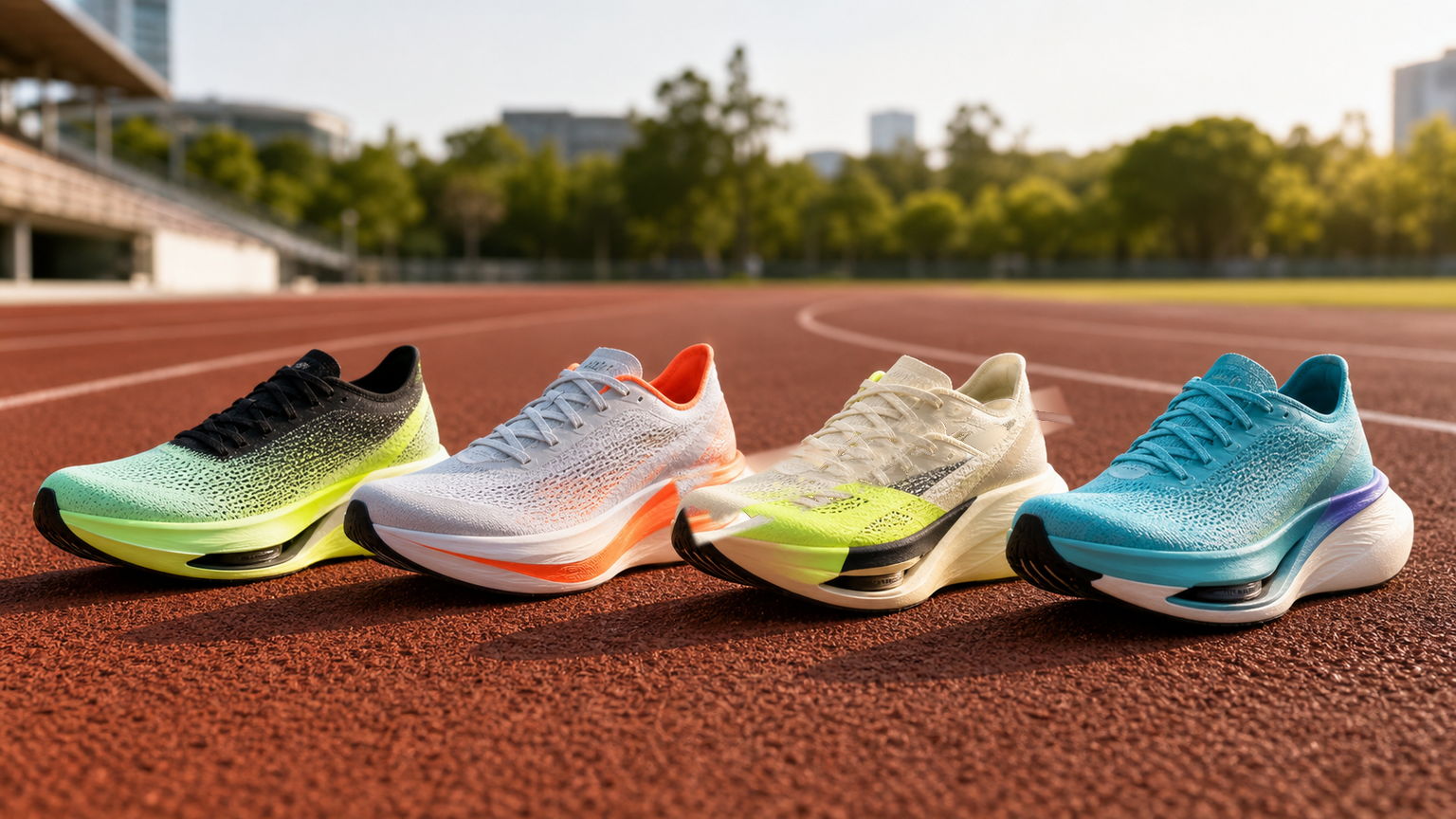
2025 Carbon Plate Racing Shoe Showdown: Full Review of Four Flagship Brands
Since Nike launched the original Vaporfly in 2017, carbon plate running shoes have evolved from “black tech” into standard equipment in the running world. By 2025, carbon plate technology from major brands has matured further, and the competition has become even more intense. This article provides an in-depth comparison of four top-tier carbon plate racing shoes to help you make the best choice on race day.
Why Are Carbon Plate Running Shoes So Important?
The core principle of carbon plate running shoes lies in the lever effect of the carbon fiber plate combined with high-rebound foam, providing extra propulsion when the runner pushes off the ground. Studies show that top-tier carbon plate shoes can reduce energy expenditure by 4-6%, which translates to an improvement of roughly 2-4 minutes in marathon times.
Review of Four Flagship Brand Models
1. Nike Alphafly 3
Weight: Approx. 210g (US 9)
Midsole Stack Height: 39.5mm / 31.5mm
Midsole Material: ZoomX foam + dual-layer Zoom Air units
Carbon Plate Type: Full-length carbon plate
The Nike Alphafly series has long been the benchmark for carbon plate running shoes. The third generation makes significant adjustments to the forefoot air unit configuration, rearranging the two Zoom Air units to deliver a more stable transition. ZoomX foam remains one of the lightest and most responsive materials in the industry.
Pros:
- Extremely strong rebound feel, with a noticeable “sinking-in” sensation
- Forefoot air units provide additional propulsion
- Suitable for advanced runners targeting paces under 3:30/km
Cons:
- High price (approx. NT$9,500)
- Upper breathability has room for improvement
- Lateral stability is not as strong as some competitors
2. Adidas Adizero Adios Pro 4
Weight: Approx. 198g (US 9)
Midsole Stack Height: 39mm / 32mm
Midsole Material: Lightstrike Pro foam
Carbon Plate Type: Carbon fiber energy rods (EnergyRods 2.0)
Adidas has carved its own path in carbon plate design. Unlike the full-length carbon plates used by other brands, the Adios Pro employs five independent carbon fiber energy rods that mimic the structure of the toe bones. The fourth generation upgrades to EnergyRods 2.0, extending further toward the front of the forefoot for greater propulsion efficiency.
Pros:
- Carbon fiber energy rods provide a more natural foot feel
- Lightstrike Pro foam offers excellent durability
- Moderate drop, suitable for midfoot and forefoot strikers
Cons:
- Rebound feel is not as “springy” as ZoomX
- Narrow last; wide-footed runners should take note
- Heel lockdown is slightly weaker
3. ASICS Metaspeed Sky+ Paris
Weight: Approx. 195g (US 9)
Midsole Stack Height: 38mm / 33mm
Midsole Material: FF Turbo Plus foam
Carbon Plate Type: Full-length carbon plate
The ASICS Metaspeed series is divided into Sky (for stride-type runners) and Edge (for cadence-type runners). The Sky+ Paris version further evolves the midsole foam formula, with the FF Turbo Plus delivering approximately 8% higher energy return.
Pros:
- Offers dedicated options for different running styles
- Balances midsole rebound and stability
- Excellent outsole traction
- Outstanding weight control
Cons:
- Price is also on the higher side (approx. NT$8,500)
- Less market availability compared to Nike
- Requires knowing whether you are a stride-type or cadence-type runner
4. New Balance SC Elite v4
Weight: Approx. 202g (US 9)
Midsole Stack Height: 38mm / 30mm
Midsole Material: FuelCell Elite foam
Carbon Plate Type: Full-length carbon plate
The New Balance SC Elite series has achieved notable success in recent years, with many elite athletes setting records in them. The V4 version features the all-new FuelCell Elite foam, improving rebound performance while maintaining a lightweight build.
Pros:
- Smooth forefoot rocker geometry
- Excellent upper fit
- Relatively better value for money (approx. NT$7,500)
- Suitable for a wide range of paces
Cons:
- Brand recognition is not as strong as Nike
- Fewer model options
- Moderate heel stability
Comprehensive Comparison Table
| Item | Alphafly 3 | Adios Pro 4 | Metaspeed Sky+ | SC Elite v4 |
|---|---|---|---|---|
| Weight | 210g | 198g | 195g | 202g |
| Rebound Feel | ★★★★★ | ★★★★ | ★★★★☆ | ★★★★ |
| Stability | ★★★ | ★★★★ | ★★★★☆ | ★★★☆ |
| Durability | ★★★ | ★★★★ | ★★★☆ | ★★★★ |
| Value for Money | ★★★ | ★★★☆ | ★★★☆ | ★★★★ |
How to Choose the Right Carbon Plate Shoe for You
Choose Based on Running Style
- Forefoot strikers: The forefoot rebound design of the Alphafly 3 and Metaspeed Sky+ is better suited
- Midfoot strikers: The energy rod design of the Adios Pro 4 offers the most natural transition
- Rearfoot strikers: The rocker geometry of the SC Elite v4 is more accommodating
Choose Based on Race Distance
- 5K-10K: Opt for lighter models with stronger rebound
- Half Marathon: All four are suitable; choose the one that feels most comfortable
- Full Marathon: Stability and durability become more important
Choose Based on Budget
If your budget is limited, the New Balance SC Elite v4 offers the best value for money. If you seek ultimate performance and have a generous budget, the Nike Alphafly 3 remains the top choice for many elite runners.
Conclusion
The carbon plate running shoe market in 2025 has entered an era of abundant options. There is no “best” shoe—only the shoe that is “best for you.” We recommend trying on shoes before purchasing and fully breaking them in during training before wearing them on race day. Remember, carbon plate shoes are a tool that adds an edge, but solid training is the true foundation of improvement.
Related Reading
- Carbon Plate Running Shoe Review: The Real Impact of Thick-Soled Carbon Plates on Marathon Performance
- The Sports Science of Carbon Plate Shoes: Analyzing the Propulsion Mechanism of the Nike Vaporfly
- 2026 Carbon Plate Racing Shoe Roundup: How to Choose Between Metaspeed, Alphafly, and Adios Pro
- Are Carbon Plate Shoes Worth Buying? An In-Depth Analysis of Benefits for Everyday Runners