Running Shoe Rotation Strategy: Why You Need More Than One Pair? Scientifically Configure Your Running Shoe Arsenal
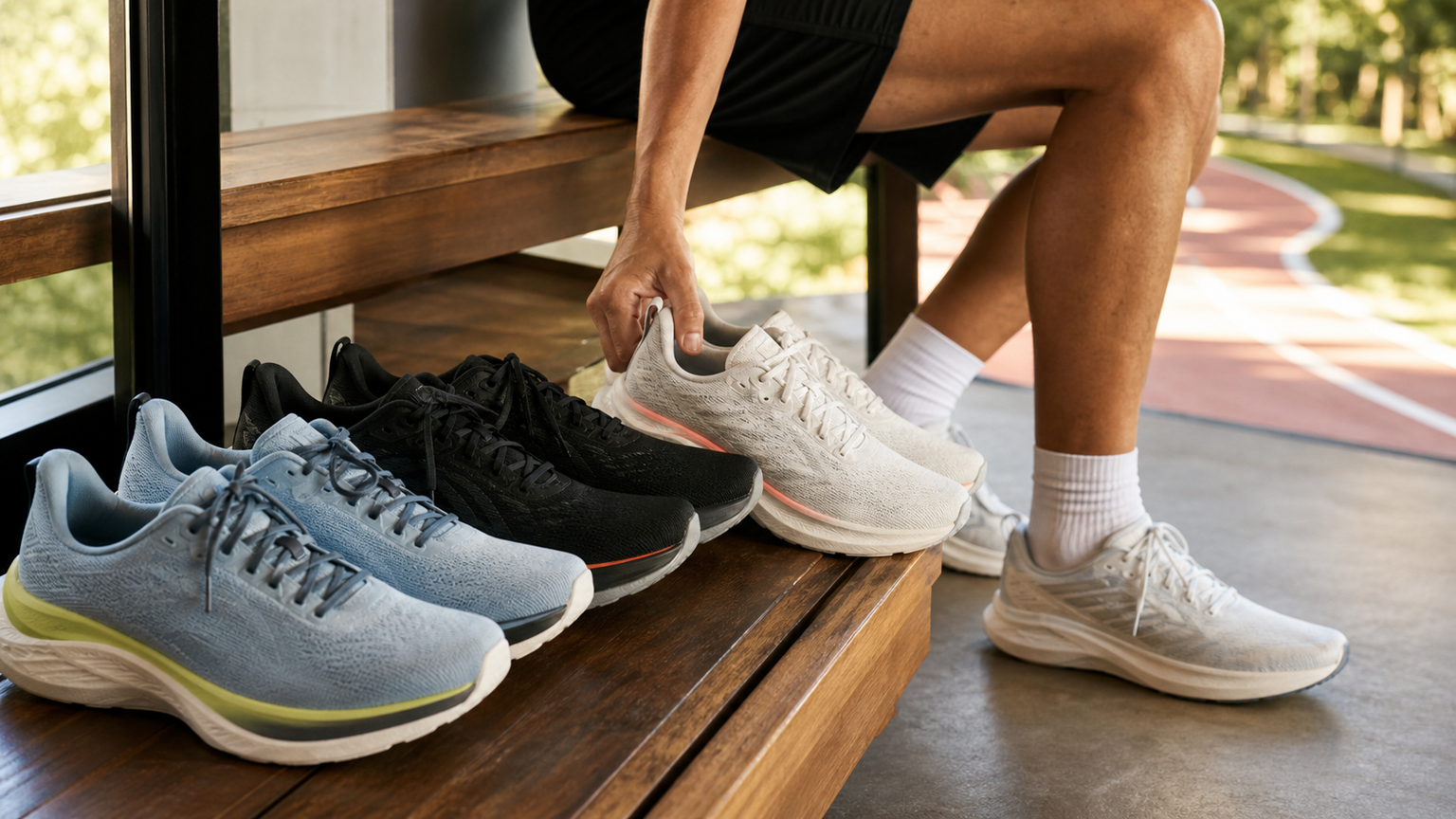
Running Shoe Rotation Strategy: Scientifically Configure Your Running Shoe Arsenal
You may have noticed that serious runners always have several pairs of running shoes in their shoe racks. This isn’t just gear obsession—it’s a scientifically validated smart strategy. A study published in the Scandinavian Journal of Medicine & Science in Sports found that runners who rotate between multiple pairs of running shoes had a 39% lower risk of injury. This article delves into the science behind running shoe rotation and teaches you how to configure the ideal shoe lineup for yourself.
Why Do You Need to Rotate Running Shoes?
1. Reduce Repetitive Stress
Each pair of running shoes has different geometry, midsole materials, and drops. Running in different shoes subjects your feet, ankles, and knees to stress from different directions and intensities. This variation prevents the same tissues from repeatedly bearing identical loads, significantly reducing the risk of overuse injuries.
2. Extend Running Shoe Lifespan
The foam in a running shoe’s midsole needs time to rebound and recover after being compressed. If you run in the same pair every day, the foam gets compressed again before it can fully recover, accelerating material degradation. Rotating shoes gives each pair a 24-48 hour recovery period, effectively extending their lifespan.
3. Targeted Training Effects
Different types of training require running shoes with different characteristics. Using racing shoes for recovery runs is wasteful, and using max-cushion trainers for interval training diminishes the workout’s effectiveness. Choosing the right shoe for each session maximizes the benefit of every workout.
Running Shoe Categories and Functions
Category 1: Daily Trainer
Use Cases: Easy runs, base aerobic runs, long slow distance
Usage Frequency: 60-70% of total weekly mileage
Key Characteristics: Ample cushioning, good durability, high comfort
This is the shoe you wear most often and the cornerstone of your shoe arsenal. Prioritize comfort and durability when choosing—it doesn’t need to be ultra-light or fast, just capable of carrying you comfortably through high mileage.
Recommended Models:
- Nike Pegasus 41
- ASICS Gel-Nimbus 26
- New Balance Fresh Foam 1080 v13
- Hoka Clifton 9
Category 2: Tempo Trainer
Use Cases: Tempo runs, lactate threshold runs, marathon pace practice
Usage Frequency: 15-20% of total weekly mileage
Key Characteristics: Lightweight, responsive, with some cushioning
A “versatile shoe” that sits between daily trainers and racing shoes. The popular “Super Trainers” of recent years mostly fall into this category, with some models even featuring carbon or fiberglass plates.
Recommended Models:
- Saucony Kinvara Pro
- Nike Vomero 18
- ASICS Magic Speed 3
- Adidas Adizero Boston 12
Category 3: Racing Flat / Carbon Plated
Use Cases: Race day, high-intensity intervals, short-distance sprints
Usage Frequency: 5-10% of total weekly mileage
Key Characteristics: Extremely lightweight, highly responsive, carbon plate propulsion
Your most prized weapons, reserved for race day and key training sessions. Carbon-plated racing shoes offer relatively less cushioning, and prolonged heavy use can increase injury risk.
Recommended Models:
- Nike Alphafly 3 / Vaporfly 3
- Adidas Adios Pro 4
- ASICS Metaspeed Sky+
- New Balance SC Elite v4
Category 4: Recovery Shoe
Use Cases: Recovery runs, super slow runs, post-race recovery
Usage Frequency: 10-15% of total weekly mileage
Key Characteristics: Extra-thick cushioning, rocker design, ultimate comfort
The day after a high-intensity workout or race, your feet deserve gentle treatment. Recovery shoes provide maximum cushioning and protection, allowing you to actively recover without adding extra strain.
Recommended Models:
- Hoka Bondi 8
- ASICS Gel-Nimbus 26
- New Balance Fresh Foam More v4
Configuring Your Shoe Rotation Based on Mileage
Beginner Runners (20-30km per week)
Recommended Setup: 2 pairs
- Daily Trainer × 1 (handles 80% of training)
- Tempo/Lightweight Trainer × 1 (for tempo runs and race day)
Beginners don’t need many shoes—rotating between two pairs is enough to gain the injury-reduction benefits.
Intermediate Runners (40-60km per week)
Recommended Setup: 3 pairs
- Daily Trainer × 1
- Tempo Trainer × 1
- Racing Shoe × 1 (for races and key interval sessions)
Intermediate runners start competing, and a pair of racing shoes can deliver noticeable performance gains on race day.
Advanced Runners (70km+ per week)
Recommended Setup: 4-5 pairs
- Daily Trainer × 2 (rotated to extend lifespan)
- Tempo Trainer × 1
- Racing Shoe × 1
- Recovery Shoe × 1
High-mileage runners wear out their daily trainers fastest, so having two pairs in rotation effectively extends their lifespan.
Practical Implementation of Shoe Rotation
Sample Weekly Plan (Intermediate Runner, 50km per week)
| Day | Training Session | Shoe Choice |
|---|---|---|
| Monday | Recovery run 8km | Daily Trainer |
| Tuesday | Interval training 10km | Tempo Trainer |
| Wednesday | Easy run 8km | Daily Trainer |
| Thursday | Tempo run 10km | Tempo Trainer |
| Friday | Rest | - |
| Saturday | Long run 16km | Daily Trainer |
| Sunday | Recovery run 6km | Daily Trainer |
Tracking and Management
Use a running app (such as Strava or Garmin Connect) to log the cumulative mileage of each pair of shoes. Set mileage reminders in the shoe profile, and prepare replacements in advance as they approach the end of their lifespan.
Frequently Asked Questions
Q: Do the shoes in rotation need to be from different brands?
No, but choosing different types of shoes is important. The difference between a cushioned trainer and a lightweight trainer from the same brand is already enough to provide varied mechanical stimuli.
Q: Can old shoes be downgraded for other uses?
Yes! Racing shoes can be downgraded to tempo trainers after retirement, and daily trainers can become recovery shoes or everyday walking shoes. However, if the midsole has visibly collapsed, it’s time to retire them completely.
Conclusion
Shoe rotation isn’t a sales pitch to make you spend more money on shoes—it’s a scientifically validated injury prevention strategy. Start by rotating between two pairs, and you’ll feel the difference. As your running experience and mileage grow, gradually expand your shoe arsenal. Remember, the best investment is reducing injuries and staying consistent with training.
Related Reading
- Running Shoe Rotation Strategy: Why You Shouldn’t Run a Single Pair Into the Ground
- How Many Kilometers Before Replacing Running Shoes? Maintenance Tips to Extend Lifespan
- Running Shoe Lifespan Explained: When to Replace? 7 Wear Signs and Scientific Mileage Management
- Road Running Special Feature | The Evolution of Running Shoe Design: Balancing Cushioning and Propulsion (R058)
#公路車 #Fitting 靠人工智慧APP 幫你調整單車
6 年前
摔車後補裝備: 好市多新款單車安全帽& Specialized Romin 北高整路屁股都不痛的坐墊 | 一千元居然有MIPS | CT Yeh | 公路車
4 年前
2025 自行車錶排行榜 兩萬車友大數據 / Garmin Bryton 排名會大洗牌嗎? / 全新的碼表前身分析 /公路車 / CT Yeh
1 年前
靠單車減肥35公斤 心得分享與整理
7 年前
再一組! 全碳幅條 碟煞/無內胎輪組 開箱! 到底好騎嗎? UNAAS X40 | 公路車 | CT Yeh
4 年前
單車 一日北高 ( 雙城 ) 肥宅雙人瘋狂行 紀錄片 REACTO
10 年前
碟煞公路車 銑面器 !? 原來銑完差這麼多! 降低蹭碟機率! | TIME 公路車 保養小記錄 | CT Yeh
3 年前
3D 列印車褲墊 / 舒適改善? / 無痕 x 分區壓縮 / ATK & Decider系列 / JE22黑科技 / #公路車 #CTYEH
11 個月前