Complete Guide to Advanced GPS Running Watch Features: Training Readiness, Recovery Recommendations, and Fitness Status Tracking
文章導覽
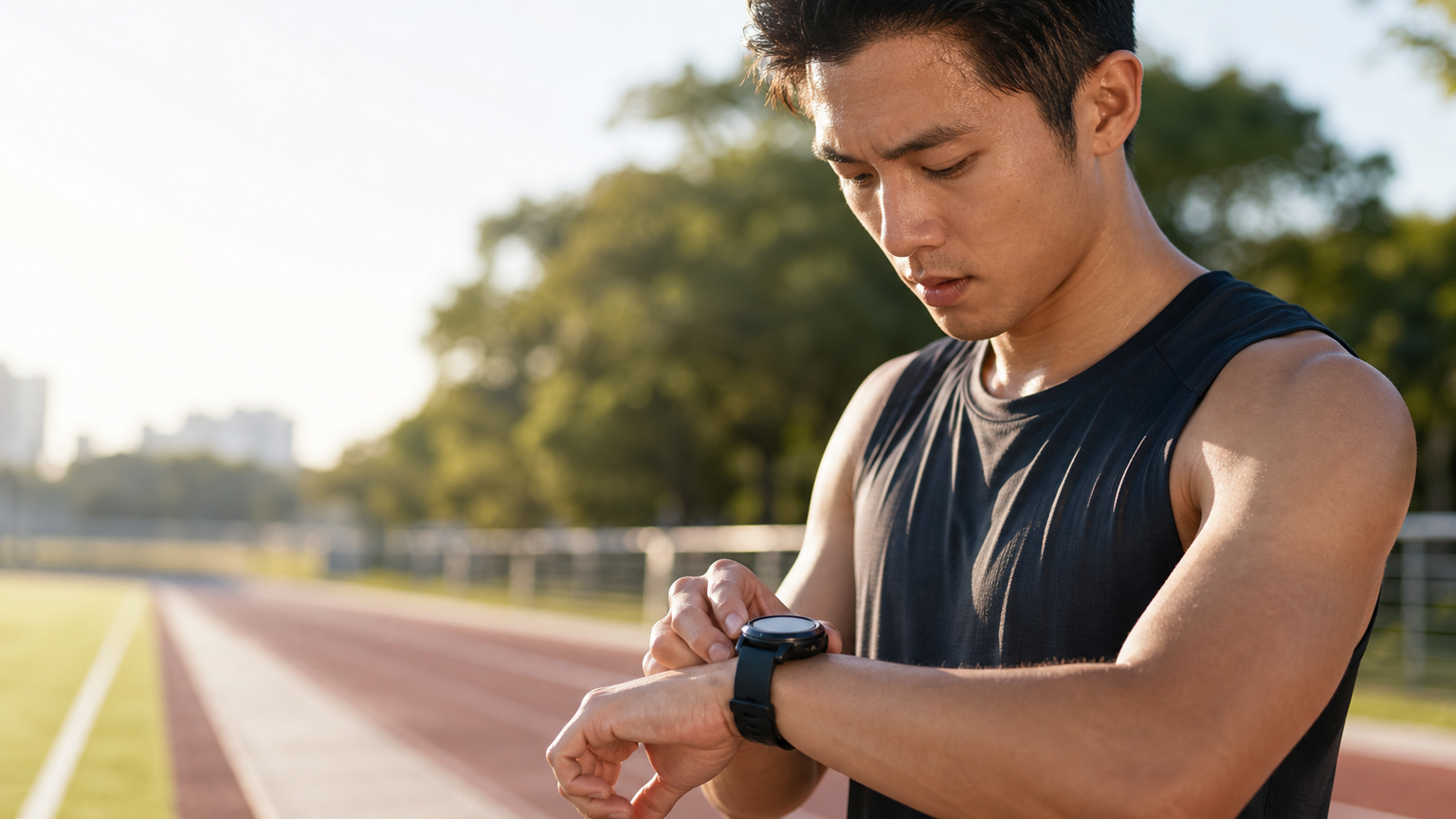
Complete Guide to Advanced GPS Running Watch Features: Training Readiness, Recovery Suggestions, and Fitness Status Tracking
If you’re still treating your GPS running watch as just a “tool for measuring distance and pace,” you’re probably only using 30% of its capabilities. By 2025, flagship running watches have evolved into your personal coach—they can tell you whether today is suitable for high-intensity training, how much longer you need to recover from your last race, and whether your aerobic fitness is improving. This article will dive deep into how these advanced features work and how to actually apply them to your training.
Core Physiological Metrics
VO2 Max Estimation
How it works: GPS watches estimate VO2 Max by analyzing the relationship between your running pace and heart rate. At the same pace, a lower heart rate indicates better aerobic capacity.
Garmin’s calculation method:
Uses Firstbeat Analytics algorithms, analyzing at least 10 minutes of steady-pace data during each running activity. Factors considered include:
- Running speed
- Heart rate response
- Heart rate variability (HRV)
- Ambient temperature (heat adaptation correction)
- Altitude (high-altitude correction)
How to use it correctly:
- Don’t just look at a single reading; observing long-term trends is more meaningful
- Runs under similar conditions (route, temperature) are the only ones that are comparable
- Fluctuations of ±2 ml/kg/min are within the normal range
- Improving VO2 Max requires sustained high-intensity interval training
Lactate Threshold
How it works: Lactate threshold is the highest intensity at which you can maintain a steady run—beyond this intensity, lactate begins to accumulate rapidly and you’ll soon have to slow down. GPS watches estimate your lactate threshold heart rate and pace by analyzing the “inflection point” in the relationship between pace and heart rate.
Garmin guided test:
Garmin offers a dedicated lactate threshold test that guides you through a progressive acceleration run and analyzes your heart rate response to identify the threshold point.
Training applications:
- Tempo run pace should be near your lactate threshold (threshold pace ± 5-10 seconds/km)
- Once you know your threshold heart rate, you can use heart rate to control training intensity
- An increase in threshold is a key indicator of marathon performance improvement
Training Readiness
This is one of the most talked-about features in recent years. Training Readiness combines multiple metrics to give you a score for whether today is suitable for high-intensity training.
Garmin Training Readiness
Score range: 1-100
Factors considered:
- Sleep quality and duration: Deep sleep, REM sleep, and total sleep hours from the previous night
- Recovery status: Time elapsed and recovery level since your last high-intensity workout
- HRV status: Comparison of morning heart rate variability against your personal baseline
- Training load: Training stress trends over the past 7 and 28 days
- Stress index: Overall physical and mental stress levels throughout the day
Practical application recommendations:
| Readiness Score | Recommendation | Training Type |
|---|---|---|
| 80-100 | Excellent condition | High-intensity intervals, racing |
| 60-79 | Good condition | Tempo runs, moderate-intensity training |
| 40-59 | Average condition | Easy runs, technique training |
| 20-39 | Recovery needed | Very easy recovery runs or rest |
| 1-19 | Training not recommended | Complete rest |
COROS Training Readiness
Score range: 1-100
COROS’s Training Readiness focuses on:
- Baseline fitness status
- Training load balance
- Recovery metrics
- Sleep data
Body Battery / Energy Index
Garmin Body Battery
Body Battery is a Garmin-exclusive feature that presents your body’s energy status in an intuitive battery percentage format.
How it works:
- Calculated through continuous monitoring of HRV, stress, activity, and sleep
- Stress and activity drain energy (battery decreases)
- Rest and sleep restore energy (battery recharges)
- A score of 100 represents a full charge
Practical tips:
- The Body Battery reading when you wake up in the morning is the most valuable reference
- If it’s consistently below 50 upon waking for several days, it may indicate overtraining or insufficient sleep
- A Body Battery of 80 or above on race morning is ideal
- Observe which activities drain your Body Battery the most (it might not be running—it could be work stress)
Recovery Time Suggestions
How it works
After each workout, the GPS watch calculates a recommended recovery time based on the following factors:
- Training intensity (EPOC value)
- Training duration
- Training type (aerobic vs. anaerobic)
- Your fitness level
- Past training load
How to interpret it
Recovery time doesn’t mean “you can’t run during this period”—it’s a recommendation to avoid high-intensity training during this time. You can still do recovery runs or easy cross-training.
Common scenarios:
- Easy 60-minute run → Recovery time 12-24 hours
- 45-minute tempo run → Recovery time 24-48 hours
- High-intensity intervals → Recovery time 48-72 hours
- Full marathon race → Recovery time 72-120 hours
Training Status
Garmin Training Status
Garmin’s Training Status comprehensively analyzes your training trends over the past several weeks and provides the following classifications:
- Peaking: Training load has decreased but fitness is maintained—the ideal race-ready state
- Productive: Training load is appropriate and fitness is improving
- Maintaining: Fitness level is stable, neither improving nor declining
- Recovery: Training load is low and your body is recovering
- Unproductive: Training a lot but fitness isn’t improving
- Detraining: Insufficient training, fitness is beginning to decline
- Overreaching: Training load is too high, causing fitness to regress
The most common misconception: Panicking when you see “Detraining” and immediately ramping up volume. In reality, seeing “Recovery” or mild “Detraining” during a planned taper period is completely normal.
HRV (Heart Rate Variability) Monitoring
Why is HRV important?
HRV measures the tiny variations in time intervals between consecutive heartbeats. Higher HRV indicates a more balanced autonomic nervous system and better recovery status.
Morning HRV Trends
Modern GPS watches continuously monitor HRV during sleep and calculate your personal baseline. Comparing your daily HRV to your baseline tells you:
- Above baseline: Recovery is going well; high-intensity training is appropriate
- Near baseline: Normal status
- Below baseline: May need more recovery
- Consistently below baseline for several days: Warning sign—possible illness, overtraining, or excessive stress
Recommended Watches for 2025
All-Rounders
- Garmin Forerunner 965: Includes nearly all advanced features, AMOLED display
- COROS PACE 3: Best value for money, impressive battery life
Flagship Level
- Garmin Fenix 8: Most comprehensive outdoor features
- Apple Watch Ultra 2: Best ecosystem integration
Entry-to-Advanced Level
- Garmin Forerunner 265: Mid-range price with most advanced features
- COROS PACE Pro: Lightweight flagship
Usage Recommendations
Don’t Be Held Hostage by Data
The advanced features of GPS watches are reference tools, not absolute commands. Your subjective feelings remain the most important indicator. If the data says you’re in good shape but your body feels fatigued, trust your body.
Establish a Personal Baseline
All advanced features require at least 2-4 weeks of continuous wear to establish an accurate personal baseline. During this period, the data may not be very accurate, so please be patient.
Long-Term Trends Matter More Than Single-Day Data
Don’t get anxious because your VO2 Max dropped by 1 point on a certain day. Look at weekly and monthly trends to draw meaningful conclusions.
Conclusion
The advanced features of modern GPS running watches are a powerful gift that technology has given to runners. By making good use of these features, you can plan your training more scientifically, track your body’s condition more precisely, and avoid overtraining more intelligently. But always remember—your own body’s sensations are the best coach, and data is just a tool to help you listen to it better.
Related Reading
- Advanced GPS Running Watch Features Explained: Route Navigation, Training Suggestions, and Health Monitoring
- GPS Running Watch In-Depth Guide: Garmin and COROS Feature Analysis and Training Applications
- Complete Sports Watch Buying Guide: GPS Accuracy, Heart Rate, Blood Oxygen, and Training Analysis Feature Comparison
- Road Running Watch Features Fully Explained: In-Depth Comparison of GPS Accuracy, Heart Rate Monitoring, and Training Metrics