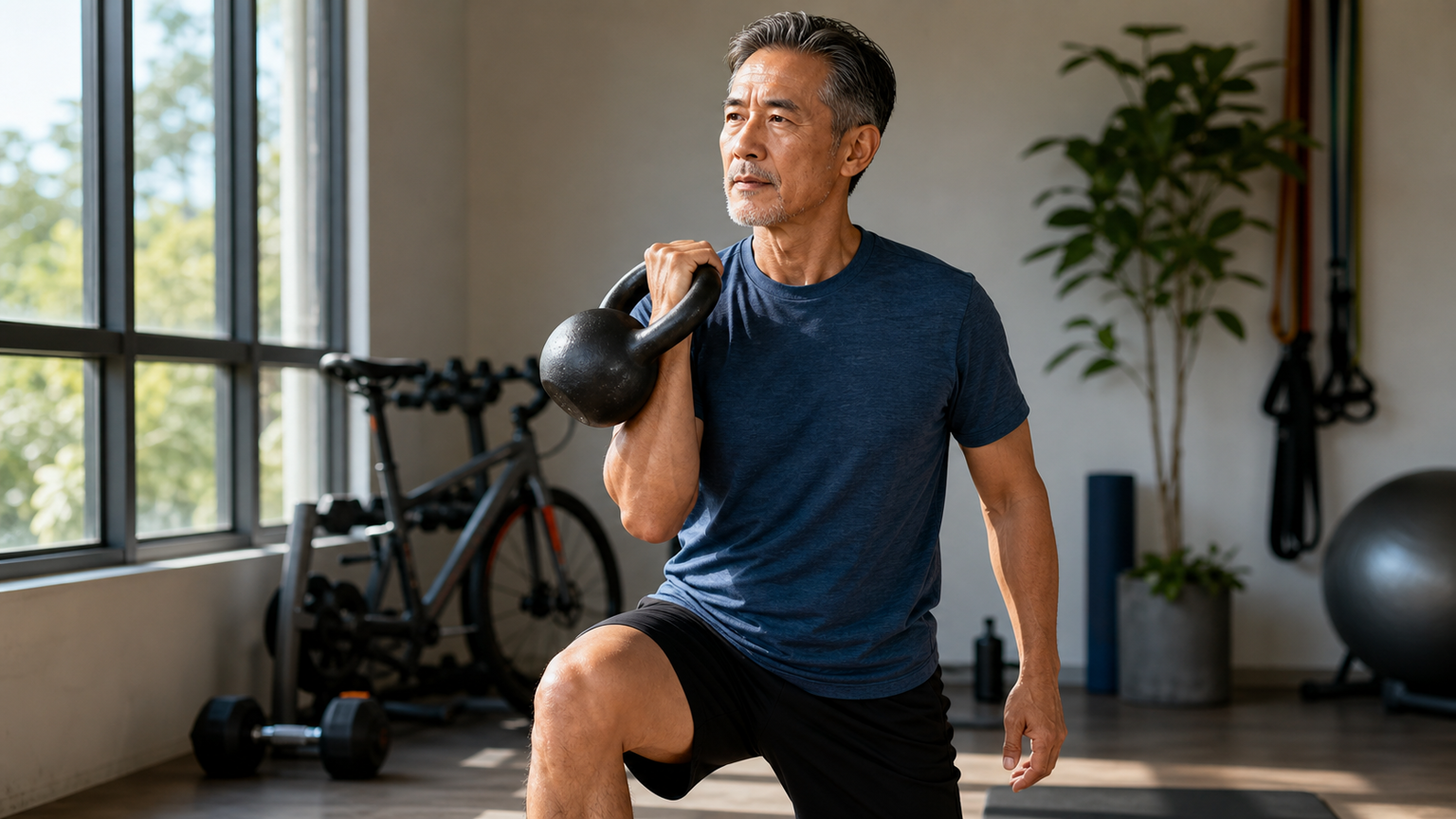
Hormonal Changes After Fifty and Training Strategies
Introduction: The Endocrine Shift You Can’t Ignore
If you’re over fifty, you may have noticed some subtle changes: recovery seems slower, body fat accumulates more easily, muscle mass appears to be declining, and sleep quality isn’t what it used to be. Behind these changes lies a common driving force—an altered hormonal environment.
This isn’t something to fear; it’s a natural process everyone goes through. By understanding these changes and making corresponding adjustments, you can absolutely continue to maintain a high level of athletic performance and quality of life.
Hormonal Changes in Men
The Gradual Decline of Testosterone
Starting around age 30, testosterone levels in men decline by an average of about 1-2% per year. By age fifty, total testosterone levels may be 20-40% lower than their peak.
Impact on Athletic Performance:
- Reduced muscle-building capacity: The same training stimulus produces a weaker muscle growth response
- Prolonged recovery time: Lower protein synthesis rates mean slower tissue repair
- Altered body fat distribution: Abdominal fat accumulates more easily
- Increased risk of bone density loss: Testosterone is a key factor in maintaining bone density
- Changes in drive and energy: Training motivation may be affected
Other Related Hormonal Changes
- Growth Hormone (GH): Declines by about 14% per decade, affecting muscle repair and fat metabolism
- IGF-1: Declines alongside growth hormone, affecting tissue repair capacity
- DHEA: A precursor hormone secreted by the adrenal glands; by age fifty, levels may be only 20-30% of peak
- Thyroid hormones: May decline slightly, affecting basal metabolic rate
Hormonal Changes in Women
The Major Transition of Menopause
Women experience menopause between ages 45-55, a more dramatic hormonal transition than in men:
Perimenopause:
- May last 4-10 years
- Estrogen and progesterone levels fluctuate dramatically
- Menstrual cycles become irregular
- Various symptoms begin to appear
Post-menopause:
- Estrogen declines by approximately 60-80%
- Progesterone nearly ceases production
- Profound effects on body composition and athletic performance
Specific Impacts on Female Athletes:
| Change | Cause | Impact |
|---|---|---|
| Accelerated muscle loss | Estrogen has anabolic effects | Decreased strength and power |
| Rapid bone density decline | Estrogen is a key factor in bone protection | Significantly increased fracture risk |
| Difficulty with thermoregulation | Vasomotor instability | Reduced heat dissipation efficiency during exercise |
| Declining sleep quality | Night sweats and hormonal fluctuations | Recovery severely compromised |
| Body fat redistribution | Altered metabolic patterns | Increased abdominal fat |
| Increased joint stiffness | Estrogen affects connective tissue elasticity | Higher injury risk |
Training Adaptation Strategies
Strategy 1: Prioritize Strength Training (For Both Men and Women)
After fifty, strength training shifts from “optional” to “mandatory”:
Training Principles:
- Use sufficient load: Light weights with high reps aren’t enough to stimulate muscle growth; you need challenging loads
- Focus on compound movements: Multi-joint exercises like squats, deadlifts, bench presses, and rows
- Progressive overload: Try to slightly increase weight weekly or biweekly
- Frequency: 2-3 sessions per week, 45-60 minutes each
Sample Weekly Plan:
Monday: Upper Body + Core
  - Dumbbell bench press 3×10
  - Single-arm row 3×10/side
  - Overhead press 3×10
  - Plank 3×30-45 sec
  - Dead bug 3×10/side

Wednesday: Lower Body + Power
  - Squat 4×8
  - Romanian deadlift 3×10
  - Bulgarian split squat 3×8/leg
  - Kettlebell swing 3×15
  - Calf raise 3×15

Friday: Full-Body Functional
  - Turkish get-up 3×3/side
  - Walking lunge 3×10 steps/leg
  - Push-up 3×12
  - Farmer's carry 3×30 sec
  - Side plank 3×20 sec/side
Strategy 2: Emphasize Protein Intake
After hormonal decline, the body becomes less efficient at utilizing protein, so you need to consume more:
- Daily target: 1.6-2.2 grams of protein per kilogram of body weight
- Minimum per meal: 30-40 grams of high-quality protein
- Leucine threshold: At least 2.5-3 grams of leucine per meal (roughly equivalent to 30 grams of whey protein or 150 grams of chicken breast)
- Before bed: 20-30 grams of casein to support overnight repair
Strategy 3: Redefine Recovery
Hormonal changes directly affect recovery capacity. Here are adjustment recommendations:
Sleep Optimization (The Most Important Recovery Tool):
- Maintain consistent bedtimes and wake times
- Keep the bedroom at 18-20°C (especially for women with hot flashes)
- Avoid blue light screens 1 hour before bed
- Consider magnesium supplementation (magnesium glycinate or magnesium threonate) to aid relaxation and sleep quality
- Consult a physician about melatonin use if necessary
Training Periodization Adjustments:
- Allow at least 48 hours between high-intensity sessions (24 hours may have sufficed when younger)
- Schedule a deload week every 3-4 weeks (reduce training volume by 40-50%)
- Rest decisively when feeling unusually fatigued; don’t push through
Strategy 4: Manage Stress Hormones
Cortisol (the stress hormone) tends to rise after fifty, and elevated cortisol can:
- Accelerate muscle breakdown
- Promote abdominal fat accumulation
- Disrupt sleep
- Suppress immune function
Strategies to Lower Cortisol:
- Avoid overtraining (the biggest training-related stressor)
- Practice regular mindfulness meditation or breathing exercises (10-15 minutes daily)
- Limit caffeine intake (avoid after 2 PM)
- Maintain social connections and positive relationships
Strategy 5: Special Considerations for Women
Training Adjustments During Perimenopause:
- Increase training intensity on days when you feel good
- Switch to low-intensity or indoor training (where temperature can be controlled) when hot flashes are severe
- Increase fluid intake (higher cooling demands)
- Consume carbohydrates before and after high-intensity training (insulin sensitivity declines)
Bone Density Protection:
- Cycling is a non-weight-bearing sport and contributes little to bone density
- Weight-bearing exercise is essential: running, jump rope, resistance training
- Ensure adequate calcium (1,000-1,200 mg daily) and vitamin D intake
- Get regular bone density screenings (DEXA scans)
When to Consider Hormone Replacement Therapy (HRT)?
This is a personal decision that requires thorough discussion with your physician. Here are the basic considerations:
Potential Benefits:
- Improvement of symptoms (hot flashes, sleep, mood)
- Bone density protection
- Possible improvement in athletic performance and recovery
- Reduced cardiovascular disease risk (when started at the appropriate time)
Things to Note:
- Risk-benefit ratios vary from person to person
- Regular medical follow-up is required
- Exercise can achieve many similar effects
Important Disclaimer: This article does not constitute medical advice. Regarding hormone replacement therapy, please be sure to consult a professional endocrinologist or gynecologist.
A Positive Perspective on Hormonal Changes
Finally, I want to convey an important concept: hormonal changes are a natural part of life, not a disease.
Many athletes over fifty, through proper training and lifestyle adjustments, not only maintain excellent athletic performance but also discover that they understand their bodies better and enjoy exercise more than they did in their forties.
Your body is changing, but your potential has never disappeared. Learn to adapt, adjust, and be kind to yourself—your athletic journey is just entering its wisest chapter.
Related Reading
- Hormonal Changes in Older Athletes: The Impact of Declining Testosterone on Training Recovery
- Hormonal Changes and Athletic Performance: The Female Athletic Journey from Puberty to Menopause
- Menopausal Athletes: How Hormonal Changes Affect Training
- Age and Recovery: Adjusting Scientific Recovery Strategies for Runners Over 40
西進武嶺 免費訓練分析服務 Intervals | 練不夠還是練過頭?你哪一種類型選手?AI模型告訴你! | 備戰神器 | 公路車 訓練 | CT Yeh
4 年前
[教學] Premiere 影片 手震 修正 教學 防抖 單眼 影像 GoPro 穩定 Video Stabilization
8 年前
靠單車減肥35公斤 心得分享與整理
7 年前
2025 自行車錶排行榜 兩萬車友大數據 / Garmin Bryton 排名會大洗牌嗎? / 全新的碼表前身分析 /公路車 / CT Yeh
1 年前
一日北高/長距離團騎 常見問題補充篇 / 組團或跟團的眉角 / 壯車友容易被瘦車友慢性拉爆 / 原來屁股痛可能是這個原因...? / 風場配速法 / 公路車 / CT Yeh
2 年前
16/02/16 - 夜訪中社路 緩慢進步中
10 年前
#公路車 #Fitting 靠人工智慧APP 幫你調整單車
6 年前
2016/4/20 - 中社路 夜騎 半年甩肉14KG 後測
10 年前