Indoor vs. Outdoor Power Differences Explained: Why Can't You Match Your Outdoor Numbers on the Trainer?
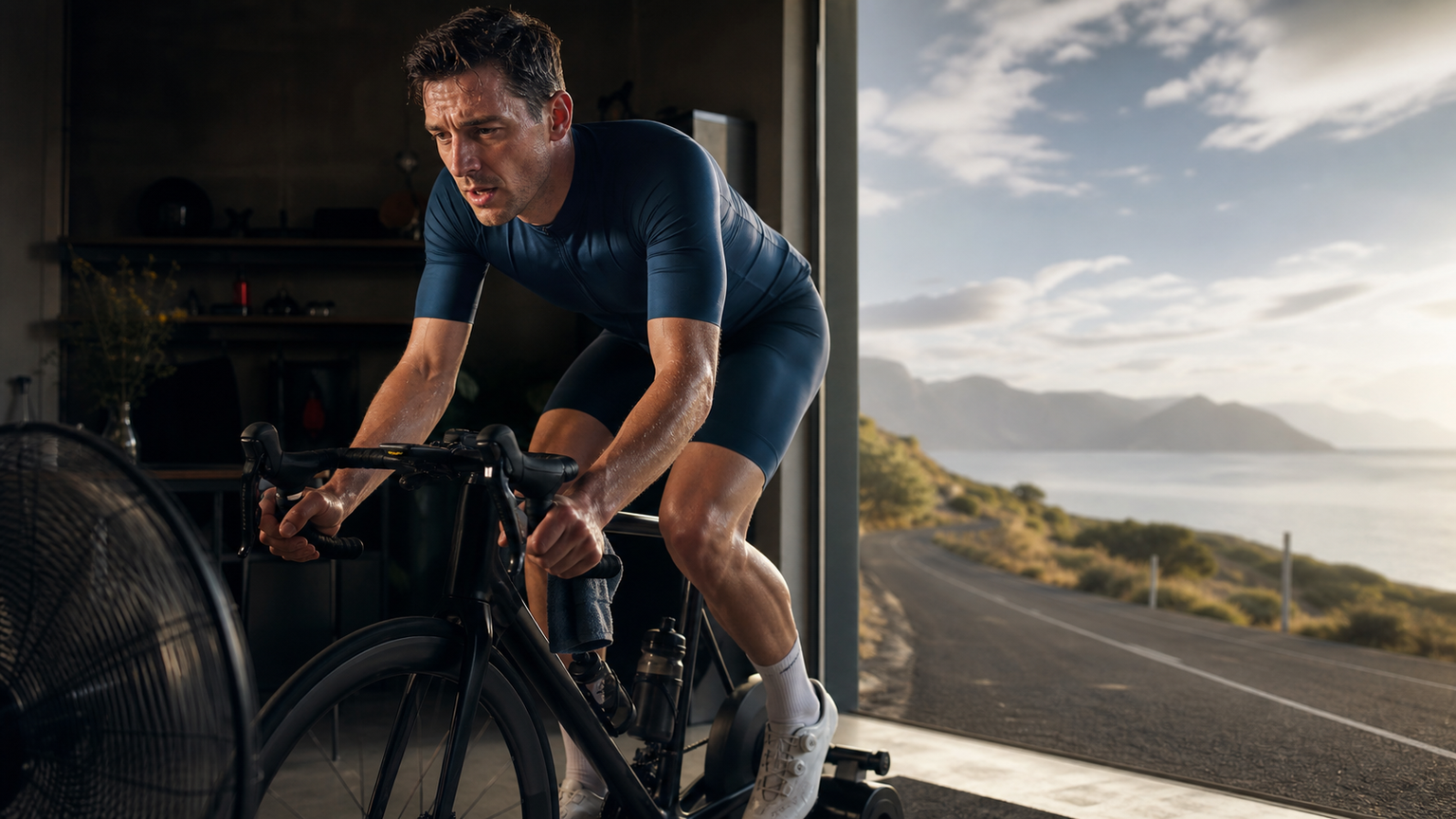
Analysis of Indoor vs. Outdoor Power Differences: Why Can’t You Match Your Outdoor Numbers on the Trainer?
“Why can I only hold 250 watts indoors, but consistently put out 270 watts outdoors?” This is a confusion countless cyclists encounter once they start using a trainer. The indoor-outdoor power difference is a real phenomenon, typically ranging from 5-15%, and in extreme cases can even exceed 20%. Understanding the reasons behind this difference is crucial for properly planning your training.
The Science Behind the Power Difference
Heat Dissipation: The Primary Factor
We’ve already discussed heat dissipation in detail earlier, but in the context of power differences, it’s worth emphasizing its impact again.
When riding outdoors at 30 km/h, your body enjoys natural airflow equivalent to a powerful fan. This cooling efficiency is nearly impossible to fully replicate indoors. For every 1°C rise in core temperature:
- Heart rate increases by 10-15 bpm
- RPE (Rate of Perceived Exertion) increases by 1-2 levels
- Maximum power output drops by 5-8%
- Sustained power capacity may drop even more
This means that in an indoor environment with inadequate cooling, your body quickly reaches its thermal limit and is forced to reduce power output.
Riding Position and Muscle Recruitment
When riding outdoors, your body naturally makes subtle adjustments in position:
- Out-of-saddle efforts: Standing and rocking recruits more muscle groups to produce power
- Weight shifting: Subtle front-back and side-to-side adjustments distribute muscle fatigue
- Hand position changes: Switching between the tops, hoods, and drops changes the angle of force application
On a trainer, the bike is fixed (especially with direct-drive trainers), and these natural dynamics are greatly restricted:
- The bike cannot sway side to side
- Weight shifting is limited
- Riding position becomes more static
- Local muscle groups fatigue more easily
Psychological Motivational Factors
Outdoor riding provides a wealth of psychological stimulation:
- Terrain variation: Climbs, descents, and corners naturally modulate your output rhythm
- Visual stimulation: Constantly changing scenery provides mental freshness
- Social factors: The motivation and competitive spirit of riding with others
- Goal orientation: The sense of accomplishment from reaching a destination or completing a route
- Adrenaline: The excitement of facing real traffic and terrain challenges
Indoor training relatively lacks these stimuli, causing mental fatigue to accumulate faster, which in turn affects your body’s willingness to produce power.
Inertia and Power Delivery
When riding outdoors, the momentum of the bike and rider creates a flywheel effect. On flats or slight descents, you can use inertia to maintain speed while briefly reducing power output, providing small but continuous recovery opportunities.
Although a trainer’s flywheel attempts to simulate this effect, physical limitations make the simulation imperfect:
- Flywheel mass is typically far smaller than the equivalent inertia of real riding
- Pedaling feels more “dead,” requiring continuous effort on every revolution
- Speed drops faster when you stop pedaling
Neuromuscular Adaptation
For well-trained riders, the nervous system has established highly optimized muscle recruitment patterns during outdoor riding. These patterns were developed in dynamic, varied riding environments.
When moving to a static trainer:
- Some muscle recruitment patterns cannot be activated
- Core stabilization muscles are used differently
- Pedaling mechanics differ slightly
Equipment Factors
Reading Differences Between Power Meters and Trainers
Differences inherently exist between various power measurement devices:
- Pedal-based power meters vs. crank-based power meters vs. trainer-built-in power
- Each device measures at a different location, leading to value discrepancies
- Drivetrain friction losses (approximately 2-5%) create gaps between upstream and downstream measurements
Calibration Issues
- Trainer calibration can drift with temperature changes
- Starting a session without adequate warm-up can lead to inaccurate initial readings
- Calibration standards are not fully consistent across different brands
Quantifying Your Personal Difference
Establishing a Personal Baseline
To understand your own indoor-outdoor power difference, systematic measurement is required:
- Use the same power meter: Use the same power measurement device both indoors and outdoors
- Perform the same test: For example, do a 20-minute FTP test in each environment
- Control variables: Similar body condition, nutritional intake, and rest levels
- Take multiple measurements: Perform at least 2-3 tests in each setting and average the results
- Record environmental conditions: Temperature, humidity, fan setup, etc.
Common Difference Ranges
Based on experience and research data:
| Scenario | Typical Difference Magnitude |
|---|---|
| Good cooling + rocker plate | 3-5% |
| Good cooling + fixed trainer | 5-10% |
| Inadequate cooling + fixed trainer | 10-15% |
| Very poor cooling + no fan | 15-25% |
Practical Strategies to Narrow the Gap
Optimize Cooling
This is the most effective way to reduce the difference:
- Use multiple high-power fans
- Control ambient temperature to 18-22°C
- Use pre-cooling techniques
- Manage environmental humidity
Improve Riding Dynamics
- Rocker Plate: Allows the bike to sway side to side, more closely mimicking the dynamic feel of outdoor riding. Users typically report a 3-5% reduction in the power gap
- Periodic out-of-saddle efforts: Even on a trainer, you can practice standing climbs (mindful of stability)
- Vary hand positions: Regularly change hand placement to avoid excessive fatigue in local muscles
Psychological Strategies
- Use virtual platforms: The visual and social elements of platforms like Zwift provide some psychological stimulation
- Group rides: Join online group rides or races to add competitive motivation
- Set clear goals: Have a specific objective for every session rather than pedaling aimlessly
- Music and videos: Appropriate entertainment can distract from fatigue
Accept the Difference and Adjust Training Zones
Some coaches recommend setting different power zones for indoor training:
- Set your indoor FTP at 90-95% of your outdoor FTP
- Or perform an FTP test indoors and use that data to set your indoor training zones
- This ensures you’re still training in the correct zones when working out indoors
Special Considerations
The Difference Is Greater in Hot Environments
If you live in a hot climate (like Taiwan’s summer), the indoor-outdoor power difference may manifest differently:
- In summer, outdoor power may actually drop due to high ambient temperatures
- An air-conditioned indoor space may actually become the environment where you produce more power
- In this case, the indoor-outdoor difference may shrink or even reverse
Difference Accumulation Over Longer Sessions
The indoor-outdoor power difference widens as training duration increases:
- First 30 minutes: Smallest difference
- 30-60 minutes: The difference gradually emerges
- Beyond 60 minutes: The difference may reach its maximum
This is because body heat accumulation is time-dependent—the longer you ride, the more pronounced the impact of inadequate cooling becomes.
Conclusion
The indoor-outdoor power difference is a complex, multi-factorial phenomenon involving physiological, environmental, equipment, and psychological aspects. The most important realization is this: it doesn’t mean you’ve gotten “weaker” from indoor training—rather, different environments present different challenges to your body. Properly understanding and quantifying your personal difference, then adjusting your training plan accordingly, ensures you get the best training results no matter where you ride. Don’t obsess over the numbers; focus on the essence of training—consistently, steadily, and progressively challenging your body.
Related Reading
- Outdoor vs. Indoor Training Power Differences: Why Riding Outside Feels Harder
- The Complete Guide to Indoor Cycling Cooling and Fan Setup: Don’t Let Heat Defeat Your Training
- The Conversion Gap Between Indoor Training and Outdoor Performance: Why Zwift Watts Don’t Equal Outdoor Watts
- The Complete Guide to Indoor Trainers and Virtual Platforms: Power Accuracy, Grade Simulation, and the Causes of Indoor-Outdoor Power Gaps
ThinkRider 智騎 XXPRO 訓練台,高階機種功能 只要 1/3價格!? 實測功率對比、噪音實測 / 公路車 / CT Yeh
1 年前
Stages功率計 和 智騎 X7 Pro 訓練檯同時騎兩個 Rouvy 角色會一起進終點嗎?最後來點數據分析 | 公路車
5 年前
CT 喇低賽) 單車 比賽總是沒照片? 攝影師的觀點大公開 姿勢就是力量! 請加速1.25倍收看
7 年前
如果Pogačar騎西進武嶺可以多快?會破2嗎?各種情況深度推估探討 / 公路車 / CT Yeh
2 年前
2016/4/20 - 中社路 夜騎 半年甩肉14KG 後測
10 年前
#公路車 #Vo2Max #最大攝氧量 測驗 體驗 | 心肺測試
6 年前
2025 自行車錶排行榜 兩萬車友大數據 / Garmin Bryton 排名會大洗牌嗎? / 全新的碼表前身分析 /公路車 / CT Yeh
1 年前
一日北高前的西濱集訓 | 跟著11小時軍團 | 300W踩不動的大逆風 | 輪車破風差幾瓦?
6 年前