【2026 Hands-On】Is the Whoop 5.0 Worth Buying in Taiwan? Monthly Subscription Cost vs Oura Ring 4 – In-Depth Comparison and Buying Guide
文章導覽
The Ultimate Wearable Tech Showdown: Whoop 5.0 vs Oura Ring 4 Deep Dive
Introduction
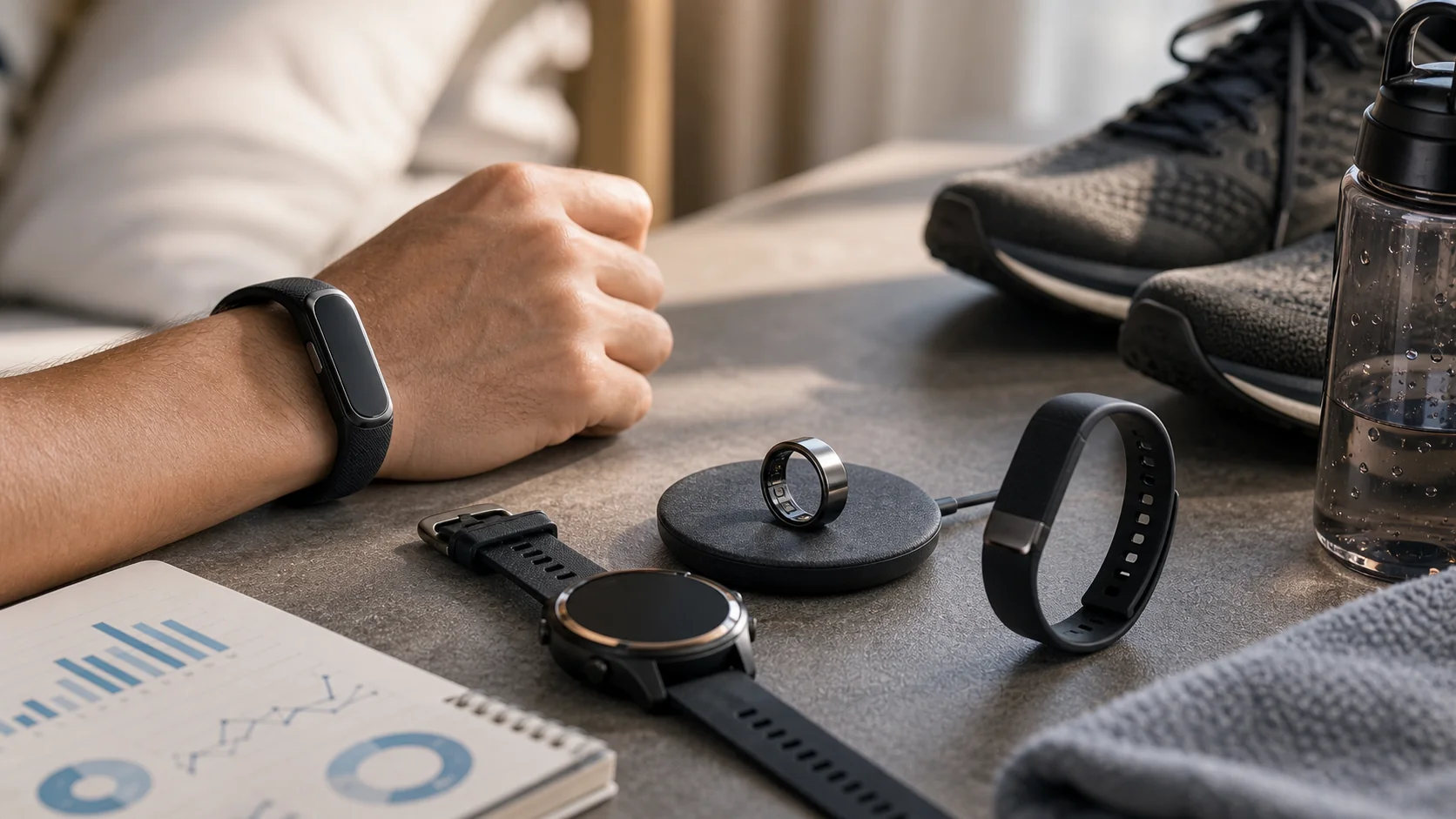
In the world of wearable sports devices, Whoop and Oura represent two fundamentally different design philosophies. Whoop is a discreet wrist band focused on 24/7 physiological monitoring and athletic recovery analysis; Oura is a refined smart ring centered on sleep tracking that extends into all-day health management. With both brands releasing their latest-generation products in 2025, this wearable tech showdown has become even more intense.
This article provides the most comprehensive buying guide for cyclists, examining hardware specifications, sensor accuracy, software algorithms, cycling training applications, and more.
Hardware Specifications Comparison
Whoop 5.0
The Whoop 5.0 delivers significant hardware upgrades:
- Sensor array: 5 LEDs (green light + red light + infrared) optical heart rate sensor, paired with a skin temperature sensor, accelerometer, and gyroscope
- Blood oxygen monitoring: SpO2 sensor operates around the clock
- Battery life: Approximately 5 days per charge (continuous monitoring mode)
- Water resistance: IP68, withstands depths of up to 10 meters
- Weight: Approximately 28 grams (including band)
- Wearing options: Wrist, bicep band, Any-Wear apparel (sensors embedded in garments)
The most revolutionary design feature of the Whoop 5.0 is the Any-Wear system. Through specially designed sports bras and shorts, the sensor can be moved from the wrist to the torso—a location where blood flow is more stable, providing more accurate heart rate data during intense exercise.
Oura Ring 4
The Oura Ring 4 continues its “invisible technology” design philosophy:
- Sensor array: Multi-wavelength LED optical sensors (red light + infrared + green light), temperature sensor array
- Blood oxygen monitoring: Nighttime SpO2 tracking
- Battery life: Approximately 7 days
- Water resistance: 100 meters (swim-grade)
- Weight: 4-6 grams (depending on size)
- Material: Titanium alloy shell, available in multiple colors
Oura’s ace in the hole is the sensing advantage of the finger position. The arteries in the fingers sit close to the skin’s surface with minimal fatty tissue, allowing the optical sensors to capture clearer pulse signals—particularly with exceptional accuracy at rest.
Core Features Deep Comparison
Heart Rate Variability (HRV) Analysis
HRV is a key metric for assessing autonomic nervous system status, directly reflecting an athlete’s recovery level and training readiness.
Whoop’s HRV approach:
- Measures RMSSD during the final slow-wave sleep stage of the night
- Uses a 30-day rolling baseline to calculate personalized HRV trends
- Integrates HRV into the “Recovery Score” (0-100%), combined with sleep quality and resting heart rate
Oura’s HRV approach:
- Continuously monitors HRV throughout the night, calculating nighttime averages and peak values
- Uses a PPG (photoplethysmography) algorithm that has been validated in multiple clinical studies
- Integrates HRV into the Readiness Score
Accuracy comparison:
According to an independent study published in Journal of Sports Sciences in 2025, the correlation coefficients of both devices against medical-grade ECG:
| Metric | Whoop 5.0 | Oura Ring 4 |
|---|---|---|
| Resting HRV (RMSSD) | r = 0.94 | r = 0.96 |
| Heart rate during exercise | r = 0.97 | r = 0.89 |
| Sleep stage detection | 85% agreement | 87% agreement |
| Resting heart rate | ±1 bpm | ±0.8 bpm |
Oura holds a slight edge in resting-state accuracy, while Whoop is more reliable for heart rate tracking during exercise—an important distinction for cyclists.
Sleep Tracking
Sleep is the foundation of recovery. Both platforms offer detailed sleep analysis, but with different emphases.
Whoop Sleep Coach:
- Calculates how much sleep you “need” based on the previous day’s Strain
- Provides sleep efficiency percentage
- Tracks the accumulation and repayment of sleep debt
- Recommends bedtime based on recovery needs
Oura sleep analysis:
- Industry-leading accuracy in sleep stage classification
- Nighttime body temperature variation tracking (reflecting metabolic and hormonal changes)
- Precise measurement of sleep latency (time taken to fall asleep)
- Sleep duration and regularity scoring
For cyclists, Whoop’s Sleep Coach feature offers greater practical value—it doesn’t just tell you how long you slept, but how long you need to sleep to fully recover based on today’s training load.
Training Load Management
Whoop’s Strain system:
- Uses a 0-21 load scale based on time distribution across heart rate zones
- Automatically detects activity types (cycling, running, strength training, etc.)
- Comparative analysis of daily load versus recovery
- Provides “optimal training zone” recommendations—suggesting appropriate training intensity based on the day’s recovery score
Oura’s activity tracking:
- Assesses daily activity levels through an “Activity Score”
- Step count, calorie expenditure, and active time statistics
- Integrates with platforms such as Apple Health and Google Fit
- Sedentary time alerts
In training load management, Whoop clearly holds the advantage. Its Strain system is specifically designed for athletes and can differentiate the impact of varying training intensities on the body. Oura’s activity tracking is better suited for general health management purposes.
Cycling Training Practical Applications
Scenario 1: Long-Distance Endurance Rides
During rides lasting over 4 hours, Whoop can track heart rate data in real time and calculate cumulative strain. Immediately after the ride, the system updates recovery requirement predictions.
However, the wrist-worn Whoop may experience reading fluctuations due to handlebar vibration during high-intensity riding. We recommend using the Any-Wear chest strap for optimal accuracy, or pairing it with a dedicated chest strap heart rate monitor such as the Wahoo TICKR.
Oura’s heart rate tracking during rides is less reliable—pressure on the handlebars affects blood flow in the fingers, causing data deviations. Its value is better realized in post-ride recovery monitoring.
Scenario 2: Pre-Race Tapering and Carb Loading
During the taper period before a race, precisely monitoring the body’s recovery status is critical.
Whoop’s strategy: Track recovery score trends. When recovery scores remain above 70% for several consecutive days and HRV shows an upward trend, it indicates the taper is working well and the body has reached peak condition.
Oura’s strategy: Monitor changes in body temperature baseline. During the taper, nighttime temperature deviation should stabilize or fall slightly below baseline, indicating reduced inflammatory response and adequate recovery.
Scenario 3: Overtraining Warning
Both platforms can detect early signs of overtraining:
- Persistently declining HRV: HRV below personal baseline for more than 5 consecutive days
- Elevated resting heart rate: Unexplained RHR increase of 3-5 bpm or more
- Deteriorating sleep quality: Reduced deep sleep percentage, increased nighttime awakenings
- Low recovery/readiness scores: Consecutive low-score warnings
Whoop directly flags “overtraining risk” in its app; Oura alerts users through “Pay Attention” and “Rest” tags on the Readiness Score.
Data Ecosystem and Integration
Whoop
- Native integrations: Strava, TrainingPeaks, Apple Health
- API accessibility: Limited, primarily through partners
- Data export: CSV format, including raw HRV, heart rate, and sleep data
- Community features: Team functionality, allowing coaches to monitor an entire squad’s data
Oura
- Native integrations: Apple Health, Google Fit, Strava
- API accessibility: Open REST API with rich third-party integrations
- Data export: Full JSON/CSV export
- Research collaborations: Partnerships with multiple universities; data widely used in academic research
Business Model Comparison
| Item | Whoop 5.0 | Oura Ring 4 |
|---|---|---|
| Hardware price | Free (with subscription) | NT$9,990-12,990 |
| Monthly fee | NT$900/month | NT$200/month |
| Annual fee | NT$7,200/year | NT$1,800/year |
| Free features | None (subscription required) | Basic health tracking |
| Minimum 1-year cost of ownership | NT$7,200 | NT$11,790-14,790 |
| Minimum 3-year cost of ownership | NT$21,600 | NT$13,590-16,590 |
Whoop is more cost-effective for short-term use, but in the long run, Oura’s one-time hardware investment plus low monthly fee model is more economical.
Buying Recommendations
Choose the Whoop 5.0 if you:
- Are a serious cyclist who needs precise training load management
- Value real-time heart rate data during exercise
- Want your coach to remotely monitor your recovery status
- Don’t mind the subscription-based pricing model
Choose the Oura Ring 4 if you:
- Prioritize overall health management, with training being just one part of your life
- Prefer an invisible, non-intrusive wearable experience
- Place particular emphasis on optimizing sleep quality
- Already own a cycling computer and heart rate strap, and need supplementary recovery data
Conclusion
There is no perfect wearable device—only the tool that best suits you. For athletes focused on cycling performance, the Whoop 5.0’s training load management system is undoubtedly more advantageous. For riders seeking comprehensive lifestyle optimization, the Oura Ring 4’s sleep analysis and low-profile wearing experience are more appealing.
Perhaps the ideal solution is—using both. Train during the day with Whoop (or directly with your cycling computer’s heart rate strap), and recover at night with Oura. When technology paints a complete 24-hour picture of your body, every pedal stroke becomes more meaningful.
Related Reading
- Sleep Tracking Device Comparison: The Sleep Metrics Cyclists Should Care About Most
- The Complete Guide to HRV Recovery Monitoring: How Whoop and Oura Ring Help Runners Make Science-Based Training and Rest Decisions
- Validity of Wearable Devices in Training Monitoring: A Comparative Study of Commercial Products vs Laboratory Equipment
- Running Headphone Review: Shokz OpenRun vs Bose Sport vs Sony WF Performance in Athletic Environments